English
 Arabic
 French
 Spanish
 Portuguese
 Deutsch
 Turkish
 Dutch
Dutch
 Italiano
 Russian
 Romaian
 Portuguese (Brazil)
 Greek
Greek
Best Perfume Store in UAE for Authentic Fragrances
Shopping |
2026-06-04 11:23:33
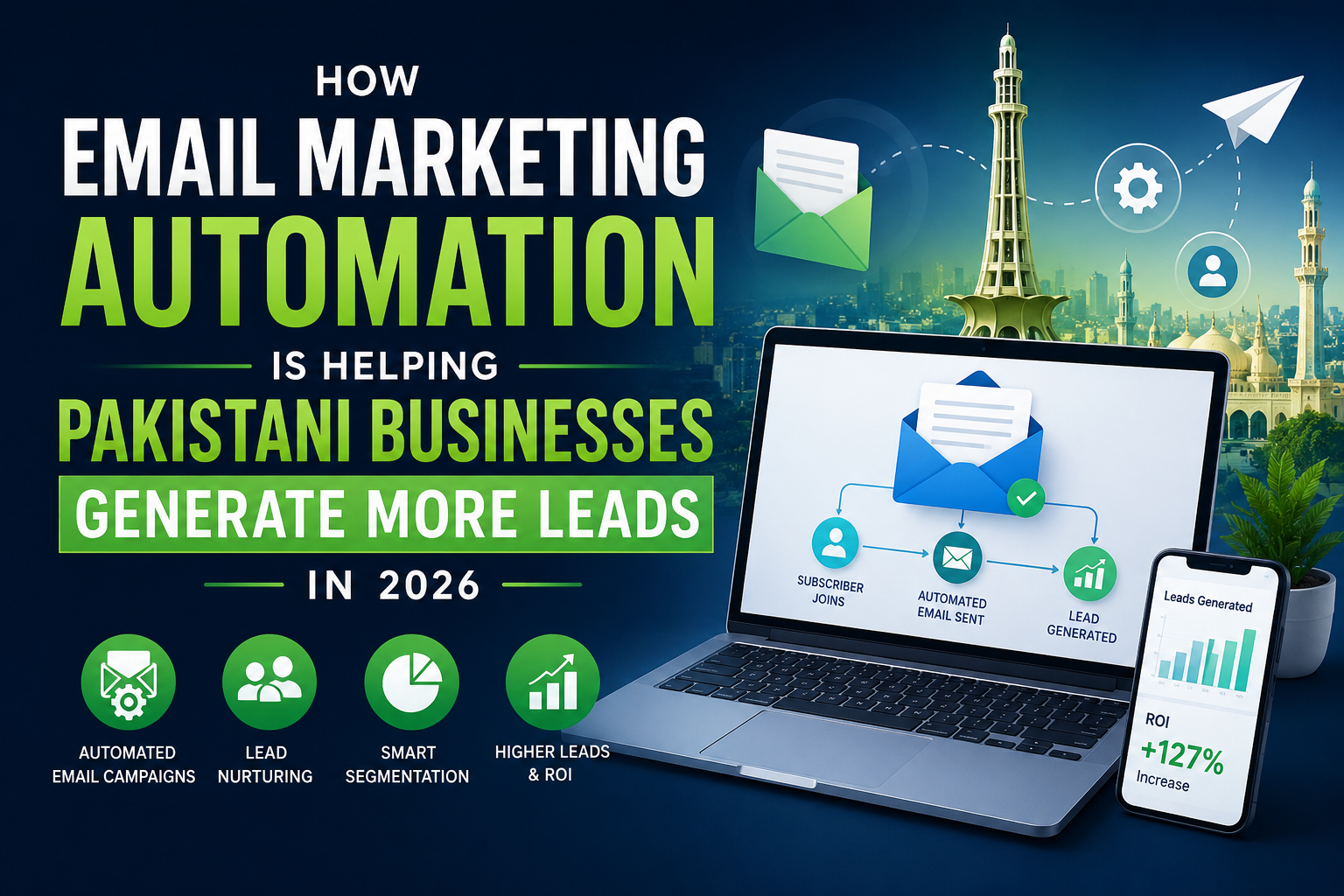
Pakistan's digital economy continues to expand as businesses invest in online channels to reach customers,
generate leads, and build long-term relationships. As competition increases across eCommerce, healthcare,
education, real estate, technology, and professional services, organizations need efficient systems that can
engage prospects consistently without requiring extensive manual effort.
Email marketing automation has become one of the most effective solutions for this challenge. By combining
automated workflows, audience segmentation, personalized messaging, and data-driven optimization, businesses
can communicate with prospects at the right time and guide them through the buying journey. In 2026, many
Pakistani businesses are using automation not simply to send emails, but to create scalable lead-generation
systems that support sustainable growth.
Email marketing automation refers to the use of software platforms that automatically send emails based on
specific triggers, behaviors, or predefined workflows. Instead of manually responding to every inquiry,
businesses can create automated sequences that engage users after actions such as newsletter signups, form
submissions, content downloads, product inquiries, or purchases.
These workflows ensure timely communication while reducing repetitive marketing tasks. Automation also enables
organizations to deliver relevant content based on customer interests and behavior.
Despite the growth of social media and paid advertising, email remains a valuable communication channel.
Businesses own their email lists, making them less dependent on third-party platforms. Email also supports
direct communication, detailed performance tracking, and advanced personalization.
Many organizations use email to nurture leads over time because purchasing decisions often require multiple
touchpoints. Automated campaigns help maintain engagement during this process.
Automation improves lead generation through faster response times, consistent communication, and improved
lead nurturing. When prospects submit information through a website form, automation can immediately deliver
a welcome email, educational content, or consultation invitation.
Lead nurturing campaigns gradually educate prospects about products and services. This approach helps build
trust and keeps the business visible throughout the decision-making process. Automated follow-ups also reduce
the likelihood that leads will be forgotten or neglected.
Modern personalization extends far beyond including a subscriber's first name. Businesses can personalize
content based on location, industry, browsing activity, previous purchases, engagement history, and interests.
For example, an online retailer may recommend products based on browsing behavior, while a real estate agency
may send different listings to residential buyers and commercial investors. Relevant messaging often generates
higher engagement than generic campaigns.
Segmentation divides subscribers into groups based on shared characteristics. Common segmentation methods
include demographic, geographic, behavioral, and lifecycle segmentation.
For Pakistani businesses operating across multiple cities, geographic segmentation can improve relevance.
Subscribers in Karachi may receive different offers or event information than subscribers in Lahore or Islamabad.
Segmentation helps increase engagement while reducing irrelevant communication.
Common automated email campaigns include welcome series, abandoned-cart emails, lead nurturing sequences,
appointment reminders, onboarding campaigns, customer retention workflows, and re-engagement campaigns.
ECommerce businesses often rely on abandoned-cart emails to recover potential sales. Educational institutions
use automation to communicate with prospective students. Healthcare providers frequently automate appointment
confirmations and follow-up reminders. Professional service firms use email sequences to nurture consultation
requests and maintain ongoing communication.
One of the primary benefits of automation is efficiency. Automated workflows reduce manual tasks while
allowing businesses to communicate with large audiences. This scalability can improve productivity and support
higher marketing returns.
Organizations can track open rates, click-through rates, conversions, subscriber growth, and customer engagement.
These metrics help identify successful campaigns and areas for improvement. Because results are measurable,
businesses can continuously optimize their strategies.
Even well-designed campaigns are ineffective if messages fail to reach inboxes. Deliverability depends on
multiple technical factors.
Businesses should implement SPF, DKIM, and DMARC authentication records to help verify legitimate email sources.
Regular list cleaning is also important because inactive or invalid addresses can negatively affect sender
reputation.
Additional best practices include avoiding purchased email lists, monitoring bounce rates, and providing clear
unsubscribe options. Strong deliverability practices improve inbox placement and campaign effectiveness.
Trust plays a critical role in successful email marketing. Businesses should obtain subscriber consent before
sending promotional emails and clearly explain how information will be used.
Responsible practices include maintaining accurate records, protecting customer data, honoring unsubscribe
requests, and avoiding excessive email frequency. Transparency helps build long-term customer relationships and
supports brand credibility.
Email marketing automation is being applied across many sectors in Pakistan.
ECommerce brands use automation to drive sales and retention. Software companies use onboarding sequences to
increase product adoption. Educational institutions nurture prospective students throughout the admissions
process. Healthcare providers communicate appointment details and educational information. Real estate agencies
share market updates and property opportunities with qualified prospects.
These examples demonstrate the flexibility of automation across different business models.
Common mistakes include sending excessive emails, failing to segment audiences, ignoring mobile optimization,
using weak subject lines, neglecting analytics, and relying on purchased email lists.
Businesses should also avoid over-automation. Automated workflows should enhance customer experience rather than
create repetitive or irrelevant communication. Regular testing and optimization help ensure campaigns remain
effective.
Successful automation requires more than software. Organizations often benefit from professional planning,
audience research, customer journey mapping, content development, and performance analysis.
Businesses seeking specialized support can explore Email marketing services in Pakistan.
A structured strategy helps ensure automation supports measurable business goals rather than simply increasing
email volume.
Artificial intelligence continues to influence email marketing platforms through predictive analytics,
audience insights, content recommendations, and send-time optimization. Businesses are also investing more in
first-party data strategies and customer journey mapping.
As competition increases, organizations that deliver relevant and timely communication are likely to achieve
stronger engagement and lead-generation results.
1. What is email marketing automation?
It is the use of software to automatically send emails based on triggers, behaviors, or workflows.
2. How does automation help generate leads?
It enables timely follow-up, lead nurturing, and personalized communication.
3. Is email marketing still effective in 2026?
Yes. It remains a valuable channel for direct communication and relationship building.
4. What is lead nurturing?
Lead nurturing involves educating and engaging prospects over time to support purchasing decisions.
5. Why is segmentation important?
Segmentation improves relevance and helps deliver more targeted communications.
6. What industries benefit from automation?
ECommerce, education, healthcare, real estate, technology, and professional services are common examples.
7. What metrics should be tracked?
Open rates, click-through rates, conversions, bounce rates, and subscriber growth.
8. What are SPF, DKIM, and DMARC?
They are email authentication standards that help improve deliverability and reduce spoofing.
9. Should businesses buy email lists?
No. Purchased lists often result in poor engagement and deliverability problems.
10. How often should emails be sent?
Frequency should align with audience expectations and campaign goals.
Email marketing automation has become an important lead-generation tool for Pakistani businesses seeking
efficient growth in 2026. By combining automation, segmentation, personalization, lead nurturing, and
deliverability best practices, organizations can build stronger customer relationships and improve marketing
performance.
As digital competition increases, businesses that invest in structured automation strategies are better positioned
to generate qualified leads, improve customer engagement, and achieve sustainable long-term growth.