

What Is a Multisig Wallet? How Shared Crypto Wallets Protect Your Funds — and Where They Fail

Intro
A normal crypto wallet has a single point of failure: one private key. Whoever holds it can move everything, and whoever loses it loses everything. A multisig wallet removes that single point — but only if it is set up properly, and it is not the automatic safety net many people assume it is.
What a Multisig Wallet Actually Is
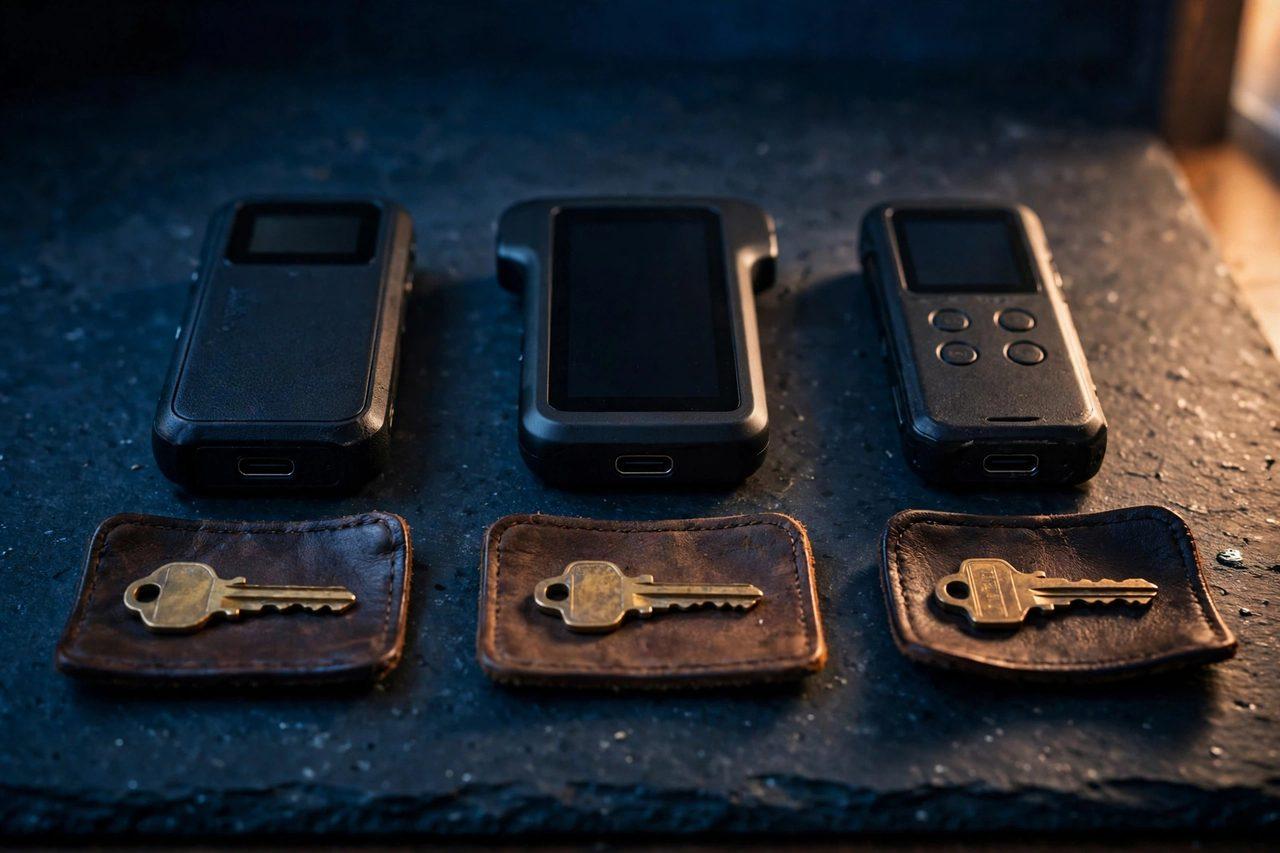 A multisig (multi-signature) wallet requires M of N keys to authorise a transaction before it can be broadcast. "M" is the threshold — the minimum number of signatures required. "N" is the total number of keys authorised on the wallet. The most common consumer configuration is 2-of-3: three total keys, any two of which together can authorise a transaction. No single key has any authority on its own.
On Ethereum and other EVM chains, a multisig is usually a smart contract wallet — Safe (formerly Gnosis Safe) is the dominant implementation, reporting over $60 billion secured across more than 40 EVM mainnets as of September 2026. On Solana the equivalent is Squads; Bitcoin and Cosmos chains have native multisig functionality built into the protocol itself.
The wallet itself does not move funds without the required signatures. A phished seed phrase, a stolen device, or a coerced individual signer is not enough to drain the wallet on its own. That is the structural property that makes multisig meaningful — and the reason teams, DAOs, family offices and anyone holding serious value use it.
Who Actually Needs One
Multisig is the right tool in a few clear situations:
- Teams and treasuries. A company or DAO treasury configured 3-of-5 means three of five officers must sign any withdrawal — no single employee, however senior, can move funds alone.
- Families and shared savings. A 2-of-3 setup between spouses, or between a person and two trusted relatives, protects against both theft and a single lost key.
- High-value personal holdings. Losing one key still leaves the wallet recoverable with the remaining two — the 2-of-3 setup turns a lost device from a catastrophe into an inconvenience.
- Inheritance planning. Keys distributed across family members mean funds are not locked forever if one person is unavailable.
What multisig is not for: small balances where the setup cost, the gas fees and the coordination overhead exceed the value protected. A hardware wallet plus a properly stored seed phrase covers most individual holders — our guide to how exchanges protect funds with cold storage explains the custody side, and the October wallet-safety guide covers the basics multisig builds on.
How the Threshold Works in Practice
Setting one up follows the same shape everywhere: choose the signer set (N) and the threshold (M), deploy the wallet — on EVM chains this is a smart contract that becomes the wallet's address — and fund it. To spend, one signer proposes a transaction, which sits in a pending state until the threshold of signatures is collected; only then can the final signer submit it and pay the gas to execute on-chain.
The trade-off is direct: a higher threshold increases security but reduces agility. A 2-of-3 is agile and forgiving; a 4-of-7 is far harder to attack but slower to operate and more likely to stall if signers are unavailable. Common configurations are 2-of-3 for small teams and family offices, and 4-of-7 or 5-of-9 for larger DAOs. A 1-of-2 or 1-of-N setup is not multisig in the security sense — any single key can sign on its own, so the threshold provides no attacker resistance.
The threshold only delivers its security property when each key is held with a non-overlapping threat surface: different physical locations where the threat model warrants it, different signers where coercion is a concern, and different manufacturers across the device set so that a single supply-chain attack or firmware bug cannot compromise every key at once. Three keys in the same drawer, on three devices from the same maker, protected by the same password, are barely better than one.
Where Multisig Fails: the Bybit Lesson
 The most expensive demonstration of multisig's limits came in February 2025, when the Bybit hack drained approximately $1.4–1.5 billion from a 3-of-3 cold multisig — the largest theft in the industry's history. Every signer approved a transaction they could not properly verify, and the threshold did nothing to stop it, because multisig checks how many people approved, not whether what they approved was what they thought it was.
The lesson is blunt: multisig protects against a compromised key, not against a compromised signing process. If signers approve transactions blindly — on a screen that shows one thing while the transaction does something else — the threshold is theatre. Every signer must independently verify the destination address, the amount, and the transaction data before signing, ideally on a separate device from the one that proposed it.
Other ways multisig fails in practice:
- Key concentration. All keys held by one person, in one place, defeats the purpose entirely.
- Threshold too high. A 3-of-3 where one signer travels, loses a device or becomes unavailable locks the funds as surely as a lost seed phrase. Build in redundancy — 2-of-3, not 3-of-3, for most personal setups.
- No key-recovery plan. Losing keys below the threshold is permanent. The remaining signers can propose a transaction to remove a lost key and add a replacement — but only while the threshold can still be met.
- Unverified contract. A multisig is a smart contract. Use audited, battle-tested implementations — Safe on EVM chains, Squads on Solana, native multisig on Bitcoin — not an unaudited copy.
The Setup Checklist
- Pick the signer set and threshold first: 2-of-3 for personal or family use, 3-of-5 for a small team.
- Use different devices, different locations, and ideally different manufacturers for the keys.
- Test with a small amount before moving real funds — propose, sign, execute, and confirm the flow works.
- Write down a recovery plan: who holds which key, how a lost key is replaced, and what happens if a signer is unavailable.
- Every signer verifies every transaction independently before signing. No blind approvals, ever.
- Keep the wallet's address and the signer list somewhere the people who need them can find them — a multisig nobody can operate is a vault with no door.
Multisig does not make crypto safe. It makes one specific failure — a single compromised or lost key — survivable, at the cost of coordination and discipline. Used with signers who actually verify what they sign, it is the strongest custody arrangement most people will ever need. Used as a checkbox, it is an expensive way to lose money more slowly.
Follow crypto security coverage on the Zimbuck News page and in the Zimbuck Market News group, and read our report on how Binance traced its $6.34 billion hack to a fake job interview. For a deeper technical walkthrough of M-of-N mechanics, see the multisig wallets complete guide.
FAQ
What is a multisig wallet? A wallet that requires M of N keys to authorise a transaction — for example, any 2 of 3 keys. No single key can move funds on its own.
What is the most common multisig setup? 2-of-3: three keys, any two can authorise. It survives the loss of one key and requires an attacker to compromise two independently held keys.
Which multisig wallets are widely used? Safe (formerly Gnosis Safe) dominates on Ethereum and EVM chains; Squads on Solana; Bitcoin and Cosmos chains have native multisig. Use audited implementations only.
Does multisig make my crypto unhackable? No. The February 2025 Bybit hack drained about $1.4–1.5 billion from a 3-of-3 cold multisig because every signer approved a transaction they could not verify. Multisig protects against a compromised key, not against blind approvals.
What happens if I lose one key in a 2-of-3 multisig? Nothing is lost — the remaining two keys can still authorise transactions, including a transaction to remove the lost key and add a replacement.
Is 1-of-2 a multisig? Not in any meaningful security sense. Any single key can sign alone, so the threshold provides no attacker resistance.
This article is general information only, not financial advice. Join the conversation on Zimbuck — the finance social platform for traders and investors.




