


Forex Week in Review: RBA and Bank of England Hike Rates but Their Currencies Fall as the Dollar Takes the Week

Two central banks raised interest rates this week and watched their currencies fall anyway: the Reserve Bank of Australia lifted its cash rate to 4.85% on Tuesday and the Bank of England raised its rate to 4.00% on Thursday, yet the US dollar finished higher against six of the seven major currencies. The Australian dollar was the week's biggest loser among the majors, falling 2.37%, while the pound gave back its gains on Friday.
For forex traders reviewing the week on the Zimbuck News page, the lesson is an old one with fresh evidence: a rate hike supports a currency only when it changes what the market expected. Hikes that are fully priced — or that arrive with divided votes and cautious guidance — can leave the currency weaker than before the decision.
Australia: a divided hike, a falling dollar
The RBA raised its cash rate by 25 basis points to 4.85% in a 6–3 vote on Tuesday. The split itself signalled how contested the decision was. AUD/USD fell on the day of the decision, closed lower in four of the week's five sessions, and lost 2.37% across the week — the largest decline of the seven majors. A central bank tightening policy while its currency slides is not a contradiction: traders were pricing what comes after the hike, and the divided vote gave them little reason to expect a long hiking cycle.

Britain: a hike that ended a winning run
The Bank of England raised its rate to 4.00% from 3.75% on Thursday, as forecast, in an 8–1 vote, with Catherine Mann backing a larger 50-basis-point move. Sterling still fell 0.17% on the day, ending a run of six consecutive higher closes. The pound was up 0.45% on the week at Thursday's close — and finished the week 0.28% down after Friday's dollar surge erased the gain. Our earlier guide to the best time to trade EUR/USD in the London–New York overlap explains why Friday's US session so often decides the week's currency story.
The euro's range held — barely
- EUR/USD weekly high: 1.12731 intraday Wednesday; closed Wednesday at 1.12287
- EUR/USD Friday low: 1.11309 — just 28 pips above the 1.1103 level
- EUR/USD Friday close: 1.11397
- Levels for next week: firm break of 1.1272 would signal short-term bottoming; 1.1103 remains the lower line
- Dollar index: +0.31% on the week, with almost all of the gain coming on Friday
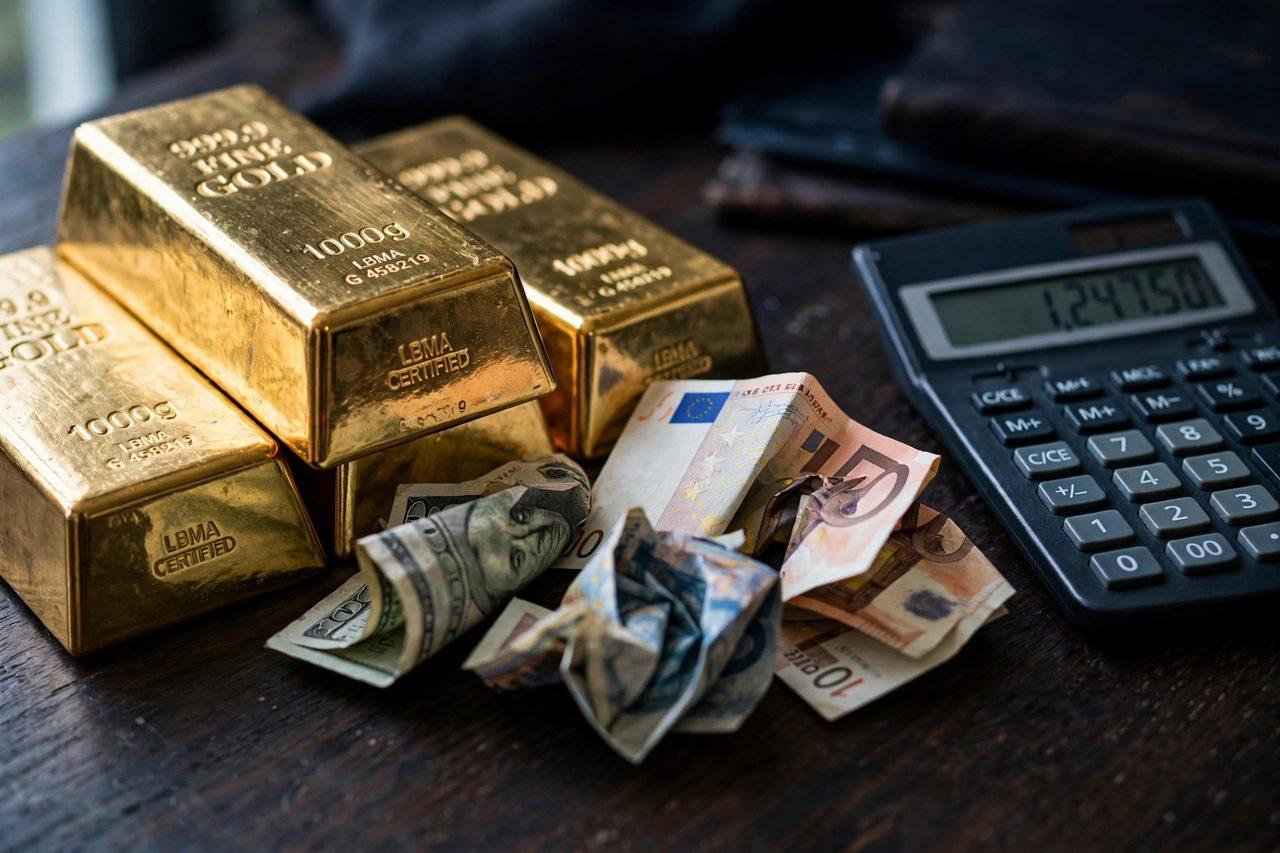
- Gold: +4.92% to $4,065.82 — first weekly gain after three falls
The crowded positioning behind the euro's weakness is detailed in our report on euro shorts hitting an 11-year extreme. Positioning that one-sided cuts both ways, which is why the 1.1272 level matters: a firm break above it would force short-covering and signal a short-term bottom. Until then, the range rules. Week-ahead levels and positioning are argued over daily in the Zimbuck Market News group.
The week's other moving parts
Monday set an early tone in energy: WTI crude fell more than 5% as traders welcomed US–Iran diplomatic efforts, one session after printing a five-month high of $104.03 on Friday. Wednesday belonged to politics: Democrats won majorities in both houses of the US Congress in the midterms, and the dollar closed lower against all seven majors that day, with EUR/USD rising 0.32% to its high of the week and USD/CAD touching its weekly low of 1.39296 before closing at 1.39775. Friday then reversed the entire pattern in a single session. The full day-by-day account is in the ForexCommand weekly review.
FAQ
Why did the Australian dollar fall after a rate hike?
The hike to 4.85% was widely expected and passed on a divided 6–3 vote, so traders focused on the limited path for further hikes rather than the increase itself. AUD/USD fell 2.37% on the week.
What did the Bank of England do?
It raised its rate to 4.00% from 3.75% in an 8–1 vote, with one member backing 50 basis points. Sterling still fell on the day and finished the week lower after Friday's dollar rally.
What are the key EUR/USD levels now?
1.1272 on the topside — a firm break signals short-term bottoming — and 1.1103 below, with Friday's low at 1.11309 stopping just above it.
Why did gold rise while the dollar strengthened?
Gold gained 4.92% to $4,065.82, its first weekly rise after three falls, as midterm uncertainty and shifting rate expectations kept demand for hedges alive even in a strong-dollar week.
Follow the majors, central-bank decisions and the levels that matter with traders worldwide on Zimbuck. This article is market news and general information only, not financial advice.




