
WTI vs Brent Crude: What Is the Difference Between the Two Oil Benchmarks? Explained

WTI vs Brent Crude: What Is the Difference Between the Two Oil Benchmarks? Explained
Every oil headline quotes one of two prices — WTI or Brent — and they are rarely the same. Why are there two prices at all, which one is the world price, and why does the gap between them widen and narrow? This guide explains it in plain language.
It matters because oil still sets the tone for energy costs and inflation worldwide. Readers following daily energy coverage on Zimbuck News will see both names constantly.
What Is an Oil Benchmark?
Crude oil is produced in many places and grades, and must be transported, stored and refined before use. A benchmark gives the market one standard reference price: for a defined grade of oil, delivered at a defined place, under standard contract terms.
Most deals are then priced as a difference to a benchmark — at a premium or discount to Brent, for example, depending on quality and location. That is why two benchmarks dominate trade even though hundreds of grades exist.
WTI: The American Benchmark
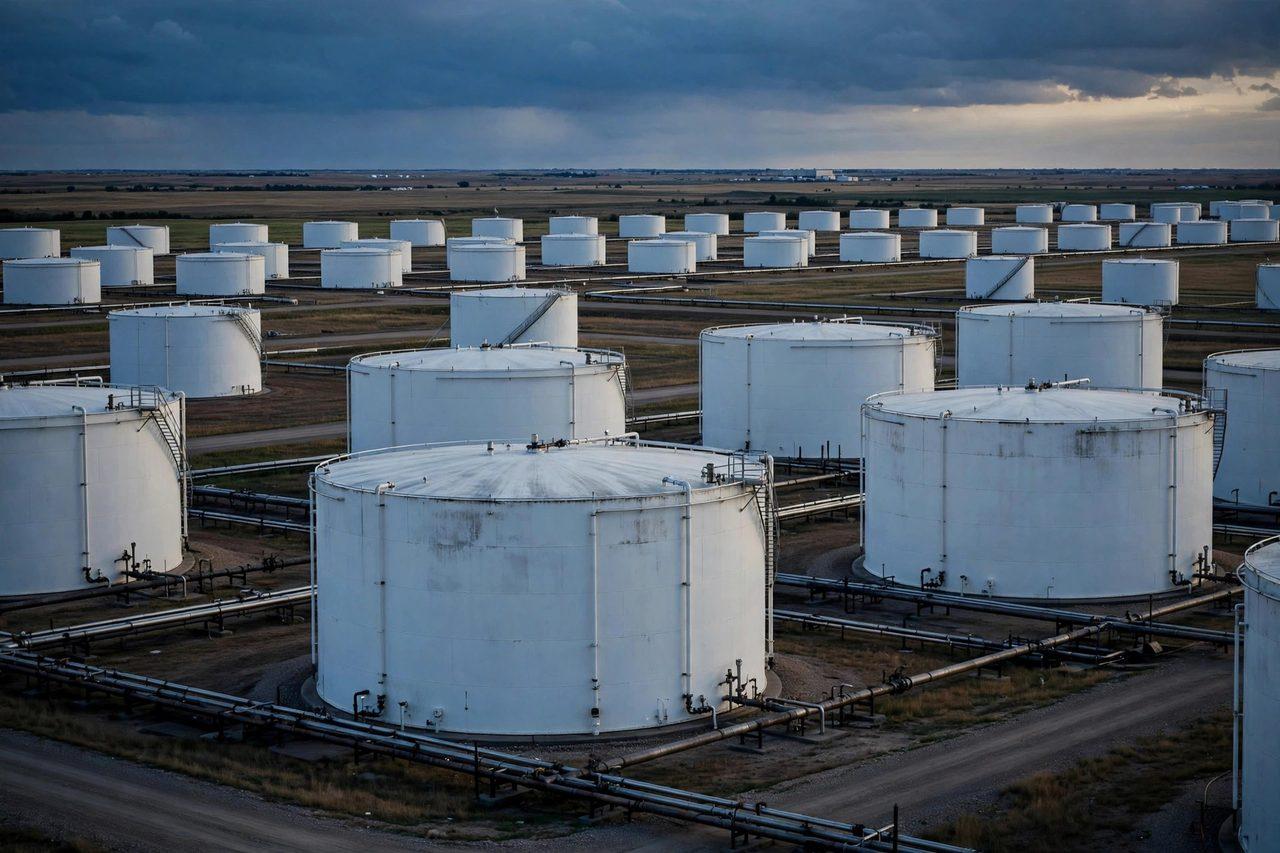
WTI stands for West Texas Intermediate. It is produced mainly in US oil fields, particularly in Texas, and its pricing point is Cushing, Oklahoma — a major pipeline and storage hub. WTI futures trade on the New York Mercantile Exchange (NYMEX), part of CME Group, with delivery at Cushing.
That inland point shapes WTI: its price also reflects how full Cushing storage is and how easily oil moves in and out by pipeline.
Brent: The Global Benchmark
Brent took its name from the Brent field in the North Sea, off Scotland. Today it is based on a basket of North Sea grades, and Brent futures trade on the Intercontinental Exchange (ICE).
Brent is seaborne: it is loaded onto tankers and shipped by sea, connecting its price directly to the world market. Roughly two-thirds of the world's traded crude is priced in relation to Brent, and producers in Europe, Africa and much of Asia use it as their reference. That is why Brent often reacts first to shocks far from the United States — a pattern discussed in our coverage explaining why Brent will not return to pre-war levels, according to Saxo.
WTI vs Brent at a Glance
- Origin: WTI from US inland fields; Brent from offshore North Sea fields.
- Pricing point: WTI for delivery at Cushing, Oklahoma; Brent around North Sea loading and seaborne delivery.
- Exchange: WTI on NYMEX / CME; Brent on ICE.
- Quality: both light and sweet; WTI is slightly lighter and lower in sulphur (about 0.24% vs Brent about 0.37%).
- Transport: WTI mainly by pipeline, landlocked; Brent mainly by tanker, waterborne.
- Main users: WTI is the key US reference; Brent is the key reference for most international trade.
- Sensitivities: WTI reacts strongly to US inventories, Cushing storage and pipeline capacity; Brent reacts faster to global shipping and geopolitics.
Quality: Light, Sweet — But Not Identical
"Light" means the crude yields a high share of valuable products such as gasoline and diesel. "Sweet" means it is low in sulphur, making it cheaper to refine. Both benchmarks qualify, which is why refiners want them.
WTI has a small quality edge — slightly lighter and lower in sulphur — which historically supported a small premium for it. But location and transport often matter more, which is why Brent has frequently traded above WTI.
Delivery: Landlocked vs Seaborne
This is the biggest practical difference. WTI is landlocked: oil gathers at Cushing and moves by pipeline. If pipelines are full or storage fills up, WTI can weaken sharply even when oil elsewhere is expensive — the oil is stuck in the wrong place.
Brent is seaborne. A tanker can sail wherever prices are highest, so Brent is harder to trap in one location and gives a cleaner signal of global supply and demand. WTI gives a clearer signal about the United States. Traders in the Zimbuck Market News group often compare the two: a move in only one benchmark usually tells you whether a story is mainly American or mainly global.
The Brent-WTI Spread, Explained
The difference between the two prices is the Brent-WTI spread. It mainly reflects quality, the cost of transport between the US interior and the coast, local storage conditions, and how easily US oil can reach export markets.
Its most famous episode came in 2011–2014, when the spread widened dramatically. The US shale boom sent large volumes of new oil toward Cushing, storage built up, pipelines could not clear the surplus, and a long-standing US ban on crude exports stopped producers selling it abroad. WTI fell to a deep discount while Brent priced the tighter global market.
That changed when the export ban was lifted in 2015 and new pipelines were built. With US crude free to compete worldwide, the spread has since mostly been tied to transport costs — wide enough to cover moving oil to export terminals and onward by ship when exports are profitable, narrower when not.

Which Benchmark Matters for Whom?
For US households, WTI is usually more relevant, because US gasoline prices track WTI more closely. For most of the rest of the world, Brent matters more: international cargoes and producers in Europe, Africa and Asia are typically priced off Brent, so it affects import and fuel costs there more directly.
Traders watch both — and the spread, which signals whether supply is tighter in the US or globally and creates arbitrage opportunities when moving oil between markets is profitable after transport.
How a Beginner Reads an Oil Quote
A headline oil price is almost always a futures price. Each contract is for a specific delivery month, and the headline is normally the front-month contract — the nearest still trading. When it nears expiry, attention rolls to the next month; that roll is normal and does not mean oil itself has jumped. Always check which benchmark and which contract month a quote refers to.
FAQ
Which is the world oil price, WTI or Brent?
Brent is usually treated as the global benchmark, because roughly two-thirds of the world's traded crude is priced in relation to it. WTI is the main benchmark for the United States.
Why is Brent often more expensive than WTI?
Mainly location and transport. Brent can be shipped anywhere by tanker, while WTI is delivered inland at Cushing and must cover transport costs to reach export markets — a difference that often outweighs WTI's small quality advantage.
What does light, sweet crude mean?
Light means the oil yields more high-value products such as gasoline and diesel. Sweet means it is low in sulphur, making it easier to refine. Both benchmarks are light, sweet crudes.
What is the Brent-WTI spread?
Simply the price of Brent minus the price of WTI. Traders watch it as a signal of whether supply is tighter in the US or globally, and as a guide to whether exporting US crude is profitable after transport costs.
Why did the spread widen so much in 2011-2014?
The shale boom sent large volumes of oil toward Cushing, storage built up, pipelines could not clear the surplus, and the US crude export ban stopped producers selling it abroad. WTI fell to a large discount until the ban was lifted in 2015.
Which benchmark affects fuel prices where I live?
In the United States, gasoline prices track WTI more closely. Elsewhere, fuel prices are influenced more by Brent, because most internationally traded crude is priced off it — though taxes, refining and currency also matter.
What is the front-month contract?
The futures contract with the nearest delivery month still trading. Headline oil prices almost always refer to the front-month contract; when it expires, the headline rolls to the next month.
WTI and Brent are two lenses on the same market: WTI shows the United States from inside, at Cushing, while Brent shows the seaborne world market. Watch both, and the spread, and most oil headlines will make sense. Join the conversation on Zimbuck — the finance social platform for traders and investors.
This article is general educational information only, not financial advice. Do your own research before making any investment decision.