

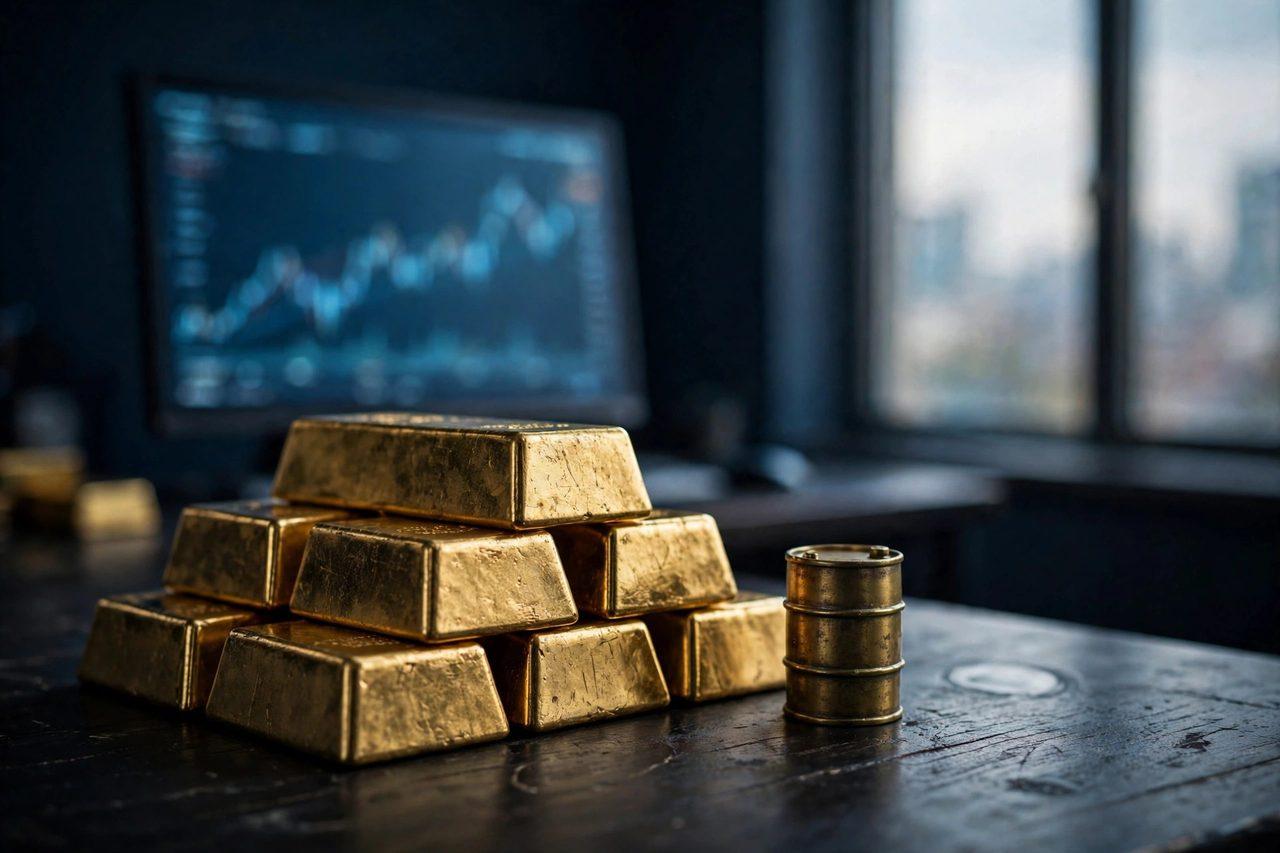
Gold Falls Below $3,900 to a One-Year Low as Oil Surges Past $95 on Iran Tensions

Gold Breaks Below $3,900 as Oil Surges on Iran Tensions
Gold fell below $3,900 an ounce on Thursday, November 12, 2026, settling at its lowest level in more than a year, while oil prices surged after President Donald Trump said the United States does not need a deal with Iran. The twin moves — cheaper gold, dearer energy — left commodity markets pricing in more inflation, not less, ahead of today's U.S. producer price data.
Front-month gold futures in New York fell 2.85% to $3,878.40 a troy ounce, the lowest settlement since October 2, 2025, and the third consecutive daily decline, according to Dow Jones Market Data via the Wall Street Journal. Silver fell harder, dropping 3.68% to $49.972 a troy ounce. Spot gold steadied only slightly in early Asian trade on Friday, edging up about 0.2% to around $3,886.82. Follow the market discussion on the Zimbuck News page.
The Numbers Behind the Move
- Gold: futures settled at $3,878.40, down $113.60 on the day — the largest one-day drop since October 30, 2026.
- Silver: settled at $49.972, its lowest since November 3, 2026.
- Brent crude: rose 3.78% to settle at $95.94 a barrel.
- WTI crude: gained 2.64% to settle at $88.69 a barrel.
- U.S. Dollar Index: little changed around 103.21.

Why Gold Fell While Oil Rose
The trigger was geopolitical. Trump's comments damped hopes of a diplomatic resolution with Iran and revived fears of Middle East crude supply disruption, pushing Brent towards $96. Rising energy prices feed directly into inflation expectations — and this week's U.S. data gave traders no comfort: October consumer prices rose 0.4% month on month, above the 0.3% forecast, with core CPI also beating expectations. The result is a market that now leans towards the Federal Reserve keeping rates high for longer, with some pricing even pointing to a December rate hike. Higher yields and a firm dollar are a classic headwind for gold, which pays no interest. Our earlier explainer on gold's slide below $4,015 as hot inflation revived Fed rate-hike bets looks at how gold and Bitcoin tend to react in exactly this kind of risk-off, high-rate environment.

What Traders Watch Next
Attention turns to today's U.S. October PPI release, where markets expect headline producer prices to rise 0.4% month on month (down from September's 1.3%) and core PPI to rise 0.3%. A hotter print would reinforce the rate-hike narrative pressuring gold; a softer one could let bullion reclaim the $3,900 level it lost on Thursday. Technical watchers also flag the $3,810–$3,850 zone as the next support area if selling resumes. Commodity traders are sharing levels in the Zimbuck Market News group.
FAQ
How low did gold go? Front-month futures settled at $3,878.40 a troy ounce on November 12, 2026 — the lowest settlement since October 2, 2025 — after briefly trading near $3,852 intraday, according to market reports.
Why did oil rise at the same time? President Trump said the U.S. does not need a deal with Iran, raising fears of supply disruption; Brent settled up 3.78% at $95.94 and WTI up 2.64% at $88.69.
Why does higher oil hurt gold? Expensive energy lifts inflation expectations, which pushes markets to expect higher interest rates for longer. Higher yields raise the opportunity cost of holding non-yielding gold.
What is the next key data point? The U.S. October PPI report due today, November 13, with consensus at +0.4% headline and +0.3% core month on month.
Read the original market report from The Wall Street Journal for the full settlement detail. For more commodities and markets coverage, join Zimbuck and follow the conversation.
This article is market news and general information only, not financial advice.






