English
 Arabic
 French
 Spanish
 Portuguese
 Deutsch
 Turkish
 Dutch
Dutch
 Italiano
 Russian
 Romaian
 Portuguese (Brazil)
 Greek
Greek
Carbon Sodium: Properties and Industrial Uses
Other |
2026-04-13 21:18:19
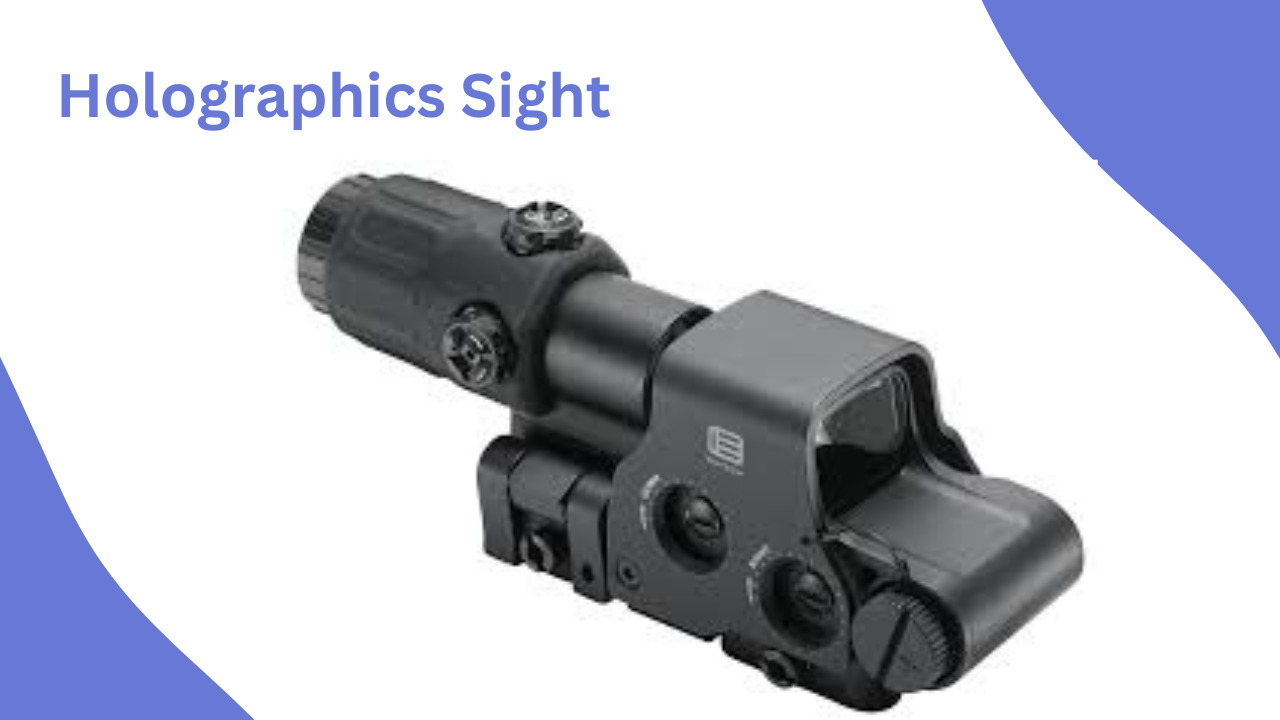
In the rapidly advancing world of tactical optoelectronics, the holographic sight represents the pinnacle of speed and reliability. While traditional red dots have served shooters well for years, the transition to holographic technology in 2026 is driven by a need for faster target acquisition and "fail-proof" performance in extreme conditions.
At ARVR Optical, we specialize in the high-performance laser diodes and precision optical windows that make these advanced aiming systems possible. Whether you are a professional operator or a new enthusiast, understanding the technical superiority of a holographic sight will change the way you look at your target.
A holographic sight is a non-magnifying optical device that uses a laser transmission hologram of a reticle. Unlike a standard reflex sight (red dot) that reflects an LED off a curved lens, a holographic system uses a laser to reconstruct a 3D image of the reticle in the air between the shooter and the target.
At ARVR Optical, we refer to this as "spatial reconstruction." To the shooter, the reticle doesn't look like it’s painted on the glass; it looks like it is floating 50 to 100 yards downrange, allowing you to focus on the target and the reticle simultaneously without straining your eyes.
As experts in optoelectronics, ARVR Optical focuses on the core components that differentiate these systems. The magic of the holographic sight happens through a complex series of mirrors and a laser diode.
Instead of a simple dot, a holographic sight can project complex patterns—like the famous "circle-dot"—without blurring. This is because the laser illuminates a recorded holographic film, providing a sharp 1 MOA (Minute of Angle) center dot that remains incredibly small, even under magnification.
While many sights claim to be parallax-free, the holographic sight achieves this mechanically through its optical path. Because the reticle is a reconstructed 3D image, it stays on target regardless of your head position or the angle at which you view the window.
Traditional red dots require a "tinted" or semi-reflective coating to reflect the LED. A holographic sight from ARVR Optical uses nearly 100% transparent glass. This provides a clearer view of the target, which is especially critical during low-light operations or when using night vision devices.
The reason ARVR Optical components are found in top-tier tactical gear is due to three primary "fail-safe" benefits:
Operation with Broken Glass: This is the "superpower" of the holographic sight. Since the hologram is projected through the entire window, you can shatter or cover 90% of the glass with mud, and as long as a small sliver of clear glass remains, the reticle will still be visible and accurate.
Instant Target Acquisition: The large, rectangular viewing window provides a massive field of view. This "heads-up" display style allows for two-eyes-open shooting, which is essential for maintaining situational awareness in 2026 combat or competition scenarios.
Superior Magnification Compatibility: When you put a 3x magnifier behind a red dot, the dot gets 3x larger (and blurrier). When you magnify a holographic sight from ARVR Optical, the 1 MOA center dot stays 1 MOA, giving you a much finer aiming point for long-distance shots.
If you are looking to source or upgrade to a holographic sight, the team at ARVR Optical recommends checking these three metrics:
Reticle Density: Look for a 65 MOA circle for close-quarters speed and a 1 MOA center dot for precision.
Battery Life Management: While holographic sights use more power than LEDs, 2026 models feature "Shake Awake" technology and auto-shutdown to extend battery life to over 1,000 hours.
Night Vision (NV) Settings: Ensure the sight has dedicated NV modes. These settings drop the laser intensity to a level that won't "bloom" or damage expensive night vision tubes.
At ARVR Optical, we see our holographic modules being used in diverse fields:
Law Enforcement: For urban environments where rapid transitions between targets are common.
Competition Shooting: Where the "limitless" eye relief and wide window allow for faster stage times.
Home Defense: For the absolute certainty that the sight will work, even if the glass is damaged or the shooter's head is not perfectly aligned.
Building a holographic sight requires a mastery of diffraction gratings and laser calibration. At ARVR Optical, we provide the technical foundation—the high-transmission windows and stable laser housings—that ensure your optic holds its zero through thousands of rounds of recoil.
Visit arvroptical.com to explore our technical data sheets. We help manufacturers and enthusiasts understand the fine details of beam collimation and thermal stability, ensuring that your holographic sight performs at the highest level in any environment, from -40°C to 60°C.
The holographic sight is more than just an aiming tool; it is a sophisticated piece of optoelectronic engineering. By moving from a simple reflection to a 3D laser reconstruction, it provides a level of speed, durability, and clarity that other optics simply cannot match.
Whether you are an expert shooter or a new buyer, the investment in holographic technology is an investment in your performance. Explore the future of precision optics at arvroptical.com, where ARVR Optical continues to push the boundaries of what is possible on the modern battlefield and range.