



A liquidation cascade is what happens when forced selling creates more forced selling. A sharp price drop pushes leveraged traders past their margin limits, their positions are closed automatically, and those forced sales push the price down further — triggering the next round of liquidations. It is one of the fastest ways a calm market turns into a vertical red candle, and understanding it explains many of the sudden moves traders blame on “panic” alone.
This is an evergreen explainer, not a forecast. It walks through margin calls, cascading stop orders and thin order books in plain language, so you can recognise a cascade while it is happening rather than only after it has finished. For day-to-day market stories, follow Zimbuck News.
What a liquidation cascade actually is
Most crypto traders use leverage: they borrow to control a larger position than their own capital would allow. That magnifies gains, but it also creates a hard line — the liquidation price. If the market reaches that price, the exchange closes the position automatically to limit further losses.
A cascade begins when one large move, or a cluster of liquidations, pushes the price into a zone where many other traders have their liquidation prices. Each forced sale adds selling pressure, the price falls again, and a new group of positions is liquidated. The process feeds on itself until the cluster of vulnerable positions is cleared, buyers step in, or the exchange’s order book finds enough demand to absorb the selling.

Margin calls: where the cascade starts
Before a position is liquidated, a trader usually receives a margin call — a warning that their collateral is no longer enough to support the position. At that point they have a choice: add more collateral, reduce the position, or hope the market turns.
- Adding collateral lowers the liquidation price, but it also puts more money at risk.
- Reducing the position cuts exposure, but it locks in a loss.
- Doing nothing leaves the outcome to the market — and in a fast move, the market may decide in seconds.
When many traders face the same choice at the same time, the ones who do nothing are liquidated together. That simultaneity is what turns ordinary selling into a cascade.
Cascading stops and clustered liquidations
Stop-loss orders add a second layer to the same dynamic. Traders place stops just below obvious support levels, and many of them choose the same round numbers. When price breaks below such a level, those stops trigger as market sell orders at once.
That is why a cascade often accelerates exactly at a level that looked like support. The break does not just change the chart — it converts a crowd of resting stop orders into live selling, and the resulting drop can trigger the liquidation prices sitting just below. One trigger becomes the next trigger, and the move gathers speed until it reaches a price where fresh buy orders are waiting in size.
Why thin order books make cascades worse
The order book decides how far a cascade travels. In a deep book, with plenty of buy orders resting close to the current price, forced sales are absorbed with only a small move. In a thin book, the same amount of forced selling has to walk through price level after price level to find buyers — a process traders call “walking the book” — and each fill happens at a worse price than the one before.
Weekends, holidays and quiet overnight sessions are the classic danger zones: fewer market makers are quoting, spreads widen, and a modest wave of liquidations can move the price several percent in minutes. Watching how levels hold during volatile sessions — like the ones analysed in this week’s Bitcoin price analysis — is good practice for seeing depth thin out in real time.
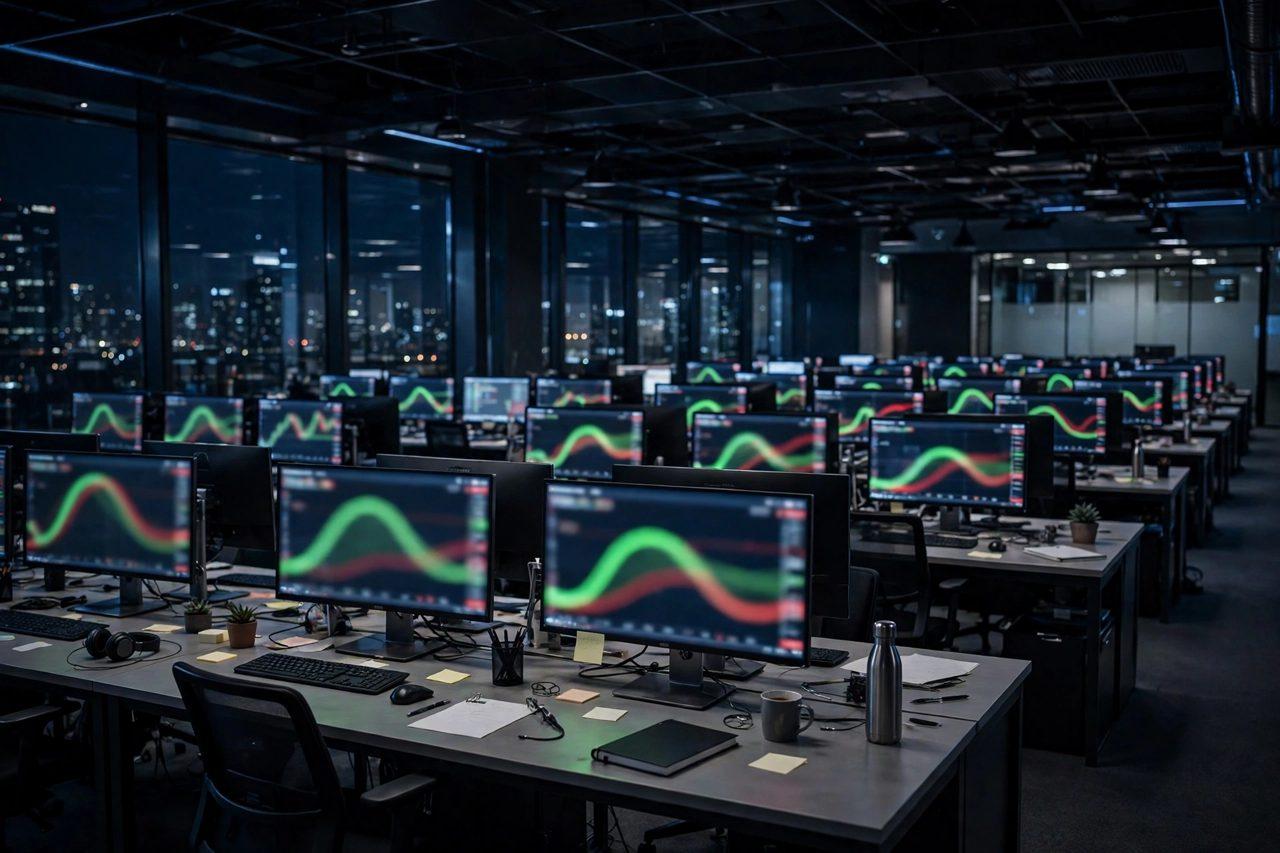
What traders watch while a cascade is under way
Three things tell you whether a cascade is still feeding itself or running out of fuel:
- Liquidation data: a rising count of long liquidations means forced sellers are still being flushed out; a sudden slowdown suggests the vulnerable cluster is clearing.
- Order-book depth: large buy orders appearing below the price can act as a floor, while a book that stays thin warns the next wave could travel further.
- Funding and open interest: falling open interest alongside the drop usually means leveraged positions are closing; if open interest stays high, more liquidations may still be waiting.
Traders in the Zimbuck Market News group regularly compare these signals across exchanges for exactly this reason, because the same pair can show very different depth and liquidation pressure in different places.
Frequently asked questions
What is a liquidation cascade?
A self-reinforcing sell-off in which falling prices trigger margin liquidations and stop-loss orders, and those forced sales push prices lower, triggering still more liquidations.
What is the difference between a margin call and a liquidation?
A margin call is a warning that your collateral is running low. Liquidation is the exchange closing your position automatically once the price reaches your liquidation level.
Why do cascades happen so fast in crypto?
High leverage is widely available, trading runs around the clock, and order books can thin out quickly outside busy hours — so a lot of forced selling can hit a small amount of resting demand at once.
Can a cascade be predicted?
Not precisely. But clusters of liquidation prices, heavy leverage and thin depth are visible in advance, and they tell you where a cascade could accelerate if the price reaches them.
Does a cascade mean the market is broken?
No. It is a feature of leveraged markets: the mechanism is working as designed, closing positions that can no longer be supported. The price move it produces can still overshoot, which is why buyers often wait for the forced selling to finish before stepping in.
A liquidation cascade will not predict prices — nothing in it claims to. What it does explain is why crypto can fall much further, much faster, than the original news seemed to justify. Read the market’s leverage and depth before you trade, and join the discussion at Zimbuck, where traders break down exchange mechanics and market structure every day.
This article is market education and general information only, not financial advice.






