What Is a Seed Phrase? How 12 or 24 Words Control Your Crypto Wallet — Explained

A seed phrase is the master key to a self-custody crypto wallet: a list of 12 or 24 ordinary words from which every private key and every address in that wallet is mathematically derived. Lose the words and the wallet cannot be recovered; hand them to someone else and they can take everything in it — which is why understanding what a seed phrase actually is matters more than almost any other beginner topic in crypto.
The phrase is not a password you chose, and it is not stored on any server. It is a human-readable encoding of one large random number, created by your wallet the moment you set it up, and it works with any compatible wallet software anywhere in the world.
Where seed phrases come from: the BIP39 standard
Seed phrases follow an open standard called BIP39 (Bitcoin Improvement Proposal 39), introduced in 2013. BIP39 fixes a list of exactly 2,048 English words. The words were chosen to be easy to recognise and hard to confuse with each other — the first four letters of every word on the list are unique, so a partially smudged word can usually still be identified.
Because BIP39 is a public standard rather than one company's format, the same phrase can restore the same wallet in many different apps and hardware devices. If a wallet company disappears tomorrow, a BIP39 phrase still works elsewhere. Our security coverage on Zimbuck, including what a dusting attack is and how tiny deposits track your wallet, returns to the same basic point: in self-custody, your keys are your responsibility, and the seed phrase is where that responsibility starts.

How 12 or 24 words become a whole wallet
The process is deterministic — the same words in the same order always produce the same wallet. It works in four steps:
- Randomness first: the wallet generates a random number called entropy — 128 bits for a 12-word phrase, 256 bits for a 24-word phrase.
- A checksum is added: the wallet hashes that number with SHA-256 and appends the first few bits of the hash (4 bits for 12 words, 8 bits for 24). This is why a mistyped word usually triggers a warning — the checksum stops matching.
- Words are picked: the combined bits are split into groups of 11 bits, and each group is a number from 0 to 2,047 pointing at one word on the 2,048-word list.
- Keys are derived: to rebuild the wallet, the phrase is run through a key-stretching function called PBKDF2 with 2,048 rounds of HMAC-SHA512, producing a 512-bit seed. From that seed, a second standard (BIP32) derives a whole tree of private keys and addresses.
One phrase can therefore control many accounts and many addresses, including addresses the wallet has not shown you yet. That is also why a phrase is so sensitive: it does not unlock one address, it unlocks the entire tree — past, present and future. Readers who follow the Zimbuck News page will have seen exchange and wallet incidents where a single leaked phrase emptied every address a user owned.
12 words or 24 words: does it matter?
A 12-word phrase carries 128 bits of entropy — roughly 3.4 × 10^38 possible combinations. No existing computer can brute-force that space, so a properly generated 12-word phrase is not going to be guessed. A 24-word phrase carries 256 bits, which adds a large extra margin, at the cost of twice as many words to write down and store without an error.
The honest answer is that for most people both are far beyond guessing attacks. The real risks are almost never mathematical. They are a weak random number generator in a cheap or fake wallet app, a photograph of the phrase sitting in a phone's cloud backup, or the owner typing the words into a website that asked for them. Word count cannot protect against any of those.
There is also an optional extra: a passphrase, sometimes called the "25th word". It is mixed into the seed calculation, so the same 12 or 24 words with a different passphrase open a completely different wallet. It adds protection if the phrase itself is found, but if the passphrase is forgotten, that wallet is gone too.
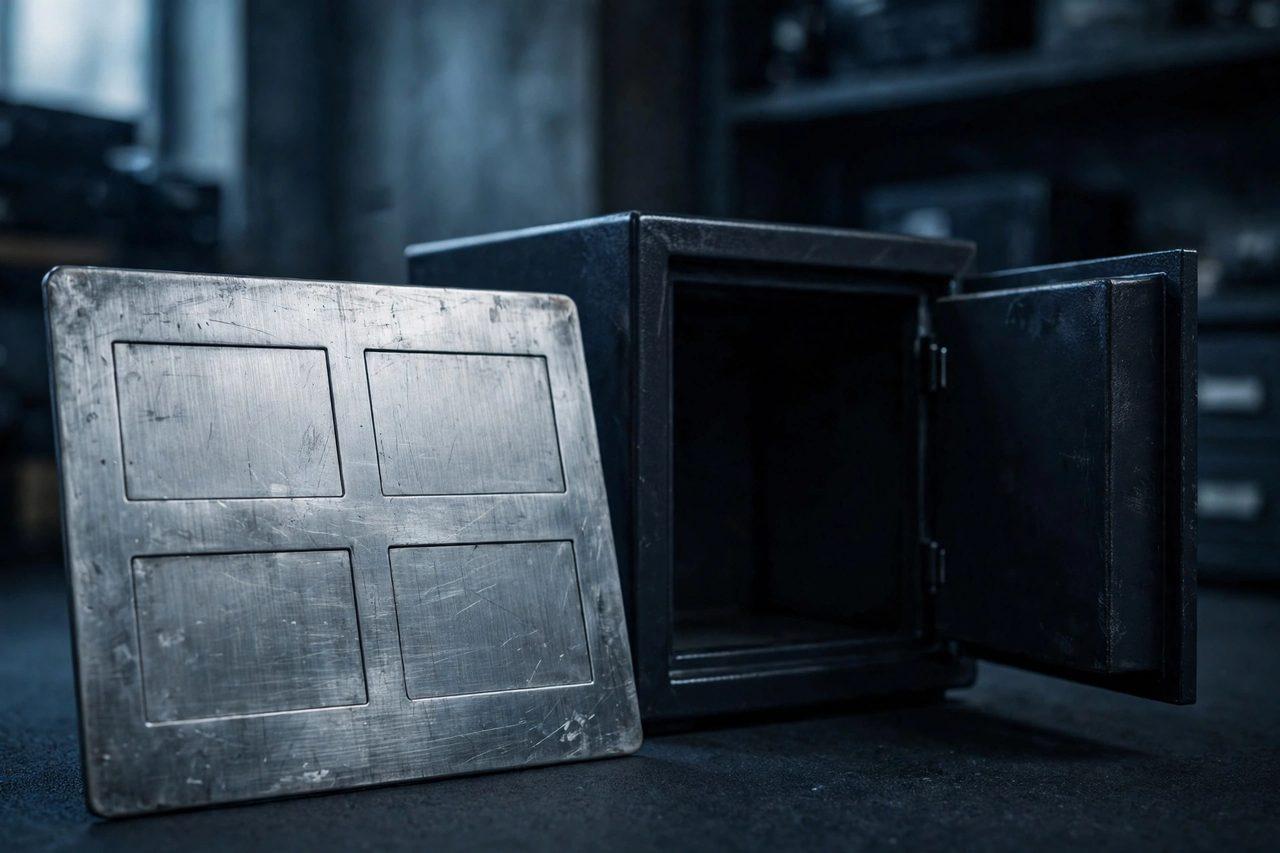
How to store a seed phrase safely
- Offline only: write the words on paper, or stamp them into a metal backup plate for fire and water resistance. Never store the phrase in a notes app, an email draft, a screenshot or a cloud drive.
- Never type it into a website: no legitimate wallet, exchange or support team will ever ask for your full seed phrase. Any page or person asking for it is trying to steal the wallet — this is the single most common way beginners lose funds, a theme the Zimbuck Market News group discusses regularly after scam waves.
- Check the words as you write: write them in order, numbered, and verify them against the wallet's confirmation screen before you send any meaningful amount to the wallet.
- Consider a second copy in a second place: one copy can be destroyed by a single fire or flood. Two copies in two secure locations protect against loss — but each extra copy is also one more thing to keep private.
- Test recovery before you need it: with a small amount at stake, practise restoring the wallet from the phrase on a spare device. A backup you have never tested is a hope, not a backup.
For a deeper walkthrough of the standard itself, the explainer at Crypto.com's learning hub on seed phrases covers storage options in more detail.
Frequently asked questions
Is a seed phrase the same as a private key? No. A private key controls one address. The seed phrase sits above it: every private key in the wallet is derived from the phrase, so the phrase restores — or gives away — all of them at once.
Can I recover my wallet if I lose one word? Often, yes. Because each word comes from a fixed 2,048-word list and the phrase carries a checksum, recovery tools can frequently work out a single missing or misspelled word. Losing several words is a very different problem, which is why careful backup matters.
Should I split my phrase between two locations? Splitting a phrase into halves stored apart is risky: losing either half can make recovery extremely difficult. Purpose-built split backups exist (such as Shamir-style backups), but for most users one complete phrase in one or two very secure places is the safer pattern.
Does my exchange account have a seed phrase? No. Coins held on an exchange are controlled by the exchange's keys, not yours. A seed phrase only exists for self-custody wallets — which is exactly the trade-off: full control, and full responsibility.
A seed phrase is a small list of words carrying an enormous amount of power, and treating it that way — offline, private, tested — is the foundation every other crypto skill builds on. For more beginner guides and daily market coverage, join the conversation at zimbuck.com.
This article is market education and general information only, not financial advice.