


What Is the Bitcoin Halving? How the Four-Year Supply Cut Works — and What Comes in April 2028

Every four years, Bitcoin quietly changes its own economics — no vote, no announcement from a company, no central bank meeting. The reward paid to miners for adding a block of transactions is cut in half. That event is called the Bitcoin halving, and it is the mechanism that makes Bitcoin's supply predictable: everyone knows today how many new bitcoins will be created in 2028, 2032 and beyond, because the schedule was written into the code from the start.
The one-sentence version. Bitcoin pays miners newly created bitcoin for securing the network.
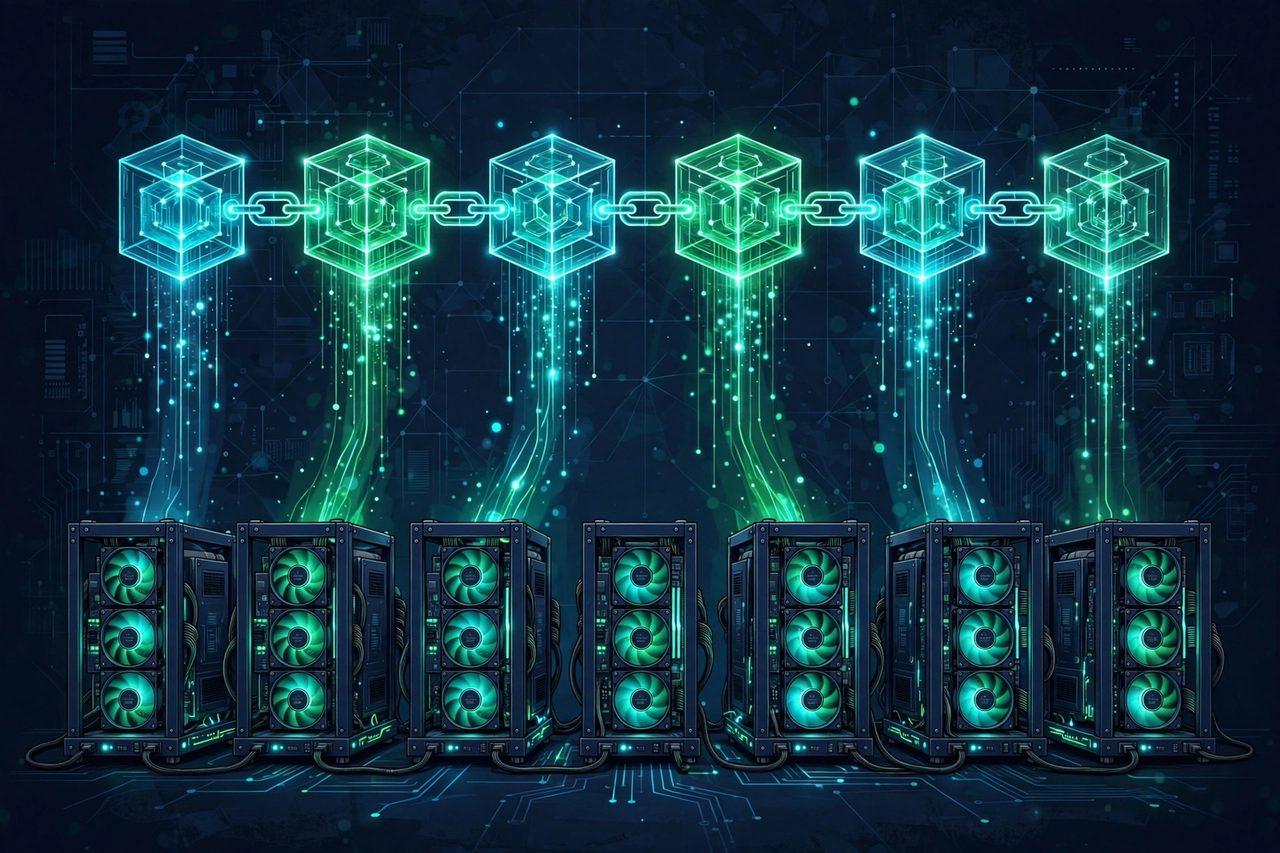 Every 210,000 blocks — roughly four years, since a block arrives about every ten minutes — that payment is halved. The first blocks in 2009 paid 50 BTC each. After four halvings, in 2012, 2016, 2020 and April 2024, the reward stands at 3.125 BTC per block, or roughly 450 new BTC per day. The next halving, expected around April 2028 at block 1,050,000, will cut it to 1.5625 BTC, or roughly 225 new BTC per day.Why would anyone design money this way? Ordinary currencies can be printed in unlimited amounts, which is why inflation erodes savings over time. Bitcoin does the opposite: its total supply is hard-capped at 21 million coins, and the halving controls the pace of getting there. Think of it as a tap that is turned down by half every four years. The water never stops entirely until around 2140, when the last fraction of a bitcoin is mined — but each turn of the tap makes new supply scarcer. Today, Bitcoin's annual issuance rate is under 1%, roughly half the rate at which new gold enters the market.What actually happens on halving day? Nothing dramatic, and that is the point. There is no ceremony and no calendar date fixed in advance: the network simply counts blocks, and when block 1,050,000 arrives, the reward changes automatically. Miners running the same software all enforce the new reward, because any block claiming the old reward would be rejected by the network. Estimates put the 2028 date in April, but the exact day shifts with how fast blocks are actually mined — if miners add computing power, blocks arrive slightly faster and the date
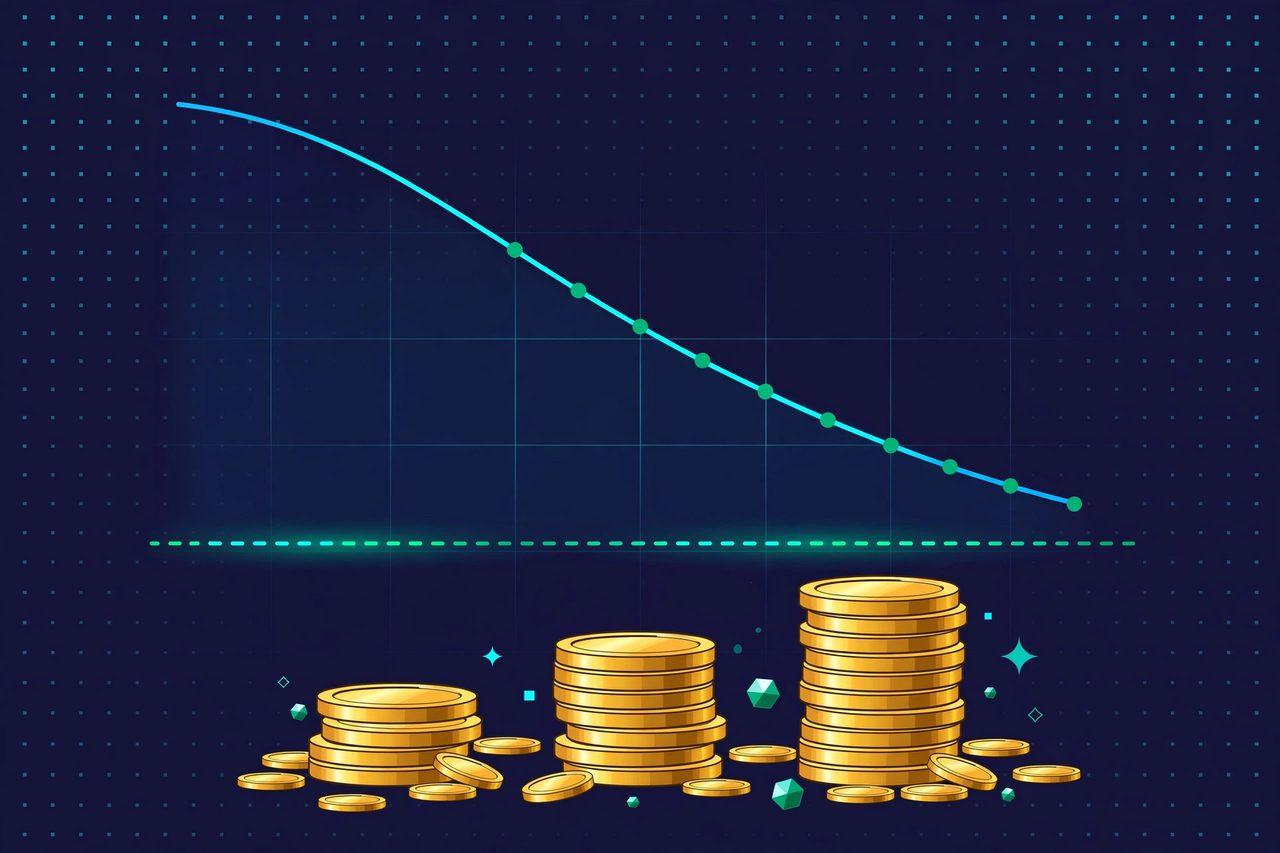 creeps earlier.What it means for miners. A halving instantly halves a miner's bitcoin income per block, while electricity and hardware costs stay the same. Efficient miners with cheap power survive; inefficient ones shut down or upgrade. That shakeout is normal and has happened four times. Over the longer run, miners are expected to earn more from transaction fees as the block subsidy fades — by 2140, fees will be their only income. For ordinary holders, the halving changes nothing about their balance: no coins are taken, no wallet is affected, and the 21 million cap does not move.Does the halving make the price go up? Honestly: not by itself.
Each of the four halvings so far was followed by a price rally within 12 to 18 months, but the size of those rallies has shrunk every cycle, and three or four data points are not proof of a rule. What the halving does is remove new supply on a fixed schedule. Whether prices rise depends on demand — real buying, not leverage — and on the wider economy: interest rates, liquidity, and investor appetite for risk. Anyone who tells you the 2028 halving guarantees a rally is selling you something, not teaching you something.What to watch before April 2028. Three things matter more than the countdown clock. First, miner health: if inefficient miners exit in an orderly way, the network keeps running smoothly; disorderly exits have historically been brief. Second, demand: whether spot buying — through ETFs, treasuries and long-term holders — is building before the supply cut, rather than arriving after it. Third, fees: as the subsidy shrinks, transaction fees must gradually carry more of miners' revenue, and fee-market behaviour in busy periods is the early test of that transition.For readers in Pakistan, India and Bangladesh, the practical lesson is simpler than the hype: the halving is why Bitcoin's supply schedule can be printed on a single page and trusted without trusting any institution. That predictability is the whole idea — and understanding it matters far more than timing the next cycle around it.FAQ. What is the Bitcoin halving? A scheduled cut, every 210,000 blocks (about four years), that halves the new bitcoin paid to miners per block. What is the current block reward? 3.125 BTC per block since the April 2024 halving — about 450 new BTC per day. When is the next halving? Expected around April 2028, at block 1,050,000, when the reward falls to 1.5625 BTC. The exact date depends on block speed, not a calendar. Does the halving change the 21 million cap? No. The cap is fixed; the halving only changes how fast the remaining coins are issued, ending around 2140. Does a halving guarantee higher prices? No. Past halvings were followed by rallies, but the sample is tiny, rallies have shrunk each cycle, and demand and liquidity matter more than the supply cut alone. Does the halving affect my bitcoin? No. Your balance is untouched; only miners' new-coin rewards change.Read more on Zimbuck: how to buy Bitcoin in Pakistan is explained here, https://zimbuck.com/blogs/659/How-to-Buy-Bitcoin-in-Pakistan-Exchanges-P2P-Payments-and , and how crypto ETFs work here, https://zimbuck.com/blogs/584/How-Crypto-ETFs-Work-What-Bitcoin-and-Ether-ETF-Flows — plus the Zimbuck News page at https://zimbuck.com/pages/zimbucknews and discussion at https://zimbuck.com/groups/zimbuckmarketnews . The halving explainer this guide is based on is here: https://www.bitcoin.com/get-started/bitcoin/technical/what-is-bitcoin-halving/ . This is market news and general information only, not financial advice. Join Zimbuck at https://zimbuck.com to follow more Bitcoin coverage.




