

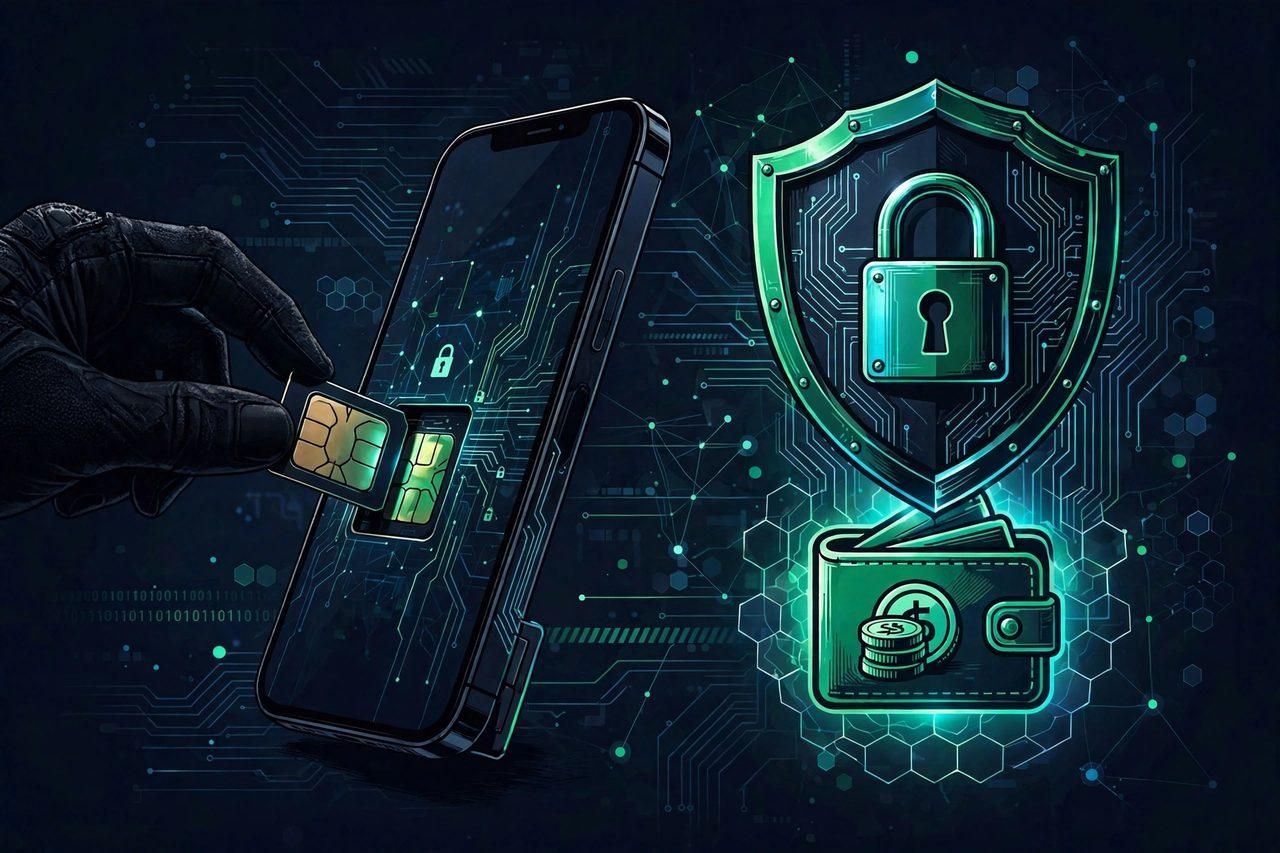
Your Phone Number Is Your Crypto's Weakest Link: How SIM-Swap Attacks Work and How to Stop One

The most dangerous crypto attack needs no malware, no cracked password and no exchange hack. It needs one phone call. In a SIM-swap attack, a criminal convinces your mobile carrier to move your phone number onto a SIM card they control. From that moment, every call and text meant for you — including the SMS codes that guard your email and exchange accounts — goes to the attacker instead. Your phone goes silent, and your accounts start opening.
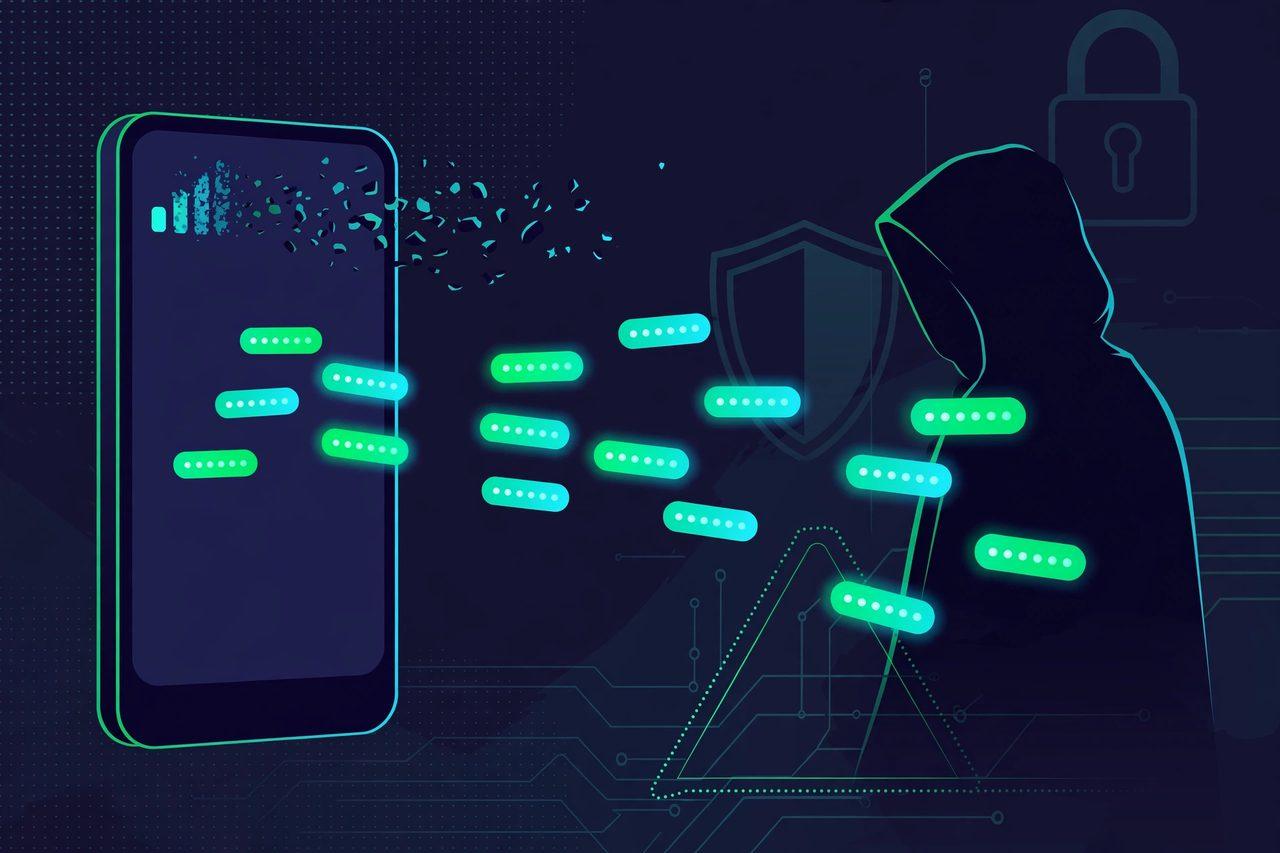 How the attack actually works. It starts with research, not hacking. Attackers gather personal details from data breaches, social media and phishing messages: your full name, date of birth, address, and anything suggesting you hold crypto. Then they call your carrier, impersonate you, and claim they lost their phone or need a replacement SIM. If the carrier's checks fail — and they have failed, repeatedly, at major carriers worldwide — the number is ported within minutes. One documented case saw a SIM swapper sentenced to 18 months in prison for stealing more than $20 million in cryptocurrency through a single phone-number takeover. Reported US SIM-swap losses reached $25.9 million in 2024 alone, according to FBI IC3 figures cited in 2026 protection guides.Why crypto holders are the prime target. A SIM swap does not break cryptography — it breaks the human process behind account recovery. If your exchange account, your email, and your two-factor authentication all trace back to the same phone number, one successful port hands the attacker all three at once. The attacker resets your email password with an SMS code, then resets your exchange password with the email, then withdraws funds — sometimes before you even realise your phone has lost signal. Crypto is targeted because transfers are fast and, in most cases, irreversible. The warning sign that matters most. A sudden, unexplained loss of cell signal — "No Service" on a phone that worked minutes ago, in a place with coverage — is the classic first symptom. If that happens, treat it as an emergency, not a network glitch: contact your carrier immediately from another phone, check your email and exchange accounts from a secure device, and freeze withdrawals if anything looks wrong. Speed matters: catching unauthorised activity within minutes rather than hours materially changes how much can be taken.The defence stack — in order of impact. First, set a carrier account PIN or passcode that is different from your phone unlock code, and ask your carrier for port protection, number lock or a port freeze — AT&T, Verizon and T-Mobile all offer versions of this free, under names like account lock, number lock and takeover protection. This is the single most effective free step, because it adds a second check before anyone can request a SIM change. Second, move two-factor authentication off SMS entirely: replace SMS codes with an authenticator app (Google Authenticator, Authy, Microsoft Authenticator, or open-source options like Aegis and Raivo), which generates codes locally on your phone with no connection to your SIM — a SIM-swapped attacker receives your
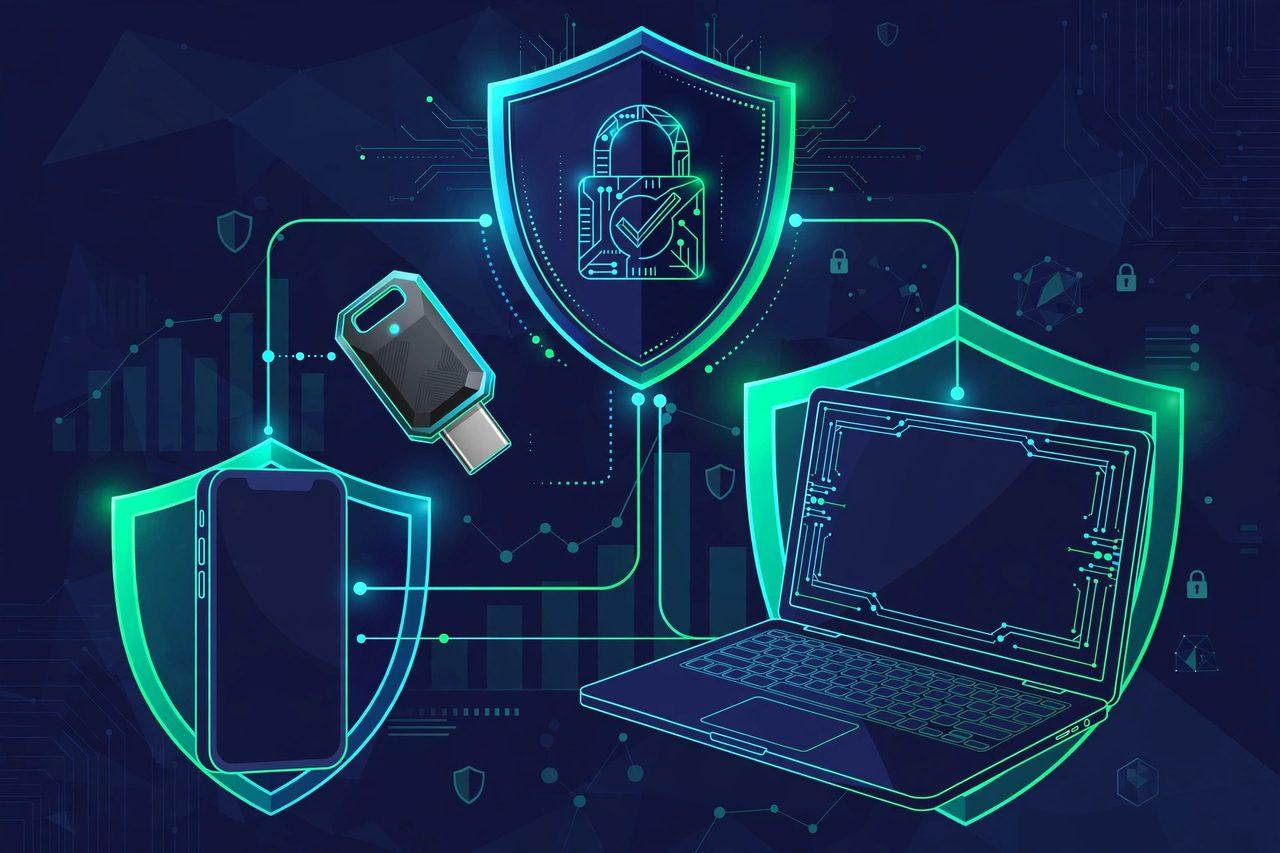 texts but cannot generate your codes. For high-value accounts, a hardware security key such as a YubiKey is stronger still: the attacker cannot tap a physical key they do not hold. Third, use a dedicated email address for exchanges only, protect it with an authenticator app or hardware key, remove SMS recovery from it, and store backup codes offline. Fourth, reduce what is publicly tied to your number: do not post it, do not use it as recovery where an app or key is available, and be careful what personal details you share online — they become the attacker's script for the carrier call.For readers in Pakistan, India and Bangladesh. The same principles apply whatever your carrier: call your provider today and ask what SIM-change protection and port-out PIN options exist on your account, and enable the strongest one available. If your bank or exchange offers only SMS codes in your country, treat that account as higher-risk: keep smaller balances there, move long-term holdings to self-custody, and check statements frequently. Where a method is restricted locally, the honest answer is to say so and plan around it rather than assume you are protected. If it has already happened. Contact your carrier to reclaim the number, contact your exchange to freeze the account, check your email for password-reset activity, place a fraud alert with the relevant authorities, and file reports — in the US, that means the FTC and the FBI's IC3. Then rebuild properly: new carrier PIN, authenticator app or hardware key everywhere, fresh passwords, and no SMS recovery left anywhere it can be removed.FAQ. What is a SIM-swap attack? A criminal convinces your mobile carrier to transfer your phone number to a SIM they control, so they receive your calls and SMS codes. Why is SMS two-factor authentication weak? Because it depends on the exact thing being hijacked: your phone number. Authenticator apps and hardware keys do not depend on your number at all. What is the single most effective free defence? A carrier account PIN plus port protection/number lock, so SIM changes cannot be approved remotely without it. What is the warning sign? Sudden, unexplained loss of cell signal — treat it as an emergency and contact your carrier from another phone immediately. Are authenticator apps enough on their own? They close the SMS hole, but combine them with a carrier PIN, a dedicated exchange email and, for high-value accounts, a hardware key. Does this only affect crypto holders? No — any account tied to your phone number, including email and banking, is exposed; crypto is targeted because transfers are fast and usually irreversible.Read more on Zimbuck: the Binance wallet-drain story shows what happens when wallet security fails, https://zimbuck.com/blogs/401/Binance-Hit-by-Suspected-2-5-Billion-Wallet-Drain-What , and how one signature emptied a hot wallet here, https://zimbuck.com/blogs/416/How-One-Signature-Emptied-a-Binance-Hot-Wallet-the-EIP — plus the Zimbuck News page at https://zimbuck.com/pages/zimbucknews and discussion at https://zimbuck.com/groups/zimbuckmarketnews . The SIM-swap protection guide this article is based on is here: https://tangem.com/en/blog/post/protect-crypto-sim-swap-attacks/ . This is market news and general information only, not financial advice. Join Zimbuck at https://zimbuck.com to follow more crypto security coverage.




