English
 Arabic
 French
 Spanish
 Portuguese
 Deutsch
 Turkish
 Dutch
Dutch
 Italiano
 Russian
 Romaian
 Portuguese (Brazil)
 Greek
Greek
Boost Your Grades with University of St Andrews Assignment Help
Literature |
2026-04-13 11:37:58
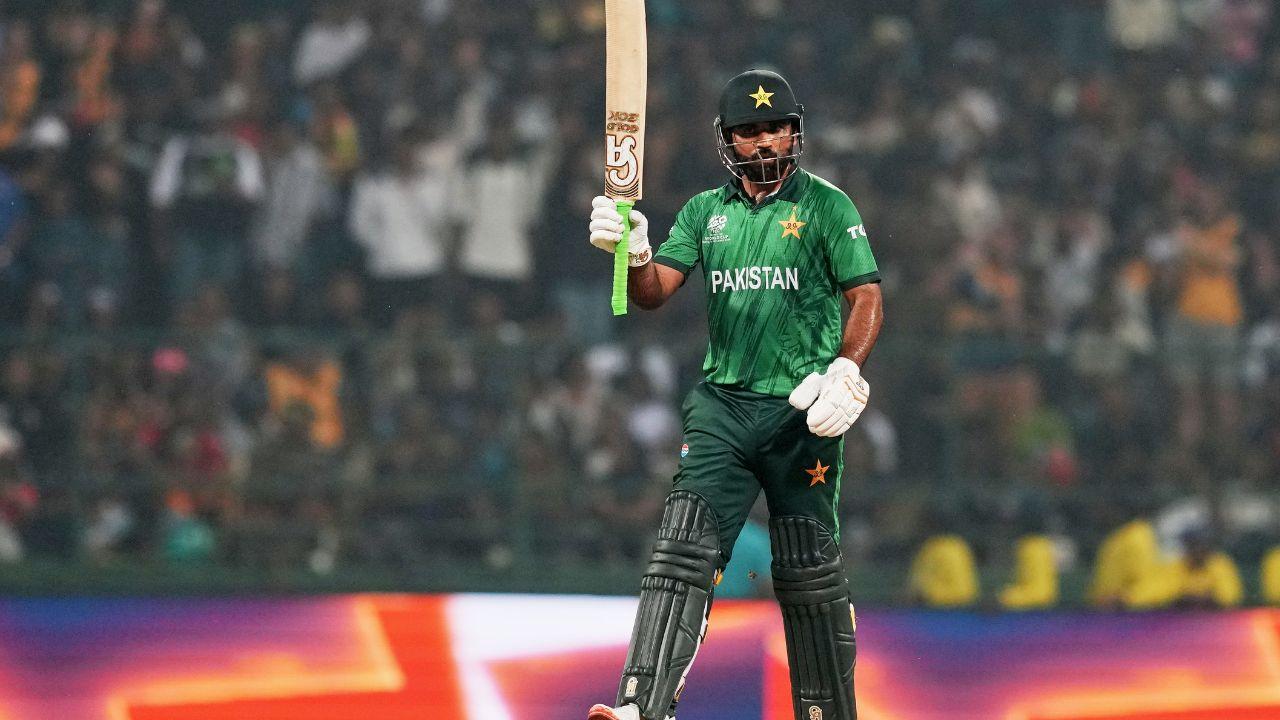
Cricket thrives on milestones, but every so often, a performance emerges that redefines what is possible in a tournament setting. That is exactly what happened when Sahibzada Farhan surpassed a long-standing record held by Virat Kohli in the ICC Men's T20 World Cup.
This was not just another statistical achievement. It was the breaking of a 12-year benchmark that many believed would stand untouched for much longer.
During the 2014 edition of the tournament, Kohli set a remarkable standard by scoring 319 runs in a single World Cup campaign. His consistency, control under pressure, and ability to anchor innings made that record a gold standard in T20 cricket.
Farhan has now overtaken that mark, registering more runs in a single edition than any batter in the tournament’s history. Doing so required not just one explosive innings, but sustained performance across multiple high-pressure matches.
Breaking such a record in modern T20 cricket — where teams are tactically sharper and bowling attacks more data-driven — makes the achievement even more significant.
Context matters.
Farhan’s runs did not come in low-pressure group matches against weaker opposition. They came during crucial fixtures where qualification scenarios, net run rate calculations, and knockout pressure were real factors. His innings against the Sri Lanka national cricket team was particularly decisive, both statistically and strategically.
He demonstrated three key qualities:
Consistency – Multiple high scores rather than a single outlier innings.
Adaptability – Adjusting tempo depending on pitch conditions and match situation.
Strike rotation discipline – Avoiding unnecessary dot-ball pressure, which is critical in T20 tournaments.
This was not blind aggression. It was structured, controlled accumulation paired with calculated boundary-hitting.
For the Pakistan national cricket team, this campaign has been transformative. Pakistan has often relied on collective bowling strength and middle-order stability. Farhan’s top-order dominance changes the equation entirely.
A tournament-leading opener provides:
Early scoreboard pressure
Reduced middle-order burden
Tactical flexibility in batting order
Psychological advantage over opponents
When your opener is consistently scoring 50+ in global tournaments, match strategy simplifies dramatically.
It is important to be precise here.
Kohli’s 2014 campaign came in a slightly different T20 ecosystem — lower average strike rates, less aggressive powerplay exploitation, and more conservative batting patterns overall. Farhan’s record, on the other hand, exists in a modern era defined by higher run rates and aggressive match-ups.
However, the counterargument is equally strong: bowling analytics, fielding standards, and strategic match-ups are far more advanced today. Sustaining form against data-backed plans targeting your weaknesses is harder now.
In short, both feats are elite. But records are records. And the new benchmark belongs to Farhan.
Individual milestones are celebrated, but their real impact lies in momentum. Tournament history shows that teams with dominant top-order batters often progress deeper into knockout rounds.
If Farhan maintains this rhythm, Pakistan’s title ambitions move from hopeful to realistic. The question now is not whether he can score — he has already proven that. The question is whether he can deliver when the tournament reaches its highest-pressure matches.