

Bitcoin Gets an App Ecosystem: eCash Launches the First BIP 300 Drivechain Mainnet

Bitcoin's base layer is famously hard to change — and a new network launched on October 29, 2026 decided not to try. eCash (ECX), a separate hard fork of Bitcoin, has become the first blockchain network to activate BIP 300 Drivechain technology, developed by LayerTwo Labs, with its mainnet going live just before the 18th anniversary of the Bitcoin whitepaper. Instead of changing Bitcoin's protocol, Drivechains let developers build specialised sidechains — independent blockchains with their own rules — while assets move between the eCash mainchain and its sidechains. Five sidechains launched with the mainnet, with two more in development. If the idea works, it answers one of Bitcoin's oldest questions: how do you add new kinds of applications without touching the base layer at all?
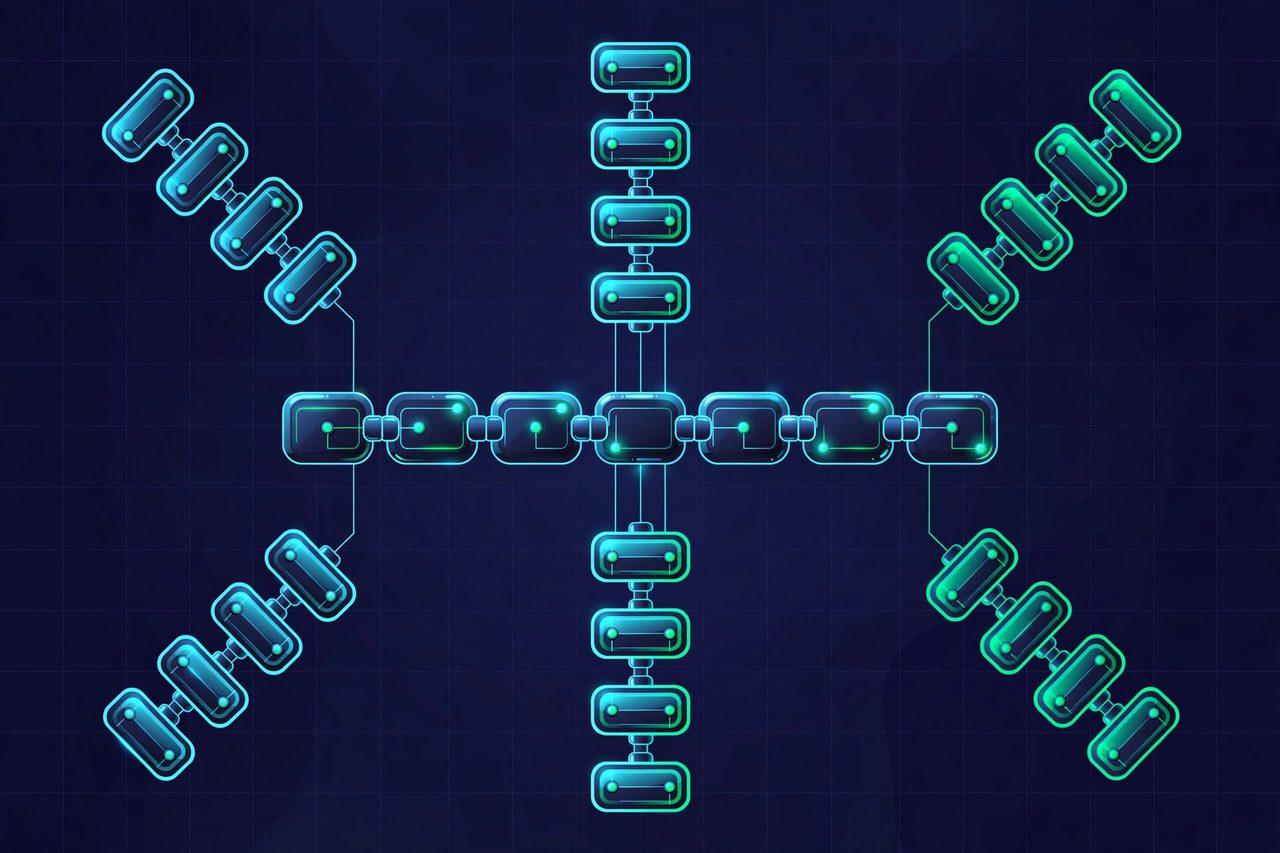
The launch matters because of what Drivechains actually are. BIP 300 and its companion BIP 301 have been developed over roughly a decade, and they describe a way for a mainchain to "drive" sidechains: miners and the mainchain coordinate to let assets move back and forth, while each sidechain runs its own logic. eCash's five launch sidechains show the range the team is aiming for: BitNames (naming/identity-style applications), BitAssets (digital assets), Thunder (faster payments), Truthcoin (prediction markets) and zSide (privacy-focused transactions). Two further networks are in active development — Photon, described as quantum-resistant, and CoinShift, a decentralised exchange. That is a deliberate showcase: one architecture, five very different jobs, from payments to prediction markets, all without requiring a change to Bitcoin's existing protocol.
Why sidechains, and why now
Sidechains are not a new idea — the concept of a two-way peg between a mainchain and a sidechain is nearly as old as Bitcoin's scaling debate — but Drivechains take a specific approach to the security question. In the BIP 300 design, the mainchain's miners effectively vouch for sidechain withdrawals, which is what makes the peg possible without a trusted custodian holding the funds. Supporters argue this keeps the base layer simple and secure while letting experimentation happen elsewhere: if a sidechain fails, the mainchain survives. Critics of sidechain designs in general have long asked the same hard question — what happens if miners collude, or if a sidechain's own rules produce a bug? eCash is now a live test of that trade-off, and its answer will be written in real usage, not in a whitepaper. The timing is also telling: the launch lands in a week when tokenization is dominating blockchain headlines, from Bullish expanding stock tokenization to Solana, Aptos and Ethereum on November 3, to the DTCC and Canton Network work bringing trillions in eligible securities toward blockchain rails. The industry's centre of gravity is shifting from "one chain does everything" to specialised chains connected by bridges, pegs and shared settlement — and Drivechains are Bitcoin's version of that argument.
The honest context is that a mainnet launch is a starting line, not a verdict. eCash's sidechains launched with users able to access them immediately, according to the launch announcement, but the metrics that will decide whether Drivechains matter — how many developers build, how much value moves across the peg, whether the five sidechains attract distinct users or just the same early adopters — do not exist yet. Bitcoin itself traded around $76,700–$77,900 on November 4 after dipping to about $75,740 overnight on US midterm results, a reminder that the market currently prices macro and ETF flows far more than protocol experiments: US spot Bitcoin ETFs lost more than $1 billion across two sessions around the election. Protocol stories play out over years; price stories play out over hours. Both can be true at once. Follow blockchain coverage on the Zimbuck News page and in the Zimbuck Market News group. Join the conversation on Zimbuck to discuss whether Drivechains are Bitcoin's app layer — or another scaling idea waiting for its killer app.
FAQ
How far did this launch go? What is eCash (ECX)? A separate hard fork of Bitcoin that launched its mainnet on October 29, 2026, and is the first network to activate BIP 300 Drivechain technology from LayerTwo Labs.
What is a Drivechain? A sidechain architecture (BIP 300/301) that lets developers build independent blockchains with their own rules, with assets moving between the mainchain and sidechains, without changing Bitcoin's existing protocol.
Which sidechains launched first? BitNames, BitAssets, Thunder, Truthcoin and zSide — covering naming, digital assets, faster payments, prediction markets and privacy transactions. Photon (quantum-resistant) and CoinShift (decentralised exchange) are in development.
Who built it? LayerTwo Labs, led by CEO Paul Sztorc, creator of the Bitcoin Drivechains proposals.
Does this change Bitcoin itself? No — eCash is a separate hard fork, and the point of Drivechains is to add functionality without requiring changes to Bitcoin's protocol. Whether developers and users follow is still unproven.
This article is market news and general information only, not financial advice.




