

What Is a Pip in Forex? Pips, Pipettes and Lot Sizes Explained for Beginners

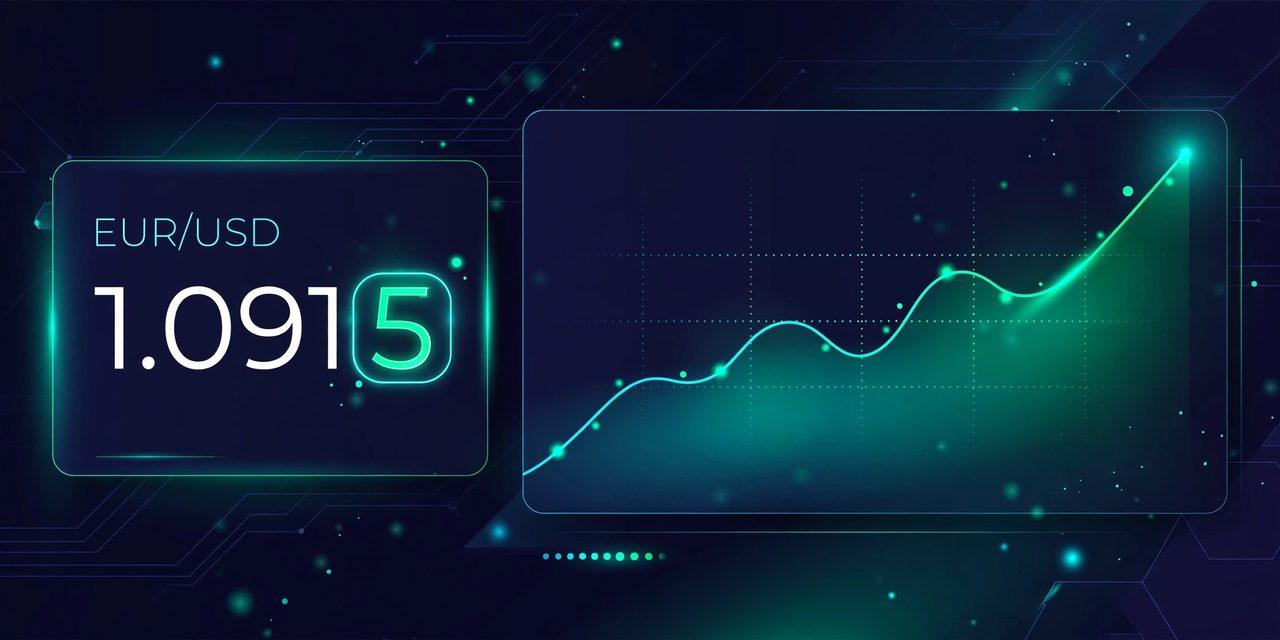
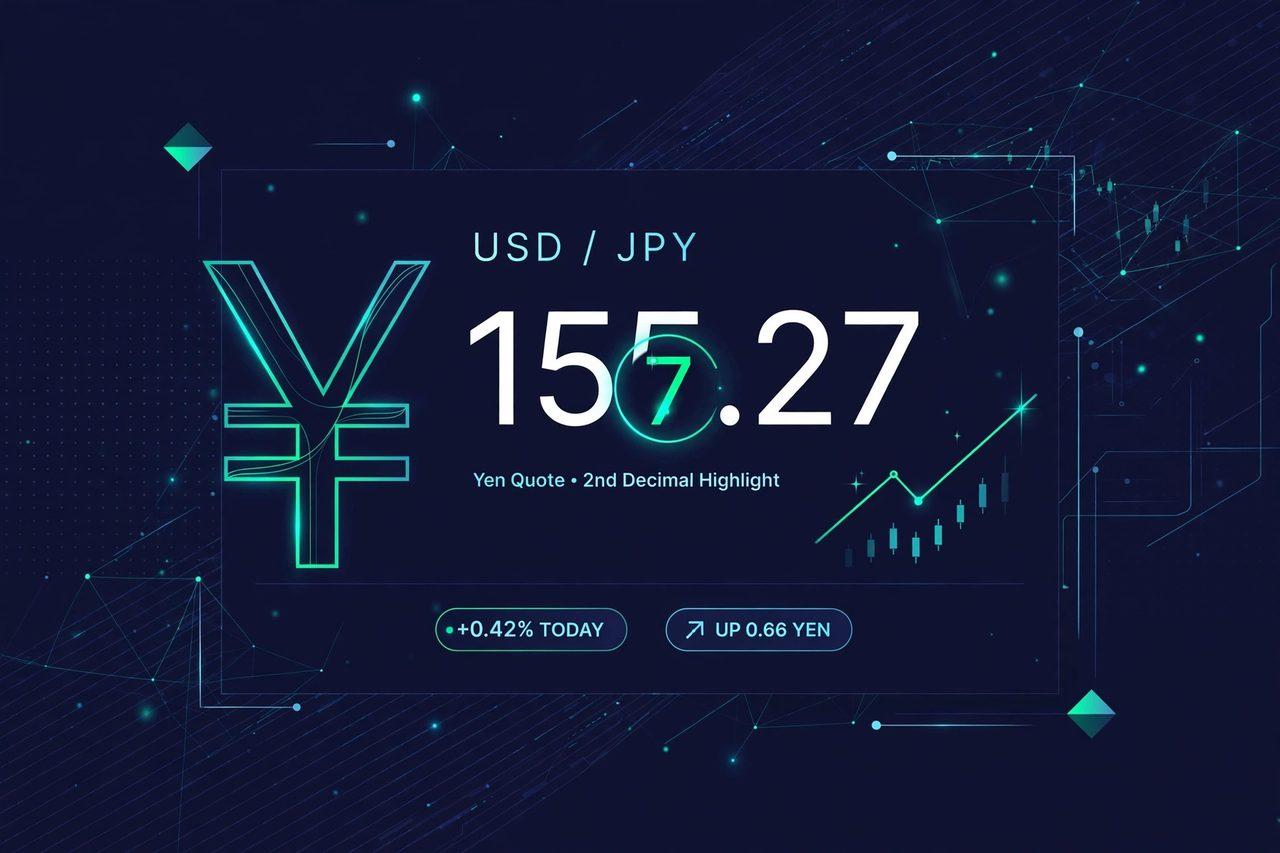
Open any forex platform and the first thing that looks wrong is the price itself: EUR/USD quoted as 1.12504, five digits after the decimal point, moving in tiny flickers that seem too small to matter. The unit that makes sense of those flickers is the pip — and misunderstanding it is the fastest way for a beginner to misjudge risk by a factor of ten or a hundred. A pip, short for "percentage in point", is the smallest standard unit of price movement in forex. For most currency pairs it equals 0.0001 — the fourth decimal place. If EUR/USD moves from 1.1000 to 1.1025, it has moved 25 pips. The extra fifth digit you see on most platforms is a pipette, one-tenth of a pip, quoted so traders can see finer movement. There is one major exception, and it trips up every beginner eventually: pairs quoted against the Japanese yen, such as USD/JPY, use a pip of 0.01 — the second decimal place — because the yen's lower value per unit means quotes run to fewer decimals. If USD/JPY moves from 150.20 to 150.50, that is 30 pips, not 3,000 — applying EUR/USD maths to a yen pair misjudges your risk by a factor of 100.
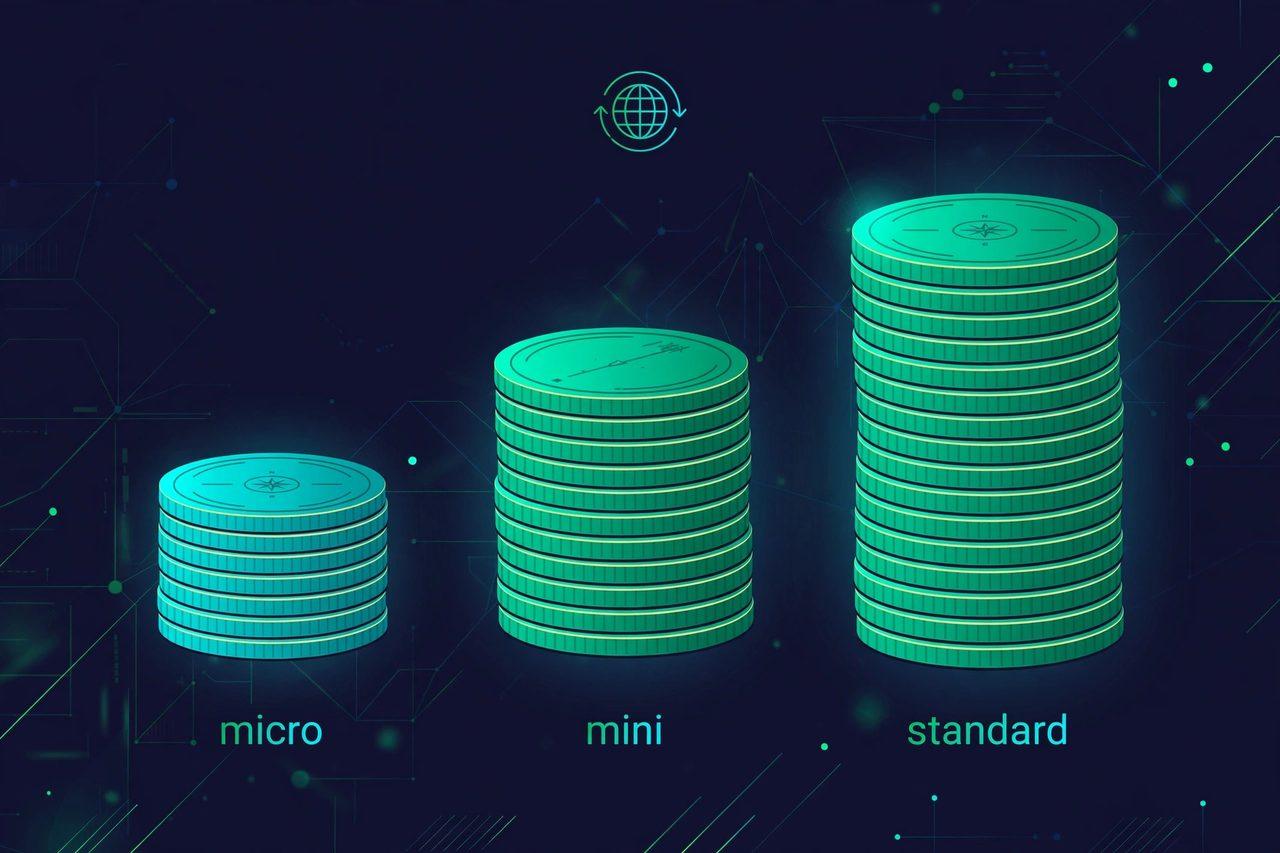
A pip on its own is just a distance; what turns it into money is your position size, measured in lots. A standard lot is 100,000 units of the base currency (the first currency in the pair). A mini lot is 10,000 units. A micro lot is 1,000 units. The value of one pip follows a simple formula: pip value = pip size × units traded, converted into your account currency. For EUR/USD with a dollar account, the maths is clean: one pip on a standard lot is $10, on a mini lot $1, on a micro lot $0.10. So a 20-pip move on a standard lot is worth $200; the same 20 pips on a micro lot is worth just $2. That is the whole secret of forex risk: the market's move in pips is identical for everyone, but the money it represents depends entirely on the lot size you chose before you entered.
Pip value in practice, and the three beginner mistakes
For pairs where the US dollar is the quote currency (EUR/USD, GBP/USD, AUD/USD) and your account is in dollars, pip value is fixed — $10 per pip per standard lot, whatever the exchange rate. For other pairs it moves with the rate. On USD/JPY, one pip on a standard lot is always ¥1,000 (0.01 × 100,000), but in dollars that is ¥1,000 divided by the current USD/JPY rate — at 150.50, about $6.64. On EUR/GBP, one pip on a standard lot is £10, converted to dollars at the current GBP/USD rate. The practical routine before any trade is therefore three steps: count the distance to your stop-loss in pips, multiply by your pip value to get the money at risk, and check that amount against what you can afford to lose — never the other way round. A trader who risks 20 pips on a standard lot is risking $200 on EUR/USD whether they meant to or not; a trader who wanted to risk $20 should have used a micro lot, or a 0.10 mini lot with a tighter stop.
The three mistakes that cost beginners most are all pip mistakes. First, ignoring the yen decimal: treating a USD/JPY move as if a pip were 0.0001 overstates or understates risk a hundredfold. Second, confusing pips with profit: "I made 50 pips" says nothing about money until you state the lot size — 50 pips on a micro lot is $5, on a standard lot $500. Third, forgetting the spread: the difference between the buy and sell price is quoted in pips too, and a 2-pip spread means every trade starts 2 pips underwater — on a 10-pip target, that is a fifth of your profit gone before the market even moves. Learn the pip, respect the lot size, and the forex quote board stops looking like noise and starts reading like a price tag. Follow forex coverage on the Zimbuck News page and in the Zimbuck Market News group. For background, see the EUR/USD beginners guide and the forex leverage and margin guide. TMGM explains what a pip is in forex. Join the conversation on Zimbuck to share the pip lesson that cost you the most — or saved you the most.
FAQ
What is a pip in forex? A pip ("percentage in point") is the smallest standard unit of price movement: 0.0001 for most pairs (the fourth decimal place), and 0.01 for Japanese yen pairs (the second decimal place).
What is a pipette? One-tenth of a pip — the fifth decimal place on standard pairs, the third on yen pairs — shown by most brokers for finer quoting.
What is a lot in forex? The standard unit of trade size: a standard lot is 100,000 units of the base currency, a mini lot 10,000 units, a micro lot 1,000 units.
How much is one pip worth? On EUR/USD with a dollar account: $10 per standard lot, $1 per mini lot, $0.10 per micro lot. On USD/JPY, one pip per standard lot is ¥1,000, converted to dollars at the current rate (about $6.64 at 150.50).
How do I calculate pips moved? Subtract entry from exit and divide by the pip size: for most pairs multiply the difference by 10,000; for yen pairs multiply by 100.
Why do yen pairs use a different pip? Because the yen's value per unit is much lower, yen pairs are quoted to two decimal places instead of four, so the smallest meaningful increment sits one decimal place earlier.
This article is market news and general information only, not financial advice.




