

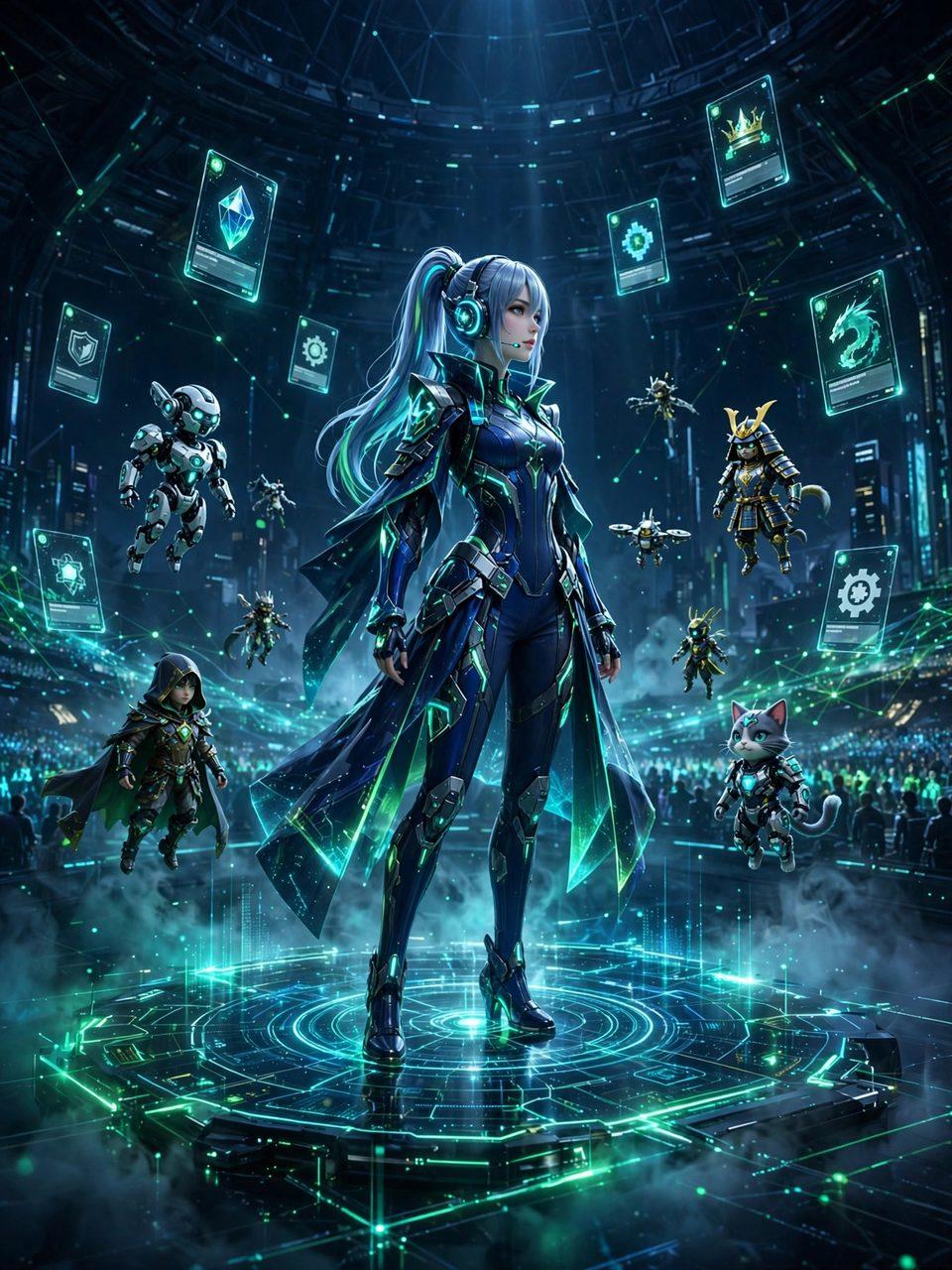
KuCoin Lists MEET48 as Web3 Gaming Tokens Find a New Stage: AI Idols, Fan Economies and the Metaverse

KuCoin has listed MEET48, setting IDOL/USDT trading to start on November 3, 2026, in a listing that captures where Web3 gaming is heading next: not another generic metaverse coin, but a token built around AI-created fan content, idol fandom, Web3 games and metaverse activities. The project links those four pieces into one economy — fans engage with AI-generated idol content, that engagement lives inside games and virtual worlds, and the IDOL token is the unit that ties fandom to ownership. It is a small listing in market terms, but it is a useful window into what the gaming-NFT space actually looks like in late 2026: less speculation about virtual land, more experiments in giving fans and players something they can own, trade and earn from.
The timing matters because the broader NFT market is sending two messages at once. Weekly NFT sales fell 44% to $37.69 million in the latest week despite growth in transactions, buyers and sellers — yet one chain bucked the trend, with Base posting a 31% gain — and in the prior week's window Ethereum retook the chain lead with $13.17 million while Polygon gained 12.43% to $9.40 million. In other words, fewer dollars but more participants: a market thinning at the top while the base of users widens. That is the backdrop against which gaming tokens like IDOL are launching — into a market that rewards actual usage more than it did in the 2021 play-to-earn boom, when Axie Infinity showed both the promise and the limits of paying players in tokens.
Why the 2026 gaming-NFT wave looks different
The 2026 resurgence has a different shape from 2021, and the differences explain why a listing like MEET48 is plausible now. First, the plumbing improved: Layer-2 networks and purpose-built NFT platforms cut transaction friction and costs, making frequent on-chain interactions feasible for players, with gasless minting and trading on platforms like ImmutableX. Second, the economics got more realistic: new tokenomics favour durable utility — cross-game composability, rentals, staking and revenue shares — instead of pure speculative minting, with creators commonly earning 5–20% of secondary sale value as royalties. Third, studios changed the pitch: the winners bundled NFTs as optional, interoperable items rather than gating core gameplay, and marketplaces added royalty enforcement and liquidity tools. Gaming NFTs now command roughly 38% of on-chain transaction volume in 2026, led by Immutable and Mythos titles like Guild of Guardians and the DMarket marketplace. None of that guarantees IDOL succeeds — a listing is not an endorsement, and idol-fandom tokens carry their own risks around hype cycles and thin liquidity. But the infrastructure underneath this launch is genuinely more mature than the last cycle's. See the gaming-NFT resurgence explained for the full 2026 picture, and compare it with the game-NFT ownership guide on how to own in-game items and the weekly NFT sales fall of 44% to $37.69M that frames this listing. Follow NFT and gaming coverage on the Zimbuck News page and in the Zimbuck Market News group. Join the conversation on Zimbuck to say whether AI idols and fan tokens are the next real gaming economy — or just the 2021 playbook with better graphics.
FAQ
What is MEET48? A project linking AI-created fan content with idol fandom, Web3 games and metaverse activities, with the IDOL token tying fandom to ownership.
When did KuCoin list it? IDOL/USDT trading was set to start on November 3, 2026.
How is this different from 2021 play-to-earn? Layer-2 scaling and gasless minting cut costs, tokenomics now favour utility (rentals, staking, revenue shares) over pure mint speculation, and studios bundle NFTs as optional items rather than gating gameplay.
What does the wider NFT market look like? Weekly sales fell 44% to $37.69 million in the latest week despite more transactions, buyers and sellers; Base gained 31%; Ethereum led the prior week with $13.17 million.
How big are gaming NFTs now? Gaming NFTs command roughly 38% of on-chain transaction volume in 2026, led by Immutable/Mythos titles and DMarket.
What are typical creator royalties? Commonly 5–20% of secondary sale value, varying by project and marketplace enforcement.
Is a KuCoin listing an endorsement? No — a listing means the token meets the exchange's listing requirements and has market-making support; it is not a guarantee of value or longevity.
This article is market news and general information only, not financial advice.




