

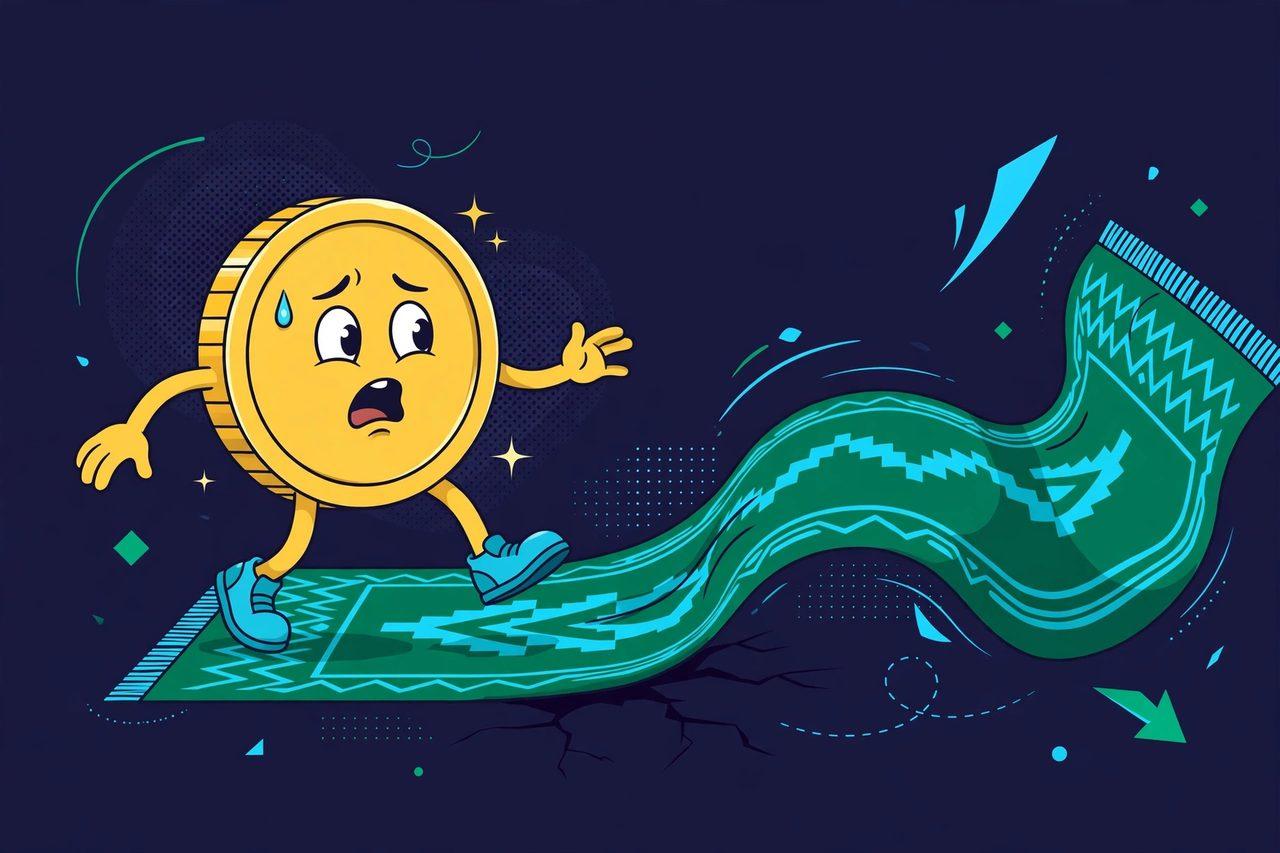

Memecoins look like jokes, and that is exactly why they are dangerous. A memecoin is a cryptocurrency whose value comes mainly from community attention, humour and social-media momentum rather than from a product, revenue or technical innovation. Dogecoin started as a parody in 2013 and became the template; since then, thousands of copycats have launched on cheap, fast chains, and a new one can go from an anonymous launch to a trending chart in hours. Some become genuine cultural phenomena with lasting communities. Many more are designed — from the first line of code — to take buyers' money and disappear. The difference between the two is rarely luck. It is usually visible in advance, if you know where to look. This guide explains what a memecoin is, how a rug pull works, and the checks to run before you put a single dollar in.
A rug pull is the classic memecoin scam, and its mechanics are simple. Developers launch a token, add it to a decentralised exchange with a liquidity pool, and hype it until buyers pile in and the price rises. Then they pull the liquidity out — or dump a huge hidden holding — and the price collapses to near zero in minutes, leaving late buyers holding tokens nobody will buy. Variants exist: the developers may keep the ability to mint unlimited new tokens, block selling for everyone but themselves (a honeypot), or quietly hold most of the supply across many wallets that look unrelated. The common thread is asymmetry — the creators can do something buyers cannot, and they use it at the moment of maximum hype.

The five-minute rug-pull checklist
Run these checks before buying any memecoin, and treat a failure on any one of them as a reason to walk away, not a detail to overlook.
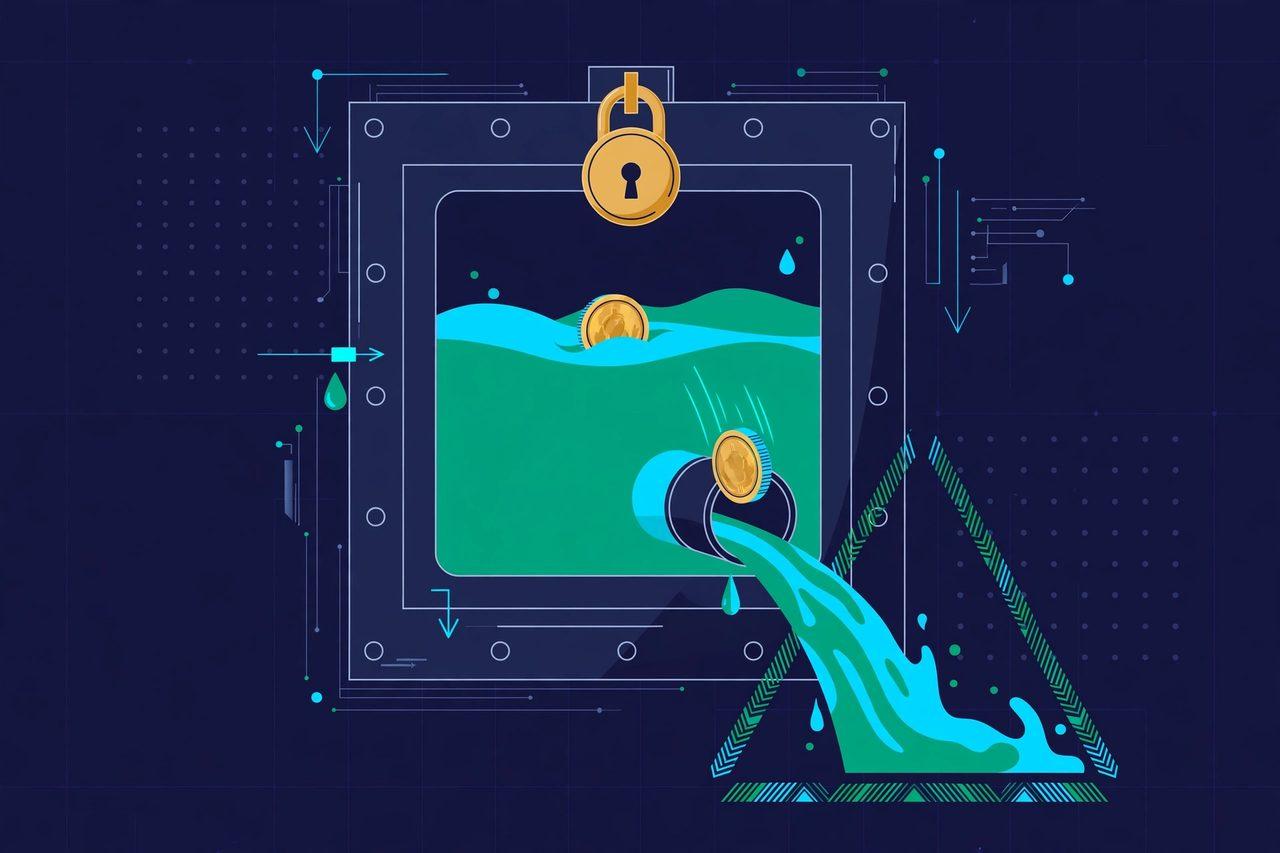
Liquidity: is it locked or burned? Check whether the liquidity-pool tokens are locked in a reputable locker for months, or burned (sent to a dead address). Unlocked liquidity means the team can withdraw it at any time. No lock, no buy.
Contract: can the team mint, pause or blacklist? Read the contract (or a reputable scanner's summary): mint functions, trading pauses, blacklist functions and high sell taxes are all levers that let creators trap buyers. Renounced ownership is not a guarantee, but unrenounced mint authority is a red flag.
Holders: who really owns it? Look at the top holders. If the top few wallets hold a large share of supply, or if many "different" wallets were all funded from the same source, one seller can crash the price. Developer wallets that claim to be burned but are not are an instant disqualifier.
Team: anonymous is normal, absent is not. Memecoin teams are often pseudonymous, and that alone is not a scam signal. But a team with no social presence, no prior work, a brand-new account and no way to be held accountable deserves far more scepticism than one with a track record.
Hype: who is being paid to shill it? Coordinated influencer blasts, paid trending spots and bot-filled comment sections are marketing spend, not adoption. If every post about the coin appeared in the same hour from accounts that never mentioned it before, you are the exit liquidity, not an early investor.
How memecoins actually get value — and how they lose it
Honest memecoins are worth understanding on their own terms, because dismissing the whole category misses why people buy them. A memecoin's value comes from attention and community: the more people who want to hold it, talk about it and build memes around it, the more demand there is for a fixed or slowly growing supply. That is real, but it is fragile — attention moves on, and unlike a company with revenue or a protocol with fees, a memecoin has no cash flow to catch it when attention fades. Price history shows the pattern again and again: explosive rises on viral moments, long slow bleeds when the joke stops being told, and sudden deaths when a whale or the team exits. The coins that survive longest tend to have the strongest communities, the fairest distributions and the least developer control — not the loudest launch week. For background on how token supply and burns shape a memecoin, see the related tokenomics guide on Zimbuck (https://zimbuck.com/blogs/1051/How-Memecoin-Tokenomics-Work-Supply-Burns-Taxes-and-Why-Market) and the related November 3 memecoin flows report (https://zimbuck.com/blogs/1022/Memecoins-Lead-Tuesday-s-Crypto-Flows-PEPE-Jumps-4-55).
That fragility sets the position-sizing rule. Never put money into a memecoin that you cannot afford to lose completely, and never let a memecoin become a large share of a portfolio because it doubled once. The traders who survive memecoin seasons are the ones who take profits into stable assets, set a maximum loss before buying, and treat every new launch as guilty until its contract, liquidity and holders prove otherwise. And if you were already rugged, beware the second scam: "recovery" services that promise to get your funds back for an upfront fee are themselves a well-documented fraud — the money from a rug pull is almost never recoverable, and anyone charging you to recover it is selling a second loss. Follow memecoin coverage on the Zimbuck News page (https://zimbuck.com/pages/zimbucknews) and in the Zimbuck Market News group (https://zimbuck.com/groups/zimbuckmarketnews), and see the Zimbuck News page again (https://zimbuck.com/pages/zimbucknews) for more safety guides. Join the conversation on Zimbuck (https://zimbuck.com) to share the red flag you check first — liquidity locks, contract powers, or holder concentration?
FAQ
What is a memecoin? A cryptocurrency whose value comes mainly from community attention, humour and social-media momentum rather than from a product, revenue or technical innovation.
What is a rug pull? A scam where developers hype a token, let buyers push the price up, then withdraw the liquidity or dump a hidden holding, collapsing the price and leaving buyers with near-worthless tokens.
What is the single most important check? Whether liquidity is locked or burned. Unlocked liquidity means the team can withdraw the pool at any time — that alone is reason not to buy.
What is a honeypot token? A token whose contract lets only certain wallets (usually the developers') sell, while ordinary buyers can buy but never sell. Contract scanners flag this pattern.
Can rugged funds be recovered? Almost never — and "recovery" services charging an upfront fee are themselves a common second scam. Treat any recovery offer that asks for payment first as fraud.
How much should I put into a memecoin? Only money you can afford to lose completely, as a small share of a portfolio, with a maximum loss decided before you buy.
This article is general information only, not financial advice.




