

How to Read a Crypto Exchange Order Book: Bids, Asks, Spread and Market Depth Explained

Every crypto trade you place goes through an order book, yet most beginners never look at one. The order book is simply the live list of all buy and sell orders waiting to be filled on an exchange. Learning to read it does not predict prices, but it does tell you how liquid a market is, how much a large order might move the price, and whether the price you see on the chart is backed by real demand or just a thin layer of orders. This guide explains bids, asks, the spread and market depth in plain language.
Bids, asks and the spread
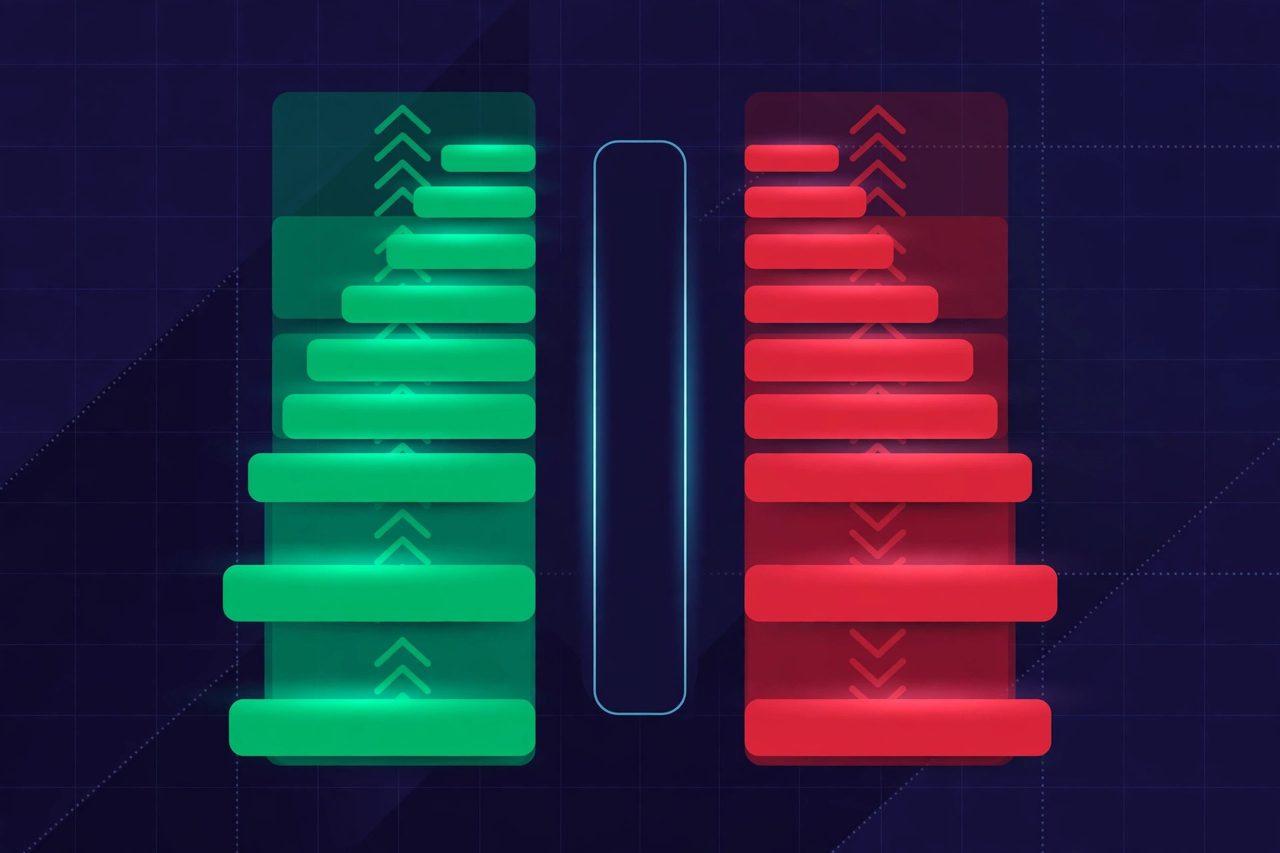
The order book has two sides. Bids are buy orders: traders willing to buy at a stated price. Asks, also called offers, are sell orders: traders willing to sell at a stated price. The highest bid and the lowest ask sit closest to the middle, and the gap between them is called the spread.
- The best bid is the highest price any buyer is currently offering.
- The best ask is the lowest price any seller is currently accepting.
- The spread is best ask minus best bid.
- A tight spread, for example a few cents on Bitcoin, signals a liquid market where buyers and sellers agree closely on value.
- A wide spread signals thin liquidity. You may pay noticeably more to buy instantly, or receive noticeably less to sell instantly, than the last traded price suggests.
Market orders take whatever price is available right now, walking through the book until filled. Limit orders wait in the book at the price you choose. That is why the book matters: a market order in a thin book can slip through several price levels, while a limit order lets you name your price and wait.
Market depth: how much sits behind the price
Depth is the total size of orders stacked at and near the current price. A deep book has large orders at many nearby price levels, so even a sizeable trade moves the price only a little. A shallow book has small orders and big gaps, so the same trade can jump the price several levels.
Watch for walls: unusually large orders sitting at one price. A buy wall below the price can act as support, because a seller must eat through it before pushing lower. A sell wall above can act as resistance. Walls are not guarantees — traders place and cancel orders constantly, and a wall can vanish seconds before price reaches it. Treat depth as a snapshot of intent, not a promise.
Three practical checks before you trade
- Check the spread first. If it is wide relative to the asset's price, consider a limit order instead of a market order.
- Check depth on both sides. Thin depth on the side you are trading into means higher slippage risk.
- Check whether the book matches the chart. A rising price with thinning bids underneath is weaker than a rising price with bids building below it.
A final caution: order books show only one exchange. Bitcoin may look deep on one platform and thin on another, and prices can differ slightly between them. Compare books across major exchanges before drawing conclusions about the whole market, and never trade on order-book signals alone. For the chart side of the same skill, see How to Read a Crypto Chart: Candlesticks, Volume and Trends Explained.

FAQ
What is an order book? The live list of unfilled buy (bid) and sell (ask) orders on an exchange, sorted by price.
What is the spread? The gap between the highest bid and the lowest ask. Tight spreads mean liquid markets; wide spreads mean thin ones.
What is market depth? How much buy and sell volume sits at prices near the current price. Deep books absorb large orders with little price movement.
Do buy and sell walls guarantee support or resistance? No. Walls show intent at a moment in time and can be cancelled, so use them as context, not certainty.
Is a market order or a limit order safer in a thin book? A limit order is usually safer, because it caps the price you accept; a market order can slip through empty price levels.
Follow exchange and market coverage on the Zimbuck News page and in the Zimbuck Market News group. Join the conversation on Zimbuck to share the first thing you check in an order book — the spread, the depth, or the walls.
This article is general information only, not financial advice.




