


Dow Surges 1,569 Points as Post-Midterm Rally Lifts S&P 500 to Its Best Day in Three Months

Wall Street roared back on November 4 as the midterm election results cleared away weeks of uncertainty. The Dow Jones Industrial Average surged 1,569.40 points, or 3%, to close at 53,356.12, the S&P 500 rose 1.6% (119.70 points) to 7,688.62 — its best day in three months — and the Nasdaq Composite climbed 1.4% (364.50 points) to 25,736.51. Oil plunged at the same time, with Brent crude falling 8.7% to $94.62 a barrel, after touching its lowest level in two months. The message from the market was blunt: uncertainty was the tax, and the election removed it.
The rally began at the open. Shortly after trading started, the Dow was already up about 1,178 points, or 2.3%, and the S&P 500 was up 1.2%. By the close, the gains had broadened across the market, with Democrats having won both chambers of Congress in the midterms — a result that, whatever its policy implications, ended the guessing about who would control the legislative agenda. The Zimbuck News page (https://zimbuck.com/pages/zimbucknews) covered the session live, and the Zimbuck Market News group (https://zimbuck.com/groups/zimbuckmarketnews) debated whether the move was relief, rotation, or the start of a longer run.
Why the market loved certainty
Markets dislike unknowns more than they dislike bad news, because bad news can be priced while unknowns cannot. A decisive election result — even one that brings policy changes investors might not love — lets traders model tax, spending and regulation with a known Congress rather than a coin flip. That is why stocks opened sharply higher: the first trade after an election is often a trade against uncertainty itself, not for any single policy.
The oil plunge amplified the move. Brent crude's 8.7% fall to $94.62 eased one of the year's biggest inflation worries, lowering input costs for transport, manufacturing and consumers at the same time. Cheaper energy plus a settled election is a powerful combination for risk appetite: it supports consumer spending, eases pressure on central banks, and gives companies room to plan.
How the day compares
- Dow: +1,569.40 points (+3%) to 53,356.12 — its best day since April 9, 2025, on a points and percentage basis.
- S&P 500: +1.6% to 7,688.62 — its best day in three months.
- Nasdaq: +1.4% to 25,736.51.
- Brent crude: −8.7% to $94.62 a barrel, its lowest in two months.
- Context: the previous session (November 3) had closed mixed — the S&P 500 at 7,568.92, the Nasdaq at 25,372.01 and the Dow at 51,786.72 — so November 4 reversed the Dow's slide and extended the other indices' gains in one session.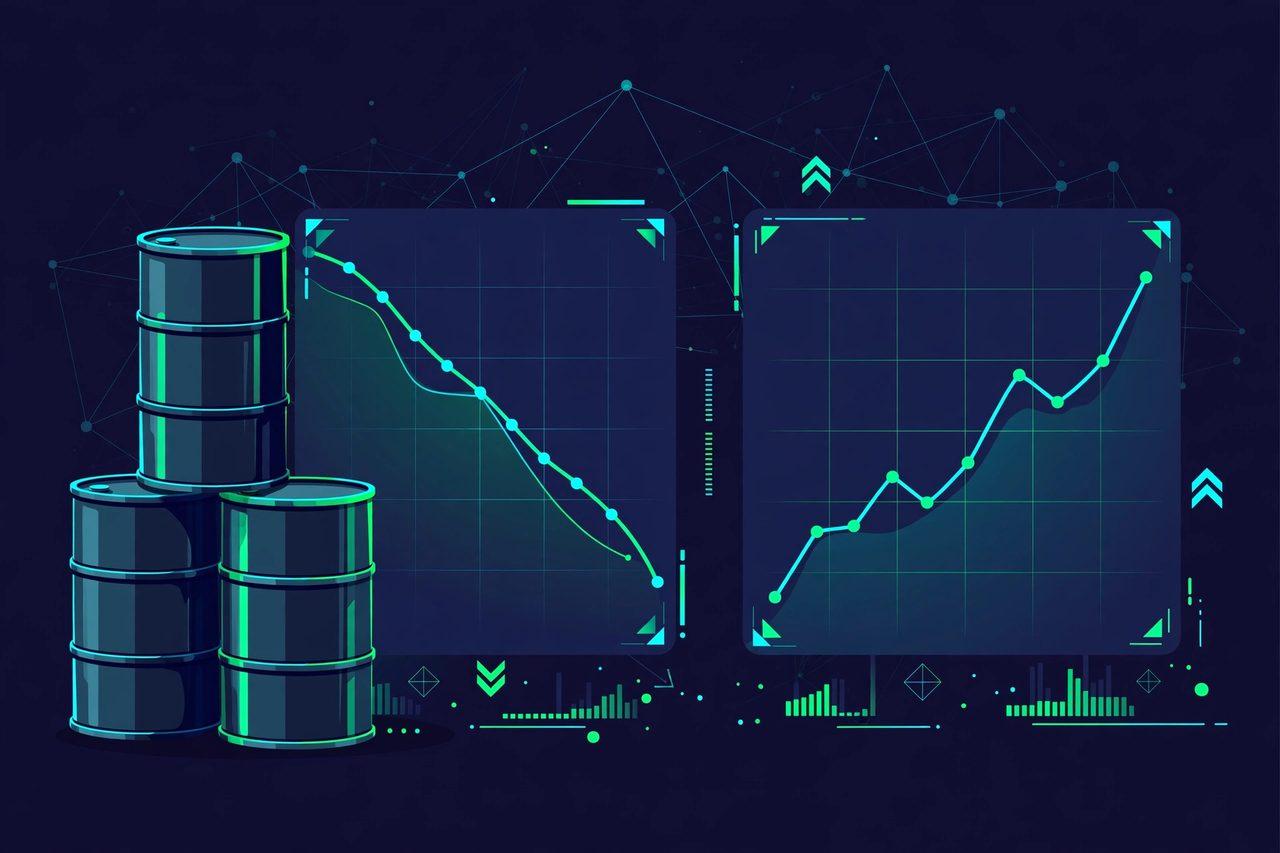
What could undo the rally
A one-day surge is not a trend, and several risks remain. First, the policy details still matter: what the new Congress actually passes on taxes, spending and regulation will move sectors unevenly, and today's broad rally could narrow fast. Second, oil's plunge, while helpful for inflation, can also signal weaker global demand — a warning as much as a relief. Third, earnings season is still delivering surprises in both directions, as Datadog's fall on a beat showed the same day. And fourth, bond yields and the dollar will decide whether this risk-on mood survives the week: a sharp rise in yields could pull money back out of stocks just as quickly.
FAQ
Why did stocks rise so much on one day?
Because a decisive election result removed a major uncertainty, and a sharp fall in oil prices eased inflation worries at the same time. Both forces pushed investors back into risk assets together.
Does a post-election rally usually last?
Not always. History shows election-year Novembers tend to be positive on average, but individual rallies fade when policy details disappoint or economic data weakens. One day is a signal, not a guarantee.
Why did oil falling help stocks?
Lower oil prices cut costs for businesses and consumers and reduce inflation pressure, which supports spending and gives central banks more room. That combination usually lifts equity valuations.
What should traders watch next?
The new Congress's first policy signals, the next inflation and jobs data, bond yields, and whether the Dow holds above its November 4 closing level in the sessions ahead.
November 4 was a relief rally with real fuel behind it: a settled election and cheaper oil. Whether it becomes a lasting trend depends on what comes next — policy, data and earnings, in that order. Join the conversation on Zimbuck — the finance social platform for traders and investors: https://zimbuck.com
Related reading on Zimbuck: November 3 indices-split story: https://zimbuck.com/blogs/1122/Indices-Split-After-Midterms-S-P-500-and-Nasdaq-Rise — earlier indices story: https://zimbuck.com/blogs/1059/Indices-Split-on-Election-Day-Nasdaq-Snaps-a-Three-Day
External source for the November 4 close figures: https://theretest.com/brief/2026-11-04-close
This article is market news and general information only, not financial advice.




