


Scroll Proposes a Privacy AI Network: Why the Layer-2 Pioneer Wants to Move Its SCR Token Back to Ethereum

Scroll, one of Ethereum's best-known Layer-2 networks, is proposing a radical change of direction. A proposal posted to the Scroll DAO forum on November 3, 2026, and reported on November 4, would turn the permissionless, general-purpose zkEVM network into a permissioned, application-specific privacy-AI network. As part of the same plan, the network's SCR token would migrate to Ethereum mainnet, rather than remaining the native token of a general-purpose chain that tries to do everything for everyone.
That is a striking pivot for a project that launched its mainnet in October 2023 and distributed its SCR token in October 2024. After 37 months as a general-purpose Layer-2, Scroll would no longer compete head-on with every other rollup for the same general activity. Instead, it would specialise: privacy-preserving artificial intelligence, built on zero-knowledge technology, with a clear product focus and a token that lives where the deepest liquidity and security already are — Ethereum itself .
What the proposal actually says
Under the proposal, Scroll would stop trying to be a chain for every use case. It would become a permissioned network built for a specific job: private AI. Permissioned does not mean closed to users, but it does mean the network's validators and participants would be known and approved, rather than anyone being able to join permissionlessly as before. The focus would shift from attracting general decentralised applications to building infrastructure where AI workloads can run with privacy guarantees that a general-purpose chain was never designed to provide.
The products named in the plan show how concrete that shift is. They include Compass and the Compass API, CENO and USX, alongside SCR itself. Together, they point to a stack for private computation, private data handling and a stable, privacy-oriented unit of account, rather than a marketplace of unrelated apps competing for the same block space. If the DAO approves, Scroll's future would be judged less on how many general apps it hosts and more on whether its privacy-AI stack actually gets used.
What happens to SCR?
Crucially for holders, the proposal does not create new SCR out of thin air. Supply would remain unchanged at 1 billion tokens, with no dilution. What changes is where SCR lives and what it does. Migrating SCR to Ethereum mainnet would put the token on the network with the largest pool of users, exchanges, wallets and DeFi protocols, and remove the need for holders to bridge or interact with a separate general-purpose chain simply to hold or use it.
Governance would also extend. The DAO's role would cover USX parameters, alongside SCR's existing governance role, and SCR would gain a staking role, with a possible role as validator collateral subject to slashing. In other words, SCR would move from being the token of a general chain to being a governance and staking asset tied to a specialised network and its privacy products. A DAO vote is required before any of this happens, and the Scroll Foundation would execute the plan if it passes, with the upgrade planned for the end of the year.
The $42.50 problem
One figure explains why Scroll's leadership is willing to consider such a drastic change. Data from growthepie put the chain's on-chain net profit at about $42.50, down roughly 92% year on year. For a network that once hoped to share in Ethereum's scaling boom, that is a sobering number. It suggests that being a general-purpose Layer-2, in a market crowded with similar rollups, is no longer enough to sustain a network on fees alone.
Scroll is not alone in reaching that conclusion. Lisk shut down on November 2, pivoting to enterprise finance, another reminder that general-purpose chains face brutal competition for users, developers and revenue. Specialisation, Scroll's argument goes, is not a retreat. It is a way to build something that a dozen other rollups cannot easily copy: verifiable, private AI computation.
What Devcon showed
The proposal also points to demonstrations at Devcon's Ethereum Execution Zone, or EEZ, where Scroll showed what its technology can already do. In one demo, a CoW Swap trade used mainnet liquidity with no bridge step. In another, Safe showed cross-network ownership changes. In a third, Falcon verified a post-quantum signature on a rollup that authorised a mainnet transfer, with a 91% gas saving. Those are not abstract promises. They are examples of how zero-knowledge proofs can let activity happen off Ethereum while still being anchored to Ethereum's security, cheaply and privately.
If Scroll becomes a privacy-AI network, those capabilities become the core product, not a side feature. AI agents and applications that need to prove what they did, without revealing the data they used, could run on infrastructure designed for exactly that job. That is a very different pitch from simply offering faster, cheaper transactions.
Why it matters for Ethereum
For Ethereum itself, the move is also revealing. The Layer-2 experiment was meant to scale Ethereum by moving activity off the main chain. Scroll's proposal suggests the next phase may be less about general scaling and more about specialised rollups that serve one purpose well, while Ethereum remains the settlement and token home. Moving SCR back to Ethereum mainnet fits that vision: the value and governance stay on Ethereum, even if the specialised computation happens elsewhere.
There are real trade-offs. A permissioned network gives up some of the openness that made Scroll attractive in the first place, and a DAO vote will test whether the community accepts that bargain. Holders must also watch how migration is handled in practice, including any deadlines, bridging steps or exchange support. But the proposal is at least honest about the alternative: staying general-purpose in a market where on-chain profi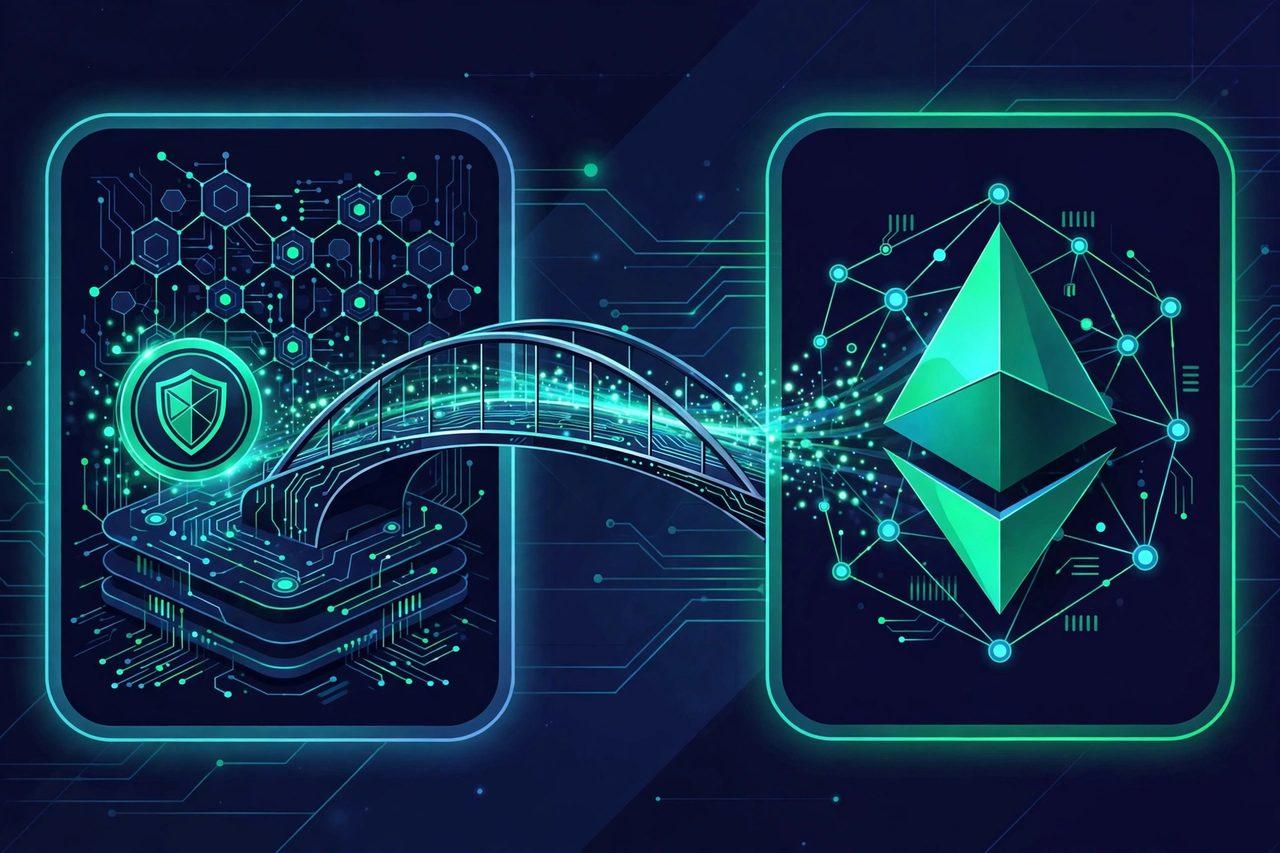 t has fallen to about $42.50.
Frequently Asked Questions
Is Scroll shutting down?
No. The proposal is to change Scroll's role, not to close it. It would become a permissioned, application-specific privacy-AI network, with SCR migrating to Ethereum mainnet and the upgrade planned for the end of the year if the DAO approves.
Will SCR supply change?
No. Supply would remain unchanged at 1 billion tokens, with no dilution. Governance would extend to USX parameters, and SCR would gain a staking role, with a possible validator-collateral role subject to slashing.
Does the DAO have to approve this?
Yes. A DAO vote is required, and the Scroll Foundation would execute the plan if it passes.
Why is Scroll considering this now?
After 37 months as a general-purpose Layer-2, with on-chain net profit of about $42.50 and down about 92% year on year, Scroll argues that specialising in privacy AI is a stronger path than competing with every other general-purpose rollup.
Related reading
Read the MAYA CHAIN Layer-2 story here: https://zimbuck.com/blogs/520/MAYA-CHAIN-Goes-Live-UK-Financial-s-New-Ethereum-Layer
Follow Zimbuck News here: https://zimbuck.com/pages/zimbucknews
Join the Zimbuck Market News group here: https://zimbuck.com/groups/zimbuckmarketnews
External source: https://www.kucoin.com/news/flash/scroll-proposes-network-transition-to-privacy-focused-ai-network-for-dao-vote
This article is for information only and is not financial advice. Join the conversation on Zimbuck: https://zimbuck.com




