


Aspadol for Severe Pain: Understanding Its Medical Role | Tapentadol Guide
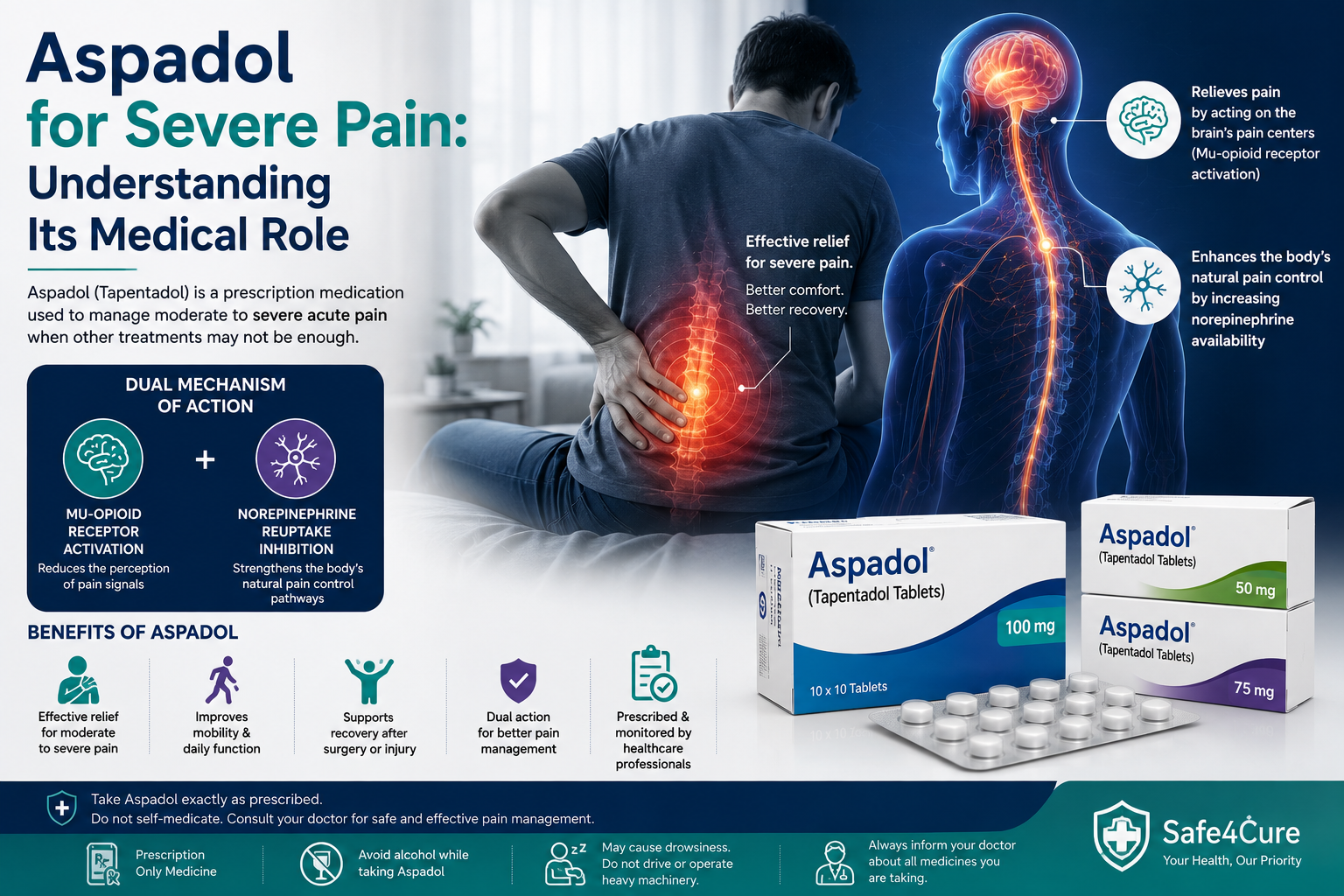
Aspadol for Severe Pain: Understanding Its Medical Role
Severe pain can significantly affect a person's ability to work, sleep, move comfortably, and participate in everyday activities. Whether pain develops after surgery, an injury, or another medical condition, effective pain management is often an important part of recovery. In some situations, healthcare providers prescribe Aspadol, which contains Tapentadol, for the treatment of moderate to severe acute pain.
Tapentadol is a prescription opioid analgesic with a unique dual mechanism of action. Unlike many traditional opioid medications, it not only activates mu-opioid receptors but also inhibits norepinephrine reuptake, helping reduce pain through two complementary pathways. This article explains the medical role of Aspadol, how it works, when it may be prescribed, its potential benefits, safety precautions, and frequently asked questions.
Understanding Aspadol for Pain Relief
Aspadol is a prescription medication containing Tapentadol, a centrally acting opioid analgesic. It is intended for adults with moderate to severe pain when a healthcare professional determines that an opioid medication is appropriate.
Tapentadol is used because it combines opioid activity with norepinephrine reuptake inhibition, making it different from many conventional pain medicines.
Since Aspadol is a prescription medication, it should only be used under medical supervision and exactly as directed.
Understanding Severe Pain
Pain is the body's natural response to injury or illness. However, severe pain can interfere with physical function and quality of life.
Common situations associated with severe pain include:
- Recovery after surgery
- Bone fractures
- Orthopedic injuries
- Severe muscle injuries
- Certain nerve-related pain conditions
- Acute traumatic injuries
Healthcare providers evaluate the cause, intensity, and duration of pain before deciding on the most appropriate treatment.
How Aspadol Works
One of the defining characteristics of Tapentadol is its dual mechanism of action.
1. Mu-Opioid Receptor Activation
Tapentadol binds to mu-opioid receptors located in the brain and spinal cord. This reduces the transmission and perception of pain signals, helping decrease pain intensity.
2. Norepinephrine Reuptake Inhibition
Tapentadol also inhibits the reuptake of norepinephrine, a neurotransmitter involved in the body's natural pain-control pathways. Increasing norepinephrine availability strengthens descending inhibitory pathways that help reduce pain signaling.
Together, these two mechanisms contribute to Tapentadol's overall analgesic effect.
The Medical Role of Aspadol
Aspadol may be considered by healthcare professionals for patients experiencing moderate to severe acute pain when other treatment options are not sufficient or appropriate.
Its role in pain management includes:
- Providing relief from significant pain.
- Supporting recovery after surgery or injury.
- Helping improve comfort during rehabilitation.
- Assisting patients in resuming daily activities as pain becomes better controlled.
Treatment decisions are individualized and depend on the patient's medical history, current medications, and overall clinical condition.
Potential Benefits
When prescribed appropriately, Aspadol may offer several benefits.
Effective Pain Relief
Tapentadol can help reduce moderate to severe pain, allowing patients to perform everyday activities more comfortably.
Improved Mobility
By reducing pain, patients may find it easier to walk, move, and participate in rehabilitation or physical therapy.
Dual-Action Pain Control
Its combined mechanisms target pain through different pathways, contributing to effective pain management.
Recovery Support
Adequate pain control can play an important role in recovery following surgery or injury by enabling participation in rehabilitation and daily self-care.
Who May Be Prescribed Aspadol?
A healthcare provider considers several factors before prescribing Aspadol, including:
- Pain severity
- Overall health
- Previous pain treatments
- Current medications
- Medical history
- Risk factors for opioid-related harms
Not every patient with pain requires an opioid medication, and treatment should always be individualized.
Possible Side Effects
Like all medications, Aspadol may cause side effects. Commonly reported effects include:
- Nausea
- Vomiting
- Dizziness
- Sleepiness
- Constipation
- Dry mouth
- Headache
Some side effects improve as the body adjusts to treatment. Patients should contact their healthcare provider if symptoms are severe, persistent, or concerning.
Seek immediate medical attention for symptoms such as severe breathing difficulty, extreme drowsiness, or signs of an allergic reaction.
Safety Precautions
To use Aspadol safely:
- Take only the prescribed dose.
- Do not take it more frequently than directed.
- Avoid alcohol during treatment.
- Do not combine it with other medications unless advised by your healthcare provider.
- Avoid driving or operating machinery if you feel drowsy or dizzy.
- Store the medication securely and out of reach of children.
Patients should never share prescription medications with others.
When to Discuss Aspadol with Your Healthcare Provider
Before starting treatment, inform your healthcare provider if you have:
- Liver disease
- Kidney disease
- Asthma or breathing disorders
- Sleep apnea
- A history of substance misuse
- Pregnancy or breastfeeding
- Allergies to medications
This information helps determine whether Aspadol is an appropriate option.
Aspadol as Part of a Comprehensive Pain Management Plan
Medication is often only one part of modern pain management. Healthcare providers may recommend combining medication with:
- Physical therapy
- Gradual exercise programs
- Adequate sleep
- Healthy nutrition
- Stress management
- Follow-up medical care
A comprehensive approach can support both pain relief and functional recovery.
Frequently Asked Questions
Is Aspadol an opioid?
Yes. Aspadol contains Tapentadol, an opioid analgesic with an additional mechanism of norepinephrine reuptake inhibition.
Can Aspadol be used after surgery?
A healthcare provider may prescribe Tapentadol after surgery for moderate to severe pain when it is considered clinically appropriate.
Does everyone experience side effects?
No. Individual responses vary. Some people experience mild side effects, while others may have none.
Can I stop taking Aspadol suddenly?
If you have been taking it regularly, consult your healthcare provider before stopping. Abrupt discontinuation may not be appropriate for all patients.
Is Aspadol suitable for chronic pain?
The suitability of Tapentadol depends on the specific condition, treatment goals, and clinical judgment of the prescribing healthcare provider.
Conclusion
Aspadol, containing Tapentadol, plays an important role in the management of moderate to severe acute pain when prescribed by a qualified healthcare professional. Its dual mechanism of action—mu-opioid receptor activation and norepinephrine reuptake inhibition—helps reduce pain through complementary pathways. While it can support recovery and improve comfort for appropriate patients, it should always be used exactly as prescribed because opioid medications carry important risks. Patients should work closely with their healthcare provider to ensure safe and effective treatment. For more educational information about Tapentadol and responsible pain management, visit Safe4Cure.
Categorie
Leggi tutto
The global transition toward electric vehicles (EVs), renewable energy storage, and sustainable manufacturing has dramatically increased the demand for advanced battery technologies. As battery production scales across industries, manufacturers, suppliers, recyclers, and regulators face growing pressure to ensure transparency, traceability, and compliance throughout the battery...

The global push toward ultra-fast, ultra-low-latency connectivity is revolutionizing how optical networks are deployed, measured, and maintained. High-density fiber architectures, multi-terabit backbones, and dense wavelength division multiplexing (DWDM) systems demand rigorous field verification and continuous diagnostic oversight. Test equipment plays a pivotal role across every stage of the...

You have had a big crash on the road in South Africa. You feel hurt, and you cannot work as you did before. It is a tough time for you and your family now. You need money to pay for the doctor and your home bills. A RAF Lawyer can help you get what the law says you must get. This pro handles your claim, so you do not have to worry. We will show you how this process works in our local courts....

Aggregate processing equipment is the specialized machinery used to produce construction aggregates—the crushed stone, sand, and gravel that form the literal foundation of modern civilization. Industry observations from Market Research Future indicate that the Crushing, Screening and Mineral Processing Equipment Market is significantly driven by the demand for aggregate processing....

Electricity powers nearly every aspect of modern living, from lighting and kitchen appliances to heating, cooling, entertainment systems, and smart home technology. As energy costs continue to rise, homeowners are looking for practical ways to reduce electricity consumption without sacrificing comfort or convenience. Improving your home's electrical efficiency is one of the smartest investments...