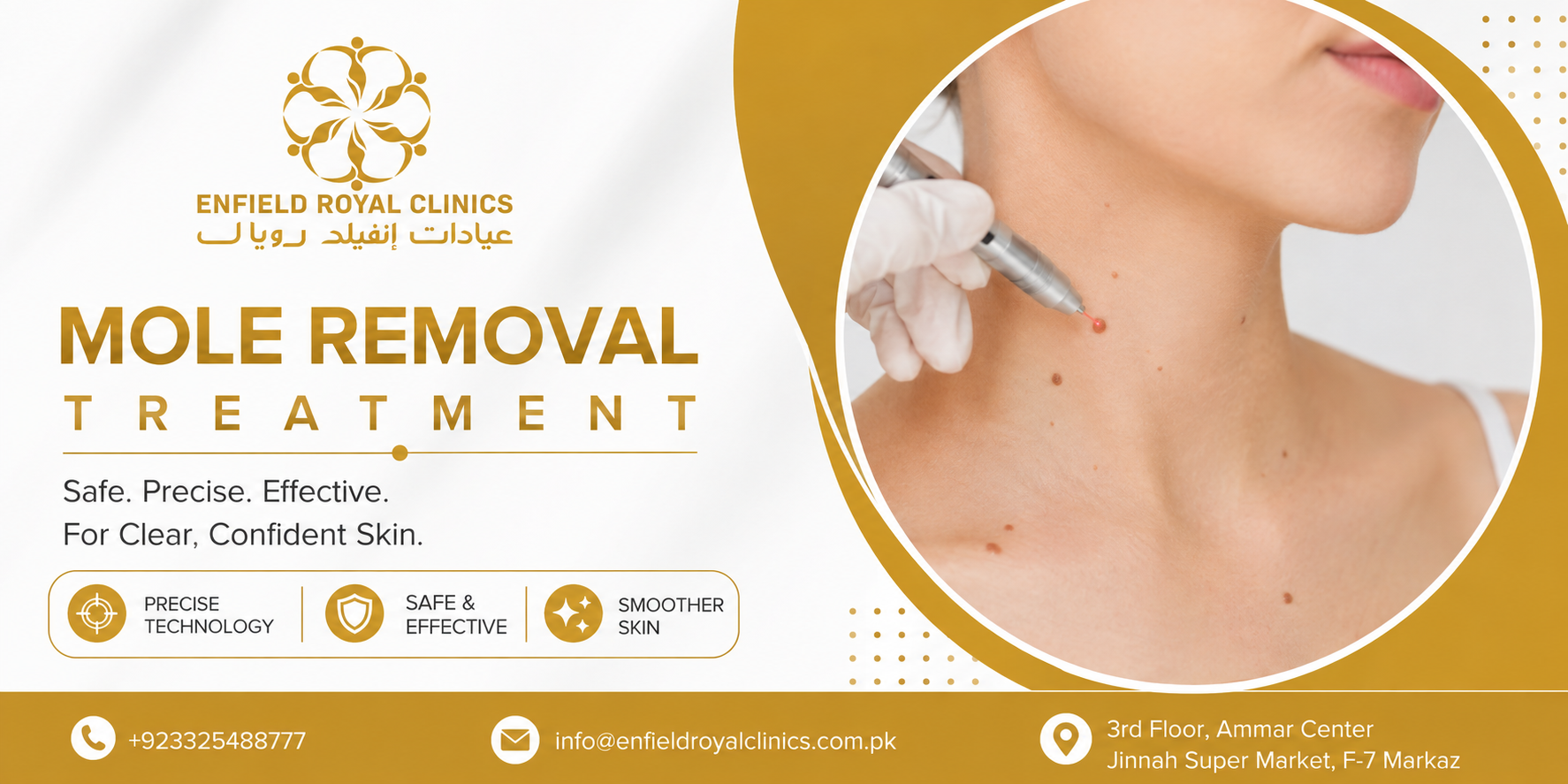
Moles are common skin growths that many people choose to remove for cosmetic reasons, discomfort, or medical evaluation. With advancements in dermatology, patients now have several options available, including laser procedures and surgical removal. Choosing the right method depends on the type of mole, its size, depth, location, and your desired outcome.
Understanding the differences between these two approaches can help you make an informed decision. Both laser and surgical Mole removal Treatment methods have their own advantages, and a dermatologist can recommend the most suitable option after examining your skin.
Understanding Laser Mole Removal
Laser mole removal is a minimally invasive procedure that uses focused laser energy to target pigment cells within selected moles. The laser breaks down the pigmented tissue while aiming to protect the surrounding skin.
This technique is often considered for smaller, superficial moles that do not require deeper removal or laboratory testing.
Benefits of Laser Removal
Laser treatment offers several advantages, including:
- Minimal skin damage
- Less discomfort during the procedure
- No surgical cuts in many cases
- Faster recovery for suitable moles
- Reduced downtime
Because laser treatment is less invasive, many patients prefer it when cosmetic appearance is their main concern.
Understanding Surgical Mole Removal
Surgical mole removal involves physically removing the mole from the skin using specialized techniques. It is commonly recommended for larger, deeper, or suspicious moles that need complete removal.
During surgical excision, the dermatologist removes the mole along with a small amount of surrounding tissue if required. The removed tissue may be sent for laboratory analysis to confirm its nature.
Benefits of Surgical Removal
Surgical removal provides several important benefits:
- Complete removal of deeper moles
- Suitable for larger growths
- Allows tissue examination when needed
- Lower chance of leaving remaining mole cells behind
For many medically necessary cases, surgical removal remains one of the most reliable options.
Which Moles Are Suitable for Laser Treatment?
Laser Mole removal Treatment is generally considered for specific types of moles.
It may be suitable for:
- Small flat moles
- Superficial pigmented moles
- Cosmetic concerns where medical testing is not required
However, laser treatment may not be the best option for every mole. A dermatologist must first determine whether the mole is appropriate for laser removal.
Which Moles Require Surgical Removal?
Surgical removal is often preferred for moles that require deeper treatment or further evaluation.
Doctors may recommend surgery for:
- Large moles
- Deep moles
- Changing moles
- Moles with unusual characteristics
- Moles requiring laboratory examination
This method allows the dermatologist to remove the entire mole and assess the tissue if necessary.
Comparing Procedure Comfort
Both procedures are designed to minimize discomfort.
Laser Treatment Experience
Patients undergoing laser removal may feel:
- Mild warmth
- Light tingling
- Small sensations during treatment
A numbing cream or local anesthesia may be used depending on the procedure and sensitivity of the area.
Surgical Treatment Experience
Surgical removal usually involves local anesthesia, which numbs the treatment area. Patients generally feel pressure or movement but should not experience significant pain during the procedure.
The comfort level depends on the size and complexity of the mole.
Comparing Recovery Time
Recovery varies depending on the treatment method and individual healing response.
Laser Recovery
Laser removal often involves a shorter recovery period. Patients may experience temporary redness or mild irritation that gradually improves.
Surgical Recovery
Surgical removal may require more healing time, especially if stitches are needed. Patients may need to follow wound care instructions carefully while the skin repairs itself.
Although recovery can take longer, surgical removal may provide more complete results for certain types of moles.
Risk of Scarring
Scarring is an important consideration for many patients.
Laser treatment may have a lower risk of noticeable scarring because it does not always involve cutting the skin. However, results depend on the mole type and individual healing ability.
Surgical removal can leave a scar, but dermatologists use careful techniques to minimize its appearance. Over time, many scars become less noticeable with proper care.
Effectiveness and Long-Term Results
Both methods can provide effective results when used for the right type of mole.
Laser removal may provide excellent cosmetic improvement for suitable superficial moles.
Surgical removal often provides more complete removal, particularly for deeper moles.
The best results come from selecting the treatment method that matches the characteristics of your mole.
How Doctors Choose the Right Option
A dermatologist considers several factors before recommending a removal method.
These include:
- Mole size
- Depth
- Color and appearance
- Location
- Skin type
- Medical history
- Cosmetic goals
A professional evaluation ensures that the chosen procedure is safe and appropriate.
Which Treatment Is Better?
There is no single best option for everyone. Laser and surgical removal both have important roles in dermatology.
Laser treatment may be preferred when:
- The mole is small and superficial
- Cosmetic improvement is the main goal
- Minimal downtime is desired
Surgical removal may be preferred when:
- The mole is large or deep
- Complete removal is needed
- Medical examination is required
The right choice depends on your individual skin condition and dermatologist's recommendation.
Final Thoughts
Both laser and surgical Mole removal Treatment options can effectively remove unwanted moles when performed by a qualified dermatologist. Laser removal offers a minimally invasive approach with quicker recovery for suitable cases, while surgical removal provides complete removal for deeper or medically concerning moles.
The safest way to choose between these treatments is through a professional skin evaluation. By understanding your mole type, treatment options, and expected results, you can select the approach that best supports healthy skin and your cosmetic goals.