


Can a Rugged Touch Screen Display Operate Reliably Under High Vibration?
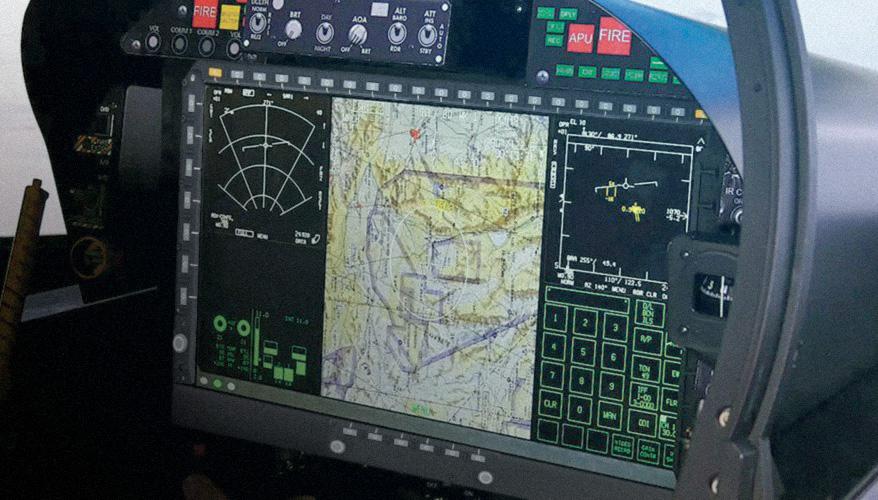
Touch interfaces have moved from consumer devices into flight decks, vehicle crew stations, and ground control shelters. Yet aircraft and armored platforms are punishing environments: rotor harmonics, gunfire, turbulence, and engine vibration all conspire against delicate electronics. The question procurement teams and system engineers rightly ask is whether a rugged touch screen display can deliver consistent, false-touch-free performance under sustained high vibration. The answer is yes, but only when vibration tolerance is engineered in from the first design review, not added as an afterthought.
How Vibration Attacks a Touch Display
Vibration threatens a touch display in several distinct ways. Mechanically, it fatigues solder joints, connectors, and mounting points, and it can cause layers of a laminated optical stack to separate over time. Optically, resonant movement between the LCD cell and the cover glass produces visible artifacts such as pooling or Newton rings. Functionally, vibration can shake a projected capacitive sensor enough to generate phantom touches, or make it difficult for a gloved operator to land a finger accurately on a small target. Each failure mode has a specific engineering countermeasure.
Design Countermeasures That Work
The foundation is optical bonding: filling the air gap between the touch sensor, cover glass, and display cell with a cured optical adhesive. A bonded stack behaves as a single rigid unit, eliminating internal resonance, improving contrast in sunlight, and preventing condensation. Around the stack, elastomeric isolation mounts and a stiff bezel tune the assembly's natural frequency away from the platform's dominant vibration bands. Ruggedized connectors with positive locking, strain-relieved harnesses, and conformally coated electronics address the fatigue problem at board level.
On the sensing side, controller firmware makes the difference between a consumer panel and a military one. Adaptive filtering algorithms distinguish the signal signature of a deliberate press from the noise of vibration, while touch thresholds, debounce timing, and palm rejection are tuned for gloved hands. Many cockpit implementations pair the touch surface with physical bezel keys, so that safety-critical commands always have a tactile path. This layered approach is central to modern Smart Cockpit Technology, where touch, physical controls, and display logic are engineered together rather than in isolation.
The Human Side of Vibration
Even a mechanically perfect display must account for the operator. Under sustained vibration, a pilot's or crew member's hand is moving too, so interface designers enlarge touch targets, add confirmation logic for irreversible actions, and provide hand-anchoring features on the bezel that steady the finger before it lands. These human factors measures work hand in hand with the hardware to keep input accuracy high when the whole platform is shaking.
Proving It: Qualification Testing
Claims mean little without evidence. Reputable manufacturers qualify displays to MIL-STD-810 Method 514 for random and sinusoidal vibration, including helicopter and gunfire profiles, and to Method 516 for shock. For civil aviation, RTCA DO-160 Section 8 defines vibration categories by aircraft zone. During testing, the display is not merely expected to survive: it must remain fully operational, with the touch interface monitored for false or missed touches while the unit is shaking on the table. Resonance surveys before and after endurance runs confirm that nothing has loosened internally.
45 Years of Rugged HMI Experience
Aeromaoz is a world-known supplier of rugged, mission-critical HMI solutions with more than 45 years of experience serving military and commercial aviation, armored vehicles, UAVs, flight simulators, and naval programs. Its bezels, displays, and illuminated control panels are engineered and tested to demanding environmental standards, and are trusted by Tier 1 system integrators and platform manufacturers around the world.
The Bottom Line
A touch screen is not inherently fragile; an unqualified touch screen is. With optical bonding, tuned mechanical mounting, vibration-aware firmware, and honest qualification testing, a rugged touch display will operate reliably through thousands of hours of rotor buzz and cross-country turbulence. For engineers evaluating suppliers, the practical question is not whether touch can survive vibration, but whether the vendor can show the test data proving that theirs does.
Categories
Read More
Corporate events require reliable technology to ensure everything runs smoothly. Whether it is a conference, seminar, exhibition, product launch, training session, or annual business meeting, having the right laptops is essential for presentations, registrations, demonstrations, and team collaboration. Choosing laptop rental for corporate events is a cost-effective solution that allows...
You want your wedding to be a day to remember for every guest. It is a time for joy and love. Picking a gift for your friends is a big task. You want something that they will truly love to keep. Many couples now choose wedding favours candles for their tables. These items look very pretty and smell amazing. They add a soft light to your wedding room. Your guests will feel very special when they...

The UAE has established itself as one of the world's leading logistics and trade hubs, connecting businesses to international markets through its modern infrastructure, strategic location, and advanced transportation network. Choosing a reliable logistics company UAE is essential for businesses that want to move goods quickly, reduce operational costs, and maintain an efficient supply chain....

Getting locked out of your vehicle is one of those situations that can happen to anyone, regardless of experience or routine. A simple distraction can leave your keys inside the car or cause you to misplace them at the worst possible moment. Choosing Lockout Assistance Calgary, AB, provides a dependable solution that helps drivers regain access to their vehicles quickly and safely....
A premium fragrance is more than just a finishing touch to your outfit—it is an extension of your personality. The right scent can enhance your confidence, create memorable first impressions, and complement your style for every occasion. Among today's most sought-after Middle Eastern fragrances, Afnan 9PM Night Out and Reef Aurum stand out for their exceptional quality, impressive...