

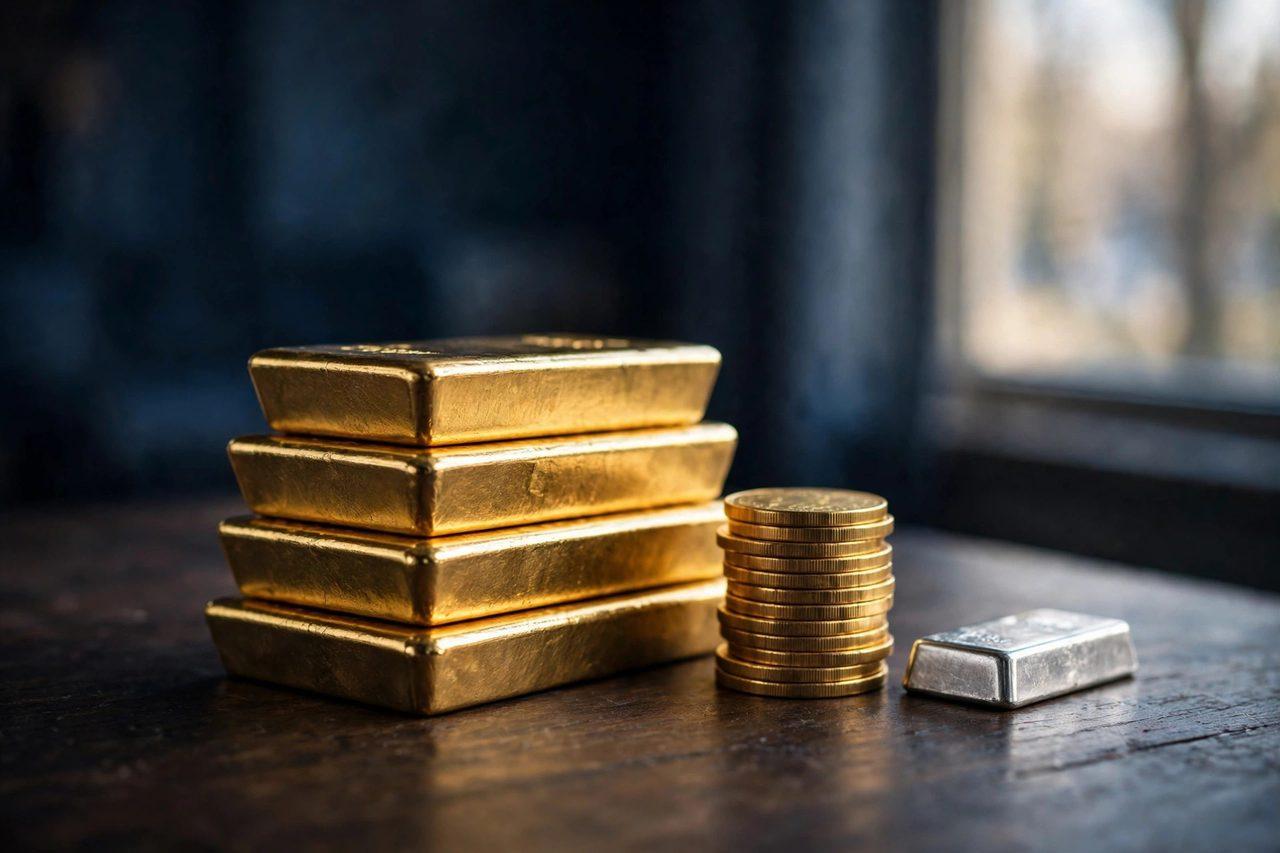
Silver's 5% Surge Leads a Metals-Complex Breakout — Friday's Payrolls Decide Whether Gold's $5,000 Call Holds

Silver ran faster than gold this week — and that is the tell. December silver futures jumped 5.08% on Wednesday to $52.28 an ounce, spot silver traded near $52.56 on Thursday, platinum gained 1.3% to $1,516.14 and palladium climbed 3% to $1,034.62. Gold’s $250 round trip is the headline, but the whole precious-metals complex moving together is the story — and Friday’s US jobs report is the next test of whether the breakout holds or reverses.
The week the whole metals complex moved
Start with the numbers. Spot gold jumped about 3.3% on Wednesday to around $4,060 an ounce — its biggest daily gain since August — and kept climbing on Thursday, gaining 1.4% to $4,117.69 after hitting a session high of $4,146.63, a level last seen on October 20. US gold futures for December delivery rose 1.3% to $4,127.40.
Gold had fallen to a one-year low of $3,869.85 last Friday, October 30. It is now more than 7% above that low — a round trip of over $250 in less than a week, with Wednesday’s 3.4% jump the sharpest single-day rise since August 19.
But gold was not the fastest mover. Silver’s 5% day, platinum’s push above $1,500 and palladium’s 3% climb show a macro driver, not a metal-specific one — and the macro driver this week has a name: oil. Our Zimbuck News report on the oil slide and gold rally covered the first leg of this move as it happened — see the Zimbuck News page.

Oil’s slide is the real story
While gold was jumping, Brent crude was collapsing. Brent fell about 9% on Wednesday to roughly $94.50 a barrel, its lowest since early September, and US crude dropped to around $88. Thursday brought a fourth straight daily decline in early trading — Brent down 1.03% to $93.65, WTI down 1.29% to $86.98 — before prices steadied and Brent later traded near $94.76–96.87 as the market weighed the same question from both sides.
The cause was diplomacy, not demand. Hopes of a diplomatic path on Iran — after the US midterm elections delivered Democratic gains in Congress — cut the risk premium that had been built into every barrel. Vice President JD Vance blamed the Iran war for the Republican Party’s election losses, and traders read the politics as de-escalation: less chance of further escalation in the US-Israeli war on Iran, more chance the Strait of Hormuz reopens and Middle Eastern supply recovers. In Dubai, the human side of the same move showed up in the jewellery market, where the 24K reference price held near AED 487.50 per gram.
Why silver is the leveraged version of the trade
Silver outperformed gold on the way up — and that is both the opportunity and the warning. Silver is the higher-beta version of the same trade: it moves faster when sentiment turns, and it falls faster on any reversal. Anyone chasing the move after a 5% day should know which side of that asymmetry they are on. Platinum and palladium, both industrial as well as precious, add a second signal: when the whole complex rises together, the driver is rates, the dollar and inflation expectations — not any single metal’s supply story.
The mechanics are the same for all four metals: a weaker dollar (the dollar index fell to 101.41) and lower yields (the 10-year Treasury yield eased toward 4.85%) cut the opportunity cost of holding assets that pay no yield. We covered the dollar’s slide and the Bank of England’s hike to 4.00% in full — see our report on the Bank of England hike.
What Citi argues — and where the thesis is already covered
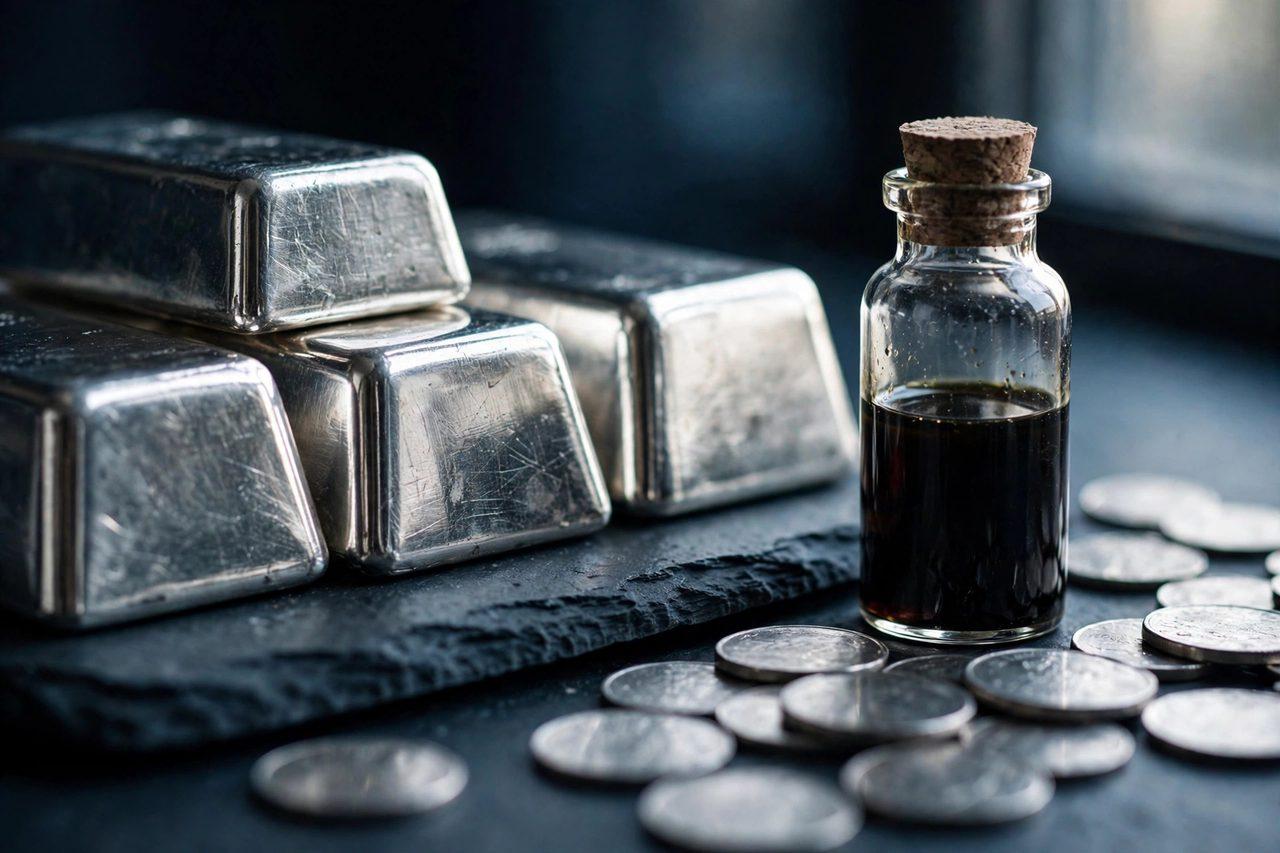
Citi’s commodities team, led by global head of commodities research Max Layton, argues that de-escalation, not escalation, is what bullion needs to rally: cheaper oil cools inflation, cooler inflation could push the Fed from hiking toward cutting, and lower rates lift gold. On that logic the bank targets $4,500 an ounce over 0–3 months and $5,000 over 6–12 months, assuming the Strait of Hormuz reopens and the conflict de-escalates by year-end. We covered the Citi thesis in depth in our earlier report — see Oil Slides for a Fourth Straight Day as Brent Falls Below $100. The full Kitco report on gold’s two-week high is at https://www.kitco.com/news/off-the-wire/2026-11-05/gold-hits-2-week-high-dollar-yields-oil-fall-after-us-midterms
There is an obvious tension in the trade, and honest coverage should name it: futures markets still price about an 81–83% chance of a December Fed hike, according to CME’s FedWatch tool. The market, in other words, still believes the Fed hikes in December while Citi argues cheaper oil will eventually force it to cut. Both cannot be right forever.
Friday’s jobs report is the next test
That tension is why Friday’s October jobs report — consensus 65,000 payrolls, unemployment 4.2% — is the next piece of evidence, and the first real crack in the hike pricing would come from a soft number. A much stronger-than-expected payrolls number would push yields back up, force the Fed to sound more hawkish, and break gold’s breakout above the 50-day moving average. The metal has already cleared the key $3,936 level; the next technical marker sits near $4,375.
The same test applies double to silver: a soft payrolls print supports the whole complex and silver’s leverage works in its favour; a hot print hits the fastest mover hardest. That is the trade to watch on Friday morning.
Gold versus oil: the trade in one picture
Gold: Wednesday move +3.3% to ~$4,060; Thursday +1.4% to $4,117.69; week’s range low $3,869.85 (Oct 30) to high $4,146.63; driver — weaker dollar, lower yields, Fed-cut hopes; Citi target $4,500 (0–3 months), $5,000 (6–12 months). Oil (Brent): Wednesday −9% to ~$94.50; Thursday 4th-day slide, then steadied ~$94.76–96.87; week’s range from ~$103 to below $95; driver — Iran diplomacy hopes, de-escalation premium unwind; lower if Hormuz reopens.
The inverse relationship is the point. Gold and oil usually rise together in a crisis. This week they moved in opposite directions because the crisis itself was repriced: less war risk means less oil risk — and, through the inflation channel, more gold upside. It is the rare week where peace is bullish for the safe haven.
What could break the rally
- Friday’s jobs report. A much stronger-than-expected payrolls number would push yields back up, force the Fed to sound more hawkish, and break gold’s breakout above the 50-day moving average.
- Diplomacy failing. If the Iran talks stall or escalation returns, Brent’s risk premium comes straight back — and with it, the inflation worries that have kept the Fed hawkish. Gold might still rise on fear, but the clean version of the rally would be damaged.
- Positioning. Gold is up $250 in a week. Fast, crowded rallies correct fast, and a metal that rose on a thesis can fall on a headline.
Why this matters beyond the metals
The gold-oil split is a window into the whole market’s argument right now. Stocks fell 4% on the Nasdaq on Thursday even as the labour data printed its best numbers in 57 years, because the AI story collided with midterm politics. Bonds rallied. The dollar fell. And in commodities, the market voted with its feet: oil down on peace, gold up on what peace does to inflation and interest rates. Every one of those moves is the same repricing, seen from a different desk.
For traders in Pakistan, India and Bangladesh watching from this side of the world, the practical read is simple: the next 48 hours belong to the US jobs report. If payrolls come in soft, Citi’s path to $4,500 gets its second test — and gold’s breakout starts to look like a trend rather than a week. If payrolls come in hot, the hike pricing wins the argument, and the metal gives some of this week back. Either way, the relationship to watch is not gold versus the dollar. It is gold versus oil.
FAQ
Why did silver jump 5% in a single day?
Silver is the higher-beta version of the gold trade. The same forces — a weaker dollar, lower yields and cheaper oil after the midterm-driven de-escalation hopes — lift silver faster than gold, and Wednesday’s 5.08% jump to $52.28 was the leveraged version of gold’s 3.3% rise.
What is Citi’s gold target?
Citi’s commodities team targets $4,500 an ounce over 0–3 months and $5,000 over 6–12 months, assuming the Strait of Hormuz reopens and the Iran conflict de-escalates by year-end.
Why would peace be good for gold?
Because cheaper oil cools inflation expectations, which could push the Fed from hiking toward cutting rates. Lower rates reduce the opportunity cost of holding gold, which pays no yield — so de-escalation can lift bullion even as it removes the usual fear premium.
Is silver a better play than gold right now?
Silver moved faster — up about 5% on Wednesday to $52.28 — but it also falls faster when sentiment turns. It is the higher-beta version of the same trade, not a different one.
What is the next catalyst?
Friday’s US nonfarm payrolls report (consensus 65,000, unemployment 4.2%). A soft number supports the Citi thesis; a strong one supports the December rate hike the market still prices at 81–83%.
Gold’s week is a reminder that the most important commodity trade is not always the one in the metal itself. Sometimes it is the barrel next door — and what the barrel says about inflation, the Fed, and the price of safety. Follow the Zimbuck News page for the jobs-report reaction and the next leg of the gold-oil trade, join the discussion in the Zimbuck Market News group, and keep your market radar on https://zimbuck.com — the finance social platform for traders and investors.
This article is market news and general information only — not financial advice. Do your own research before investing.




