

Nasdaq Falls Into Correction as Chip Selloff Erases the Post-Election Rally

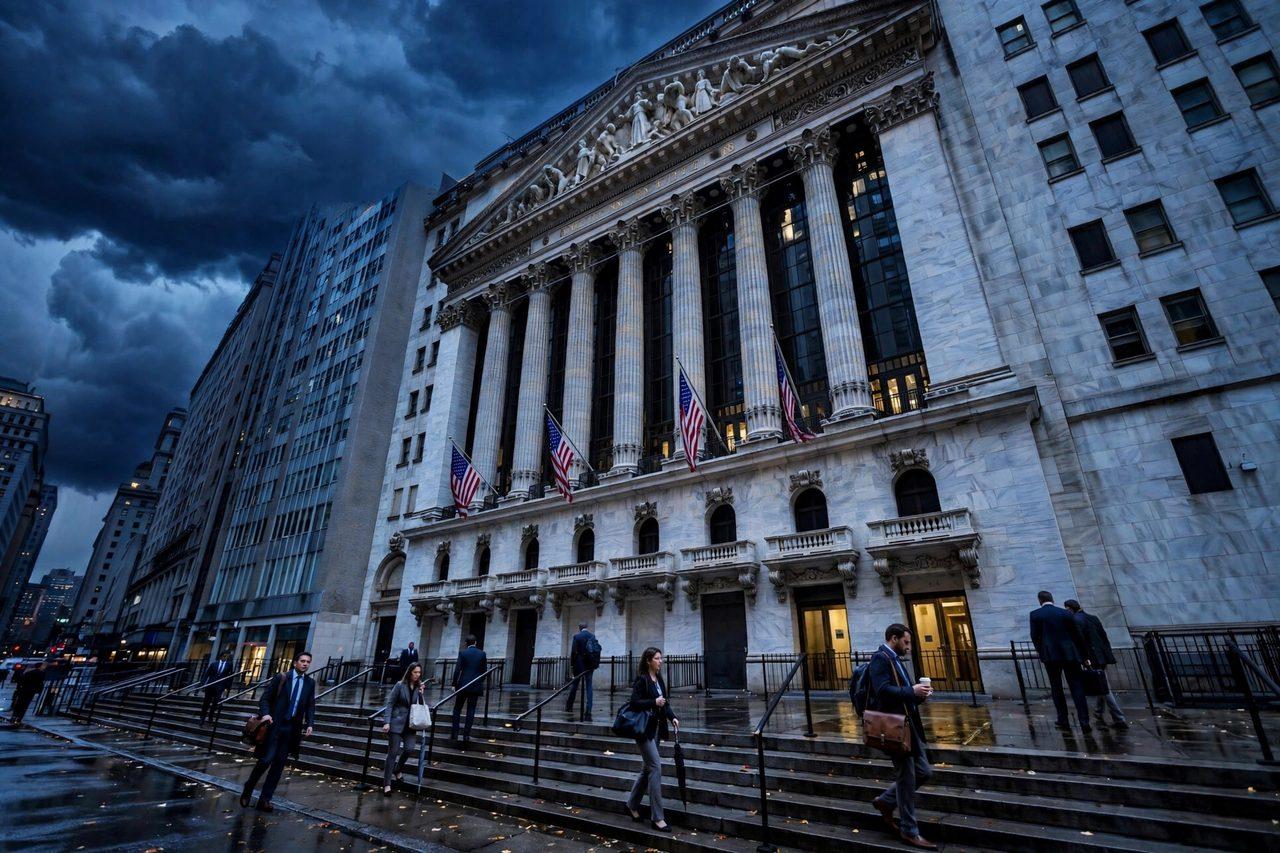
Thursday was the day the post-election rally died. One session after Wall Street celebrated the midterm results with its best day in decades, stocks plunged — and the Nasdaq Composite fell into correction territory as the artificial-intelligence trade unwound violently.
The Nasdaq Composite sank 5.52% to 24,315, about 11.9% below its record — past the 10% drop that defines a correction. The Nasdaq-100 fell 6.36% to 26,629.81. The S&P 500 dropped 4.36% to 7,353.73, its worst day since the April 2025 tariff shock. The Dow Jones Industrial Average sank 3.44% — 1,833.06 points — to 51,523.06. The Russell 2000 fell 4.45% to 2,729.89. All four major indexes finished lower, fully reversing Wednesday's gains.

A one-day reversal of historic size
Wednesday had been a melt-up. The Dow ripped 1,569.40 points, up 3.03%, to 53,356.12 — its best post-midterm day since 1982. The S&P 500 rose 1.58% to 7,688.62, the Nasdaq-100 rose 0.91% to 28,437.17 and the Russell 2000 rose 1.58%, while the VIX collapsed 20.26% to 16.61.
Thursday took it all back, and more. The VIX, the market's fear gauge, closed at 28.18, up 11.57 points — its biggest one-day rise since April 2025, according to Cboe data. Breadth was very weak: just 71 gainers against 431 decliners in the S&P 500, only 14.1% advancing. Energy had zero advancers in the index.
Chips led the fall — again
The selling was centred on the same names that powered the AI rally. The Philadelphia Semiconductor Index fell around 10–11%, its worst day since March 2020, and the VanEck Semiconductor ETF (SMH) plunged 11.21%. The seven biggest technology companies shed about $1.1 trillion of market value in a single day, a one-day record, Bloomberg reported.
Data-centre build-out worries drove the move. After Tuesday's Democratic sweep, investors feared tighter rules and possible moratoriums on data-centre construction, with anti-data-centre campaigns in Texas and Georgia adding to the anxiety. The fear hit power, high-performance-computing miners and chipmakers hardest: SanDisk fell 22.3%, Micron 17.5%, AMD 17.3%, IREN 17%, Bloom Energy 16.4%, Nebius 14.9%, Dell 14.9% and Vertiv 14%.
Earnings could not save the day
Earnings gave the few pockets of strength — and the clearest lesson of the session. AppLovin (APP) soared 31% after revenue grew 56% to $2.18 billion and its fourth-quarter guide of $2.38 billion topped the $2.25 billion estimate. Cloudflare (NET) jumped about 17% after hours on EPS of $0.38 vs $0.34 expected, revenue of $782.5 million vs $736.8 million, and a raised full-year outlook. Unity rose 14.9% on third-quarter revenue of $622 million against $567.4 million expected.
But the market also showed how quickly a good report can be punished. Qualcomm beat on earnings — $2.17 vs $2.02 estimated — and still fell about 10% in premarket trading, because its smartphone chip sales missed Wall Street estimates on sluggish demand and declining Apple-related revenue. A beat is not enough when the guide disappoints.
The day's key numbers:
- Nasdaq Composite: -5.52% to 24,315 — in correction, ~11.9% below its record
- Nasdaq-100: -6.36% to 26,629.81
- S&P 500: -4.36% to 7,353.73 — worst day since April 2025
- Dow: -3.44% (-1,833.06) to 51,523.06
- PHLX Semiconductor Index: down ~10–11% — worst since March 2020
- VIX: 28.18, up 11.57 points
- Magnificent Seven one-day value loss: ~$1.1 trillion
The macro backdrop kept piling on
It was not only a tech story. ADP reported private-sector payrolls rose by 86,000 in October, topping economists' expectations, and the Bank of England raised its benchmark rate to 4% from 3.75% — its first increase in more than three years, as the Iran war's impact on oil prices feeds inflation. Oil settled higher, with WTI up 2.7% at $90.52 and Brent up 3.9% at $98.29, steadying after Wednesday's roughly 9% slide.
All eyes now turn to Friday. The October jobs report arrives at 8:30 a.m. ET, with the consensus expecting 65,000 additional jobs and a 4.2% unemployment rate. After a week that swung from the best post-midterm day since 1982 to the worst day since April 2025, that number lands on a market that has learned, twice in two days, how fast sentiment can flip.
For context on how the week built up, see our earlier take on the AI fears replacing the midterm relief rally on the Zimbuck News page, and the indices week-ahead outlook — both are being discussed in the Zimbuck Market News group.

FAQ
Is the Nasdaq officially in a correction?
Yes. The Nasdaq Composite closed about 11.9% below its October 6 record, past the 10% decline that defines a correction.
How bad was Thursday, November 5, for stocks?
The S&P 500 fell 4.36%, its worst day since April 2025; the Nasdaq Composite fell 5.52%; the Dow lost 1,833 points; the Nasdaq-100 fell 6.36%. The VIX jumped 11.57 points to 28.18.
What caused the selloff?
Fears of tighter data-centre rules after the Democratic midterm sweep hit chip, power and AI-infrastructure stocks, erasing Wednesday's post-election relief rally. Weak chip earnings, led by Qualcomm's smartphone-chip miss, added to the pressure.
Which stocks actually rose?
AppLovin jumped 31% on a strong earnings beat and guide, Cloudflare rose about 17% after hours on its own beat, and Unity gained 14.9%.
What comes next?
The October US jobs report on Friday at 8:30 a.m. ET — consensus 65,000 new jobs, 4.2% unemployment — is the next big test for a market that has swung violently in both directions this week.
This article is market news and general information only, not financial advice. Join the conversation on Zimbuck — the finance social platform for traders and investors: https://zimbuck.com




