


How to Read a Forex Economic Calendar: CPI, NFP and Interest-Rate Decisions Explained

Most forex losses do not come from a bad chart reading. They come from a surprise. A trader opens a neat EUR/USD position at noon, and at 1:30 in the afternoon a US jobs report lands, the dollar jumps 80 pips in a minute, and the stop-loss is gone before the trader even sees the headline. The economic calendar exists so that never has to be a surprise again. It is a schedule of every government data release and central bank decision that can move currencies — and reading it is one of the most practical skills in forex.
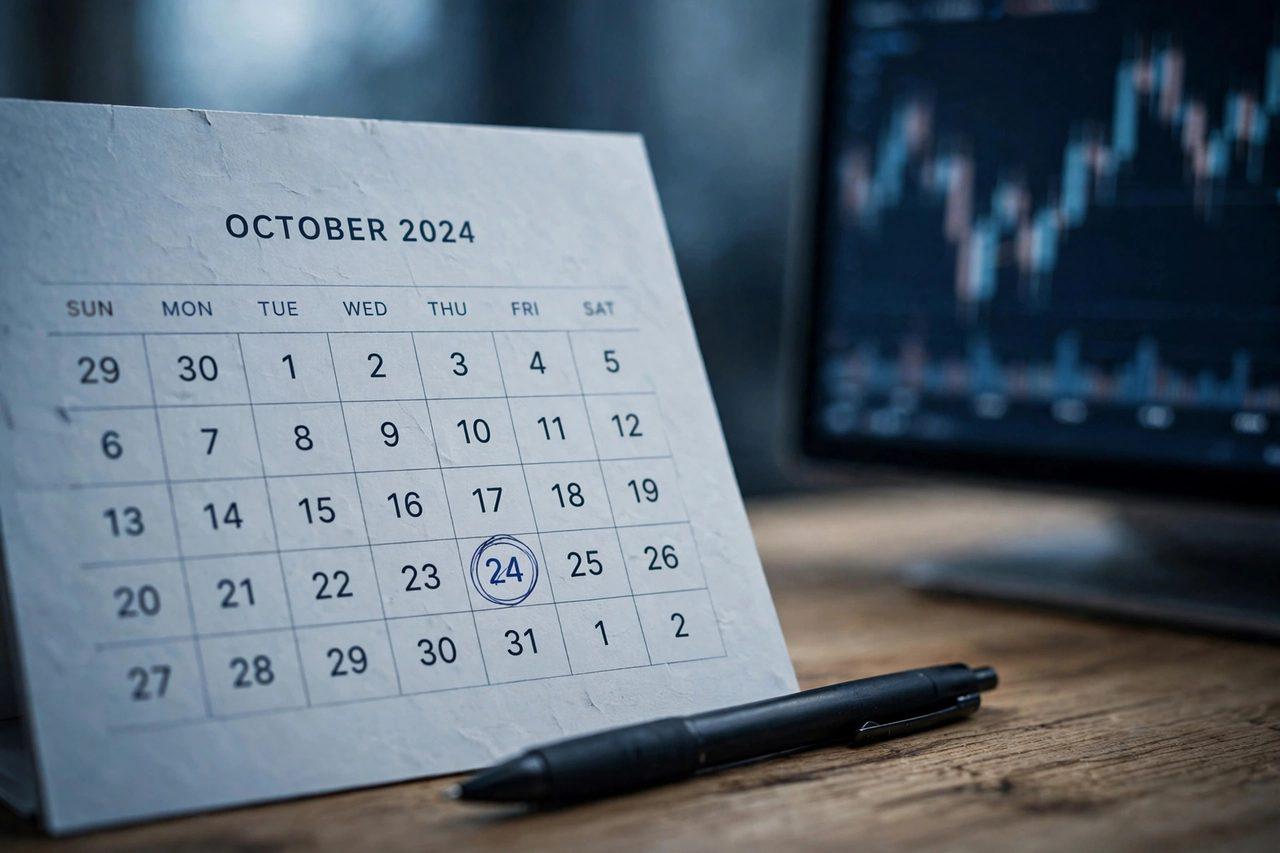
What the economic calendar shows
Every row of the calendar is one event: the time of the release, which currency it affects, how much impact it is expected to have, and three numbers — actual, forecast and previous. The calendar does not tell you what price will do. It tells you when volatility is likely to spike, so you can plan around it instead of being ambushed by it.
The columns work together. Previous is the last reading. Forecast is what economists expect — the number the market has already priced in. Actual is the number that comes out. The reaction is driven mostly by the gap between actual and forecast, not between actual and previous. A result equal to the forecast often moves little, because the market had already priced it in. A big gap in either direction moves price.
Calendars mark impact as low, medium or high, usually colour-coded red, orange and yellow. High-impact events are the ones that consistently move markets. Medium-impact events can move them if the surprise is large. Low-impact releases are rarely worth trading around. Filter by the currencies you actually trade: if you trade EUR/USD, watch euro and US dollar releases and ignore the rest.
The releases that actually move forex
Non-Farm Payrolls (NFP). The single most-watched release for USD pairs. Published by the US Bureau of Labor Statistics on the first Friday of each month at 8:30 AM Eastern Time — 6:30 PM Pakistan time in winter — it measures the net change in US jobs outside farming. Beats of 50,000 or more against the forecast typically move EUR/USD by 40 to 80 pips in the first minute, and the first one to three minutes are the highest-volatility window in forex: price can move 50 to 200+ pips on a major USD release. A real example: on October 2, 2026, the US September jobs report showed +29,000 jobs against about 90,000 expected — a miss of roughly 60,000 — and the dollar moved sharply on the disappointment.
CPI inflation. The Consumer Price Index, released monthly for each major economy, is the single most-watched inflation number globally because it shapes rate expectations. US CPI lands mid-month, also at 8:30 AM Eastern. Hot inflation can bring rate hikes and a stronger currency; a cooler-than-expected reading can push the currency down as traders price in easing.
Interest-rate decisions. The US Federal Reserve's FOMC sets rates eight times a year; the statement comes at 2:00 PM Eastern with a press conference at 2:30 PM. The European Central Bank, the Bank of England and the Bank of Japan follow their own fixed calendars, and their decisions dominate EUR, GBP and JPY flows. The statement and the press conference move price as much as the number itself — traders listen for hints about the next move, not just this one.
The supporting cast. GDP growth reports, retail sales, weekly jobless claims every Thursday, and the Fed's preferred inflation gauge, the Core PCE Price Index, round out the tier-one list. For the euro, watch eurozone CPI and ECB statements; for the pound, Bank of England decisions and UK jobs data.
How to use the calendar in a daily routine
Check the calendar at the start of each session, before you open a single position. Note the high-impact events scheduled during your trading window and which pairs they touch. Then pick one of three stances for each release: trade before it, trade through it, or trade the follow-through.
Trading through a release means accepting wider spreads and slippage — liquidity providers pull quotes in the seconds around the number, stops trigger, and the first move is often a fake-out. Waiting for the first five-minute candle to close before acting is the approach most retail traders can execute consistently. And the simplest stance of all is the one beginners should use most: stay out until spreads calm down. The calendar helps you stay out on purpose, instead of by accident.
One practical detail trips up more beginners than any other: time zones. Calendars often show GMT or the exchange's time zone, so convert every release to your own clock before you plan around it. For traders in Pakistan, that means NFP at 6:30 PM PKT in winter and 5:30 PM PKT in summer, when US daylight saving shifts the gap by an hour. Pin the calendar to UTC or to your broker's server time if you run stop orders close to the release minute — and remember that release times can change, and some data is revised after publication.

The surprise rule, with numbers
The whole calendar boils down to one formula: surprise = actual minus forecast. A stronger-than-expected US jobs report tends to strengthen the dollar, because it reduces the likelihood of Fed rate cuts. A weaker-than-expected eurozone CPI reading can push EUR/USD lower, because it hints at European Central Bank easing. The bigger the surprise, the more volatile the reaction tends to be — with wider spreads and a higher risk of slippage.
That is why the forecast column matters more than the previous column. The market trades the expectation, not the history. If everyone expects 90,000 jobs and the number comes in at 29,000, the story is not "jobs grew" — it is "jobs grew 61,000 fewer than expected." Read the calendar that way and it stops being a list of dates and becomes a map of scheduled risk across your trading day.
FAQ
What is the most important event on the forex economic calendar? Non-Farm Payrolls, released the first Friday of each month. It is the most-watched release for USD pairs and produces the sharpest moves.
What time is NFP in Pakistan time? 8:30 AM Eastern Time is 6:30 PM PKT in winter (EST) and 5:30 PM PKT in summer (EDT). Always check your calendar's time-zone setting.
Should beginners trade during high-impact releases? Most should not. Spreads widen, slippage is common, and the first move is often reversed within minutes. Learn to read the calendar first; trade the follow-through later.
What does "actual vs forecast" mean? The forecast is the consensus estimate before the release. The actual is the released number. The gap between them — the surprise — is what moves price.
Where do I find an economic calendar? Every major broker and forex site publishes one free — Forex Factory, Investing.com, and most broker platforms include a filterable economic calendar with impact ratings and time-zone settings.
This article is general information only, not financial advice. Forex trading carries a high level of risk and may not be suitable for all investors. Join the conversation on Zimbuck — the finance social platform for traders and investors: https://zimbuck.com




