


How to Evaluate a Data Migration Solution for Your SAP SuccessFactors Instance
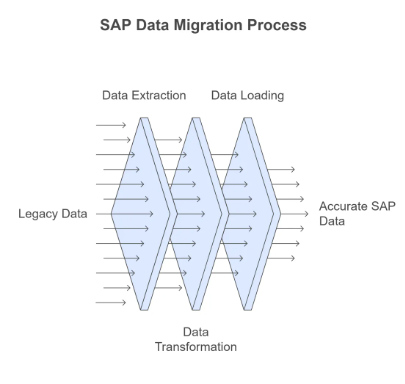
Evaluating a data migration solution for SAP SuccessFactors comes down to answering one question with evidence rather than assurance: will this tool migrate candidate data from our legacy ATS into SuccessFactors without losing information, and can it prove it? The most reliable way to answer that question is to run a pilot migration against a genuine sample of your organisation's own legacy records, using a tool built to parse resumes with AI rather than transfer files wholesale, and then review the resulting SuccessFactors profiles field by field against the source data before committing to a full rollout.
UK organisations preparing for a SuccessFactors migration often build an evaluation process around vendor demonstrations, reference calls, and feature checklists, all of which are useful but none of which actually test the thing that matters most: how a given tool performs against your specific legacy data. Legacy ATS platforms vary enormously in how they structure candidate records, and a parsing engine that performs well against one vendor's export format may struggle against another's, particularly around edge cases like multi-language resumes, non-standard date formats, or fields that were repurposed informally over years of internal use. A pilot migration against real records is the only evaluation step that surfaces these specific compatibility issues before they become production problems.
Beyond the pilot itself, a structured evaluation framework should weigh a small number of criteria consistently across every vendor under consideration. Parsing accuracy comes first: does the tool correctly separate current from prior employment, correctly attribute skills and certifications, and handle UK-specific qualification frameworks and regional terminology without defaulting to assumptions built for other markets? Compliance posture comes second, particularly relevant under UK GDPR, where organisations need documented assurance that personal data moving through a migration process is handled lawfully, securely, and with retention limited strictly to what the migration requires, with no candidate data lingering in an intermediate processing layer once the transfer is complete.
It is worth pausing here to note that many UK evaluation teams underestimate how much internal recruiter input improves an evaluation's usefulness. Recruiters who will actually search the migrated data daily are best positioned to judge whether a pilot's output feels genuinely usable, and their feedback during a pilot often surfaces practical issues, such as an odd skill grouping or an unfamiliar job title mapping, that a purely technical review by IT alone would miss entirely.
Scalability is the third criterion, and it is where many otherwise promising tools reveal their limitations. A migration approach that performs well against a five-hundred-record pilot does not automatically perform equally well against a legacy database of half a million records spanning a decade or more of accumulated data drift. UK organisations evaluating vendors should ask directly about throughput at their actual expected volume, not a generic industry benchmark, and request evidence from comparable migrations at similar scale.
The fourth criterion, and one increasingly relevant as recruiting technology evolves, is how a migration tool's underlying capability extends beyond the one-time project. A growing number of UK HR technology teams are looking at data migration not as an isolated event but as the first application of a broader AI-driven parsing and enrichment layer that will continue operating on new candidate submissions long after the migration itself is complete. This matters because a tool that only solves the migration problem in isolation offers less durable value than one that establishes a standing capability for structured, standardised candidate data going forward.
Data Migration for SAP SuccessFactors is built to satisfy all four criteria simultaneously: AI-driven parsing that reconstructs legacy resumes into structured, standardised SuccessFactors profiles, a zero-loss transfer approach with documented validation, throughput proven across large-scale enterprise migrations, and continuity into standing recruiting operations rather than a one-time script that gets discarded after go-live.
That continuity point deserves elaboration, because it is genuinely reshaping how UK recruiting teams think about migration. Rather than treating the transfer of legacy data as a discrete IT project, many organisations are now evaluating migration tools alongside the broader question of how AI is being applied across their SuccessFactors environment more generally, from resume parsing at intake through candidate matching and search. RChilli AI Agents for SAP SuccessFactors illustrates this shift directly, showing how the same underlying parsing and enrichment technology that powers a clean migration also supports ongoing, automated recruiting workflows well beyond the initial transfer.
For UK HR operations and IT teams building an evaluation framework, RChilli for SAP SuccessFactors offers a fuller view of how these capabilities fit together across an organisation's recruiting technology stack, which is a useful reference point when comparing vendors whose offerings may look similar on a feature list but differ substantially in how deeply their parsing technology is integrated with SuccessFactors' native data model.
It is also worth setting realistic expectations about what "without data loss" means during evaluation, since vendors define the phrase differently. For a UK organisation, the standard should be that every structured data point present in a legacy record, contact details, full employment history, education, certifications, and skills, is both present and correctly attributed in the resulting SuccessFactors record, and that it is genuinely searchable using natural recruiter search terms rather than merely stored somewhere in the system. A tool that preserves a resume as an attached document without extracting its content into structured fields has not met this bar, even if no data was technically deleted in the process, because the practical effect for a recruiter is identical to the record not existing at all.
Governance sign-off is another practical step that UK evaluation processes sometimes overlook until late in the project. Data protection officers and IT security teams should be looped into vendor evaluation early rather than brought in only for final contract review, because a migration approach that fails a security or compliance review after a pilot has already succeeded technically creates unnecessary rework and delay. Asking for a vendor's ISO 27001:2022 and SOC 2 Type II certification documentation, along with a written data retention and deletion policy specific to the migration process, at the same stage as the technical pilot keeps both workstreams moving in parallel rather than sequentially.
Cost comparison across vendors should also account for what happens after the migration event itself concludes. A lower upfront quote from a vendor offering a narrower, one-time migration script is not necessarily better value than a slightly higher quote from a vendor whose parsing capability continues supporting recruiting operations afterward, since the latter avoids the need to procure and integrate a separate ongoing data quality solution later. Building this forward-looking cost comparison into the evaluation, rather than comparing migration quotes in isolation, tends to produce a more accurate picture of total value across vendors.
A practical recommendation for any UK organisation at the start of this evaluation is to resist the temptation to shortcut the pilot step, even under project timeline pressure. A vendor's written specifications and sales demonstrations describe intended capability, but only a pilot against your own legacy data confirms actual capability against the specific data an organisation will be moving. That distinction, between what a tool is designed to do and what it demonstrably does with your organisation's real records, is the single most useful piece of evidence an evaluation process can produce, and it is worth the extra week or two it typically takes to run properly before a full migration commitment is made.
Catégories
Lire la suite
Planning a grand destination wedding requires creativity, detailed coordination, and professional expertise. Choosing the best destination wedding planner in Delhi can help couples turn their wedding vision into a beautiful and well-organized celebration. From selecting the right venue and creating elegant décor to arranging guest accommodation, transportation, catering, entertainment,...

A well-planned wardrobe makes getting dressed every day simple, comfortable, and stylish. Instead of filling closets with clothing that is only worn occasionally, many fashion-conscious people now prefer investing in versatile pieces that can be styled in multiple ways. This approach saves time, reduces unnecessary purchases, and creates a more consistent personal style. Among today's premium...

The modern industrial world is characterized by the generation of vast quantities of waste heat—thermal energy produced as a byproduct of industrial processes that is typically released into the environment. Waste heat recovery (WHR) is the practice of capturing this otherwise lost energy and repurposing it for useful applications, such as pre-heating, temperature control, or even...

The rapid evolution of wireless communication technologies has reached a critical juncture as radio frequency spectrums become increasingly congested. Visible Light Communication (VLC), commonly known as Li-Fi, utilizes light-emitting diodes (LEDs) to transmit data at blazing speeds through light waves. This groundbreaking technology offers high bandwidth, exceptional security, and immunity to...

Termites are one of the most destructive pests that can silently damage homes, offices, commercial buildings, and wooden structures. If you are searching for reliable Termite Control Lahore, choosing an experienced company is essential to protect your investment. Mehfooz Termite Services offers professional termite inspection, treatment, and complete pest management solutions throughout Lahore...