


How New Drivers Can Become More Comfortable in Heavy Traffic
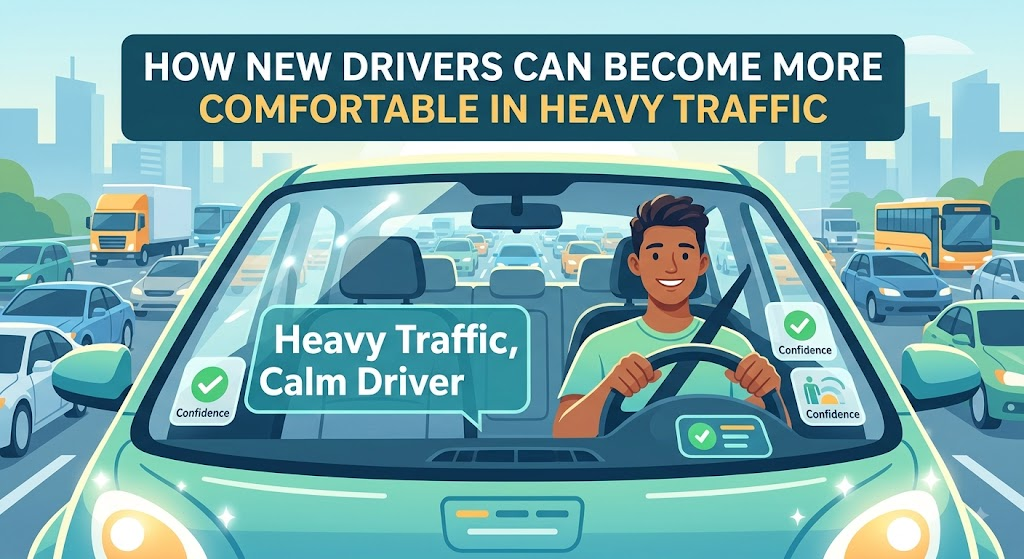
Heavy traffic can be one of the most challenging situations for a new driver. Busy roads often involve frequent stops, changing lanes, impatient drivers, pedestrians, cyclists, intersections, and limited space between vehicles. Feeling nervous in these conditions is normal, but confidence usually improves with preparation, repeated practice, and a calm approach to decision-making. The goal is not to eliminate every stressful moment but to learn how to respond safely and predictably.
For beginners, working with a qualified instructor through a driving school Vancouver program can provide structured practice in increasingly demanding road conditions. Professional instruction can help new drivers develop essential habits such as maintaining a safe following distance, checking mirrors regularly, anticipating traffic movements, and making decisions without unnecessary hesitation. These skills become especially valuable when traffic becomes crowded or unpredictable.
Why Heavy Traffic Feels Difficult for New Drivers
Heavy traffic requires drivers to process more information in less time. A beginner may need to monitor the vehicle ahead, check mirrors, watch surrounding lanes, follow traffic signals, identify road signs, and anticipate what other road users might do. Managing all of these tasks simultaneously can feel overwhelming when driving experience is still limited.
Another challenge is that traffic rarely moves at a consistent speed. Vehicles may accelerate for a few seconds and then stop suddenly. Drivers may merge into nearby lanes, change direction, or leave gaps that disappear quickly. New drivers sometimes interpret this constant movement as a need to react immediately to everything around them.
A better approach is to focus on what directly affects your safety. You do not need to predict every driver's action. Instead, maintain enough space to give yourself time to observe, decide, and respond.
Build Confidence Before Driving in the Busiest Areas
Confidence in heavy traffic starts before entering a congested road. New drivers should first become comfortable with basic vehicle control in quieter environments. Smooth steering, controlled braking, proper acceleration, mirror use, and lane positioning should become increasingly familiar before tackling very busy roads.
Practice can then progress gradually. A driver might begin with moderate traffic, move to busier roads during less demanding periods, and eventually practice during peak traffic when appropriate. This gradual exposure allows the driver to build experience without unnecessarily increasing stress.
It is also helpful to know the route before starting a challenging journey. Review the destination, major intersections, lane requirements, and possible turns in advance. Navigation technology can assist with directions, but drivers should avoid constantly looking at a phone or navigation screen while moving. If you need to change a route, make the adjustment safely and when traffic conditions allow.
Maintain a Safe Following Distance
One of the most useful habits in heavy traffic is leaving enough space between your vehicle and the one ahead. New drivers sometimes follow too closely because they worry that another vehicle will enter the gap. However, reducing the space can leave less time to respond if traffic stops suddenly.
A safe following distance gives you additional time to brake gradually and assess what is happening ahead. It also reduces the pressure to make sudden decisions.
In slow-moving traffic, the same principle applies. Even when vehicles are moving only a short distance at a time, avoid constantly closing the gap and braking sharply. Smooth acceleration and controlled braking can make congested driving more predictable and comfortable.
Look Beyond the Vehicle Directly Ahead
A common beginner habit is focusing almost exclusively on the car immediately in front. While that vehicle is important, looking farther ahead can provide more useful information.
Try to identify brake lights several vehicles ahead, upcoming intersections, lane reductions, stopped buses, pedestrians, or changes in traffic flow. If traffic farther ahead is slowing, you can begin reducing speed gradually instead of waiting until the vehicle immediately ahead brakes hard.
This habit improves anticipation. Rather than reacting to every change at the last possible moment, you begin preparing for situations before they reach you.
Stay Calm During Stop-and-Go Traffic
Stop-and-go traffic can become mentally tiring because it requires repeated acceleration and braking. New drivers may become frustrated when traffic appears to move slowly or when another vehicle repeatedly changes lanes.
The safest response is to avoid allowing frustration to influence your driving. Maintain a steady pace when possible, leave adequate space, and accept that congestion cannot always be avoided.
Breathing normally and relaxing your grip on the steering wheel can also help prevent unnecessary physical tension. A tense driver may make steering and braking movements more abrupt. Staying composed makes it easier to concentrate on the road.
Use Mirrors and Blind-Spot Checks Correctly
Heavy traffic increases the importance of knowing what is happening around your vehicle. Check your mirrors regularly rather than waiting until you need to change lanes.
Before moving into another lane, use the appropriate sequence of observations: check the relevant mirror, assess the surrounding traffic, check the blind spot as required, signal appropriately, and move only when there is a safe opportunity.
A signal communicates your intention, but it does not automatically give you the right to move into another lane. Always confirm that the maneuver can be completed safely.
Do Not Feel Pressured by Other Drivers
New drivers sometimes make unsafe decisions because they feel pressured by drivers behind them. Someone may follow closely, change lanes aggressively, or appear impatient when you are driving cautiously.
You are not required to match another driver's behavior. If the speed limit and conditions allow you to travel safely, maintain a predictable driving pattern. Do not accelerate excessively simply because another driver is close behind you.
Similarly, if you miss a turn, do not make a sudden maneuver to correct the mistake. Continue safely and find another appropriate route. Missing an exit or turn is generally less serious than making an unsafe lane change.
Learn How to Handle Lane Changes
Lane changes can be particularly stressful in dense traffic. New drivers should avoid treating every gap as an opportunity to move. Instead, assess whether changing lanes is actually necessary.
If you need to change lanes, identify the desired lane early and begin observing traffic well in advance. Use your mirrors and blind-spot checks, signal appropriately, and wait for a safe gap. If no suitable opening appears, continue in your current lane until a safe opportunity becomes available.
Patience is an important part of defensive driving. A few extra seconds spent waiting for a safe gap is preferable to forcing a maneuver.
Practice at Different Times and in Different Conditions
Experience becomes more useful when it covers a variety of realistic driving situations. Once a beginner is comfortable with moderate traffic, practice can gradually include busier intersections, multi-lane roads, longer commutes, and different times of day.
Weather can also affect traffic conditions. Rain, reduced visibility, or glare may require greater caution and more space. New drivers should gain experience gradually and avoid deliberately practicing in conditions that exceed their current ability.
The purpose of practice is not simply to accumulate driving hours. Each session should reinforce a particular skill, such as smooth braking, lane positioning, merging, or scanning ahead.
Develop a Simple Traffic-Management Routine
A consistent routine can reduce the mental workload of heavy traffic. Instead of trying to process everything randomly, develop a regular pattern of observation.
Keep your attention primarily on the road ahead while periodically checking mirrors and surrounding traffic. Scan for potential hazards, maintain an appropriate following distance, and think about what could happen next.
For example, if you see a pedestrian approaching a crosswalk, a vehicle waiting to turn, or traffic slowing ahead, consider how those situations might affect your path. This type of anticipation helps replace panic with preparation.
Take Breaks When Driving Becomes Mentally Overwhelming
Long periods of congestion can cause fatigue and reduced concentration. If you are driving for an extended period and begin feeling mentally exhausted, take a safe break when possible.
Do not stop in an unsafe location simply because you feel stressed. Instead, plan suitable rest points before longer journeys. A short break can help restore concentration and reduce frustration.
New drivers should also avoid driving when excessively tired. Alertness is essential for safe decision-making, especially in dense traffic where situations can change quickly.
Confidence Comes From Repetition, Not Perfection
New drivers should remember that becoming comfortable in heavy traffic does not happen instantly. A driver may feel confident on one road and nervous on another, and that is part of the learning process.
The most effective approach is to build experience gradually while maintaining safe habits. Each successful trip provides another opportunity to improve observation, vehicle control, judgment, and decision-making.
Mistakes such as missing a turn or taking longer to complete a lane change do not necessarily indicate poor driving. What matters is responding safely and learning from the experience.
Conclusion
Heavy traffic becomes easier to manage when new drivers focus on preparation, observation, space, and calm decision-making rather than trying to react to everything at once. Gradual practice, safe following distances, regular mirror checks, careful lane changes, and anticipation can make busy roads feel much more manageable over time. For learners who want structured guidance and practical experience, Benche Driving school can be considered as part of a broader approach to developing safe and confident driving habits. With patience and consistent practice, new drivers can become more comfortable navigating busy roads while keeping safety at the center of every journey. The key is to progress at a sensible pace, learn from each experience, and remember that confident driving develops through responsible practice rather than rushing the learning process.
Κατηγορίες
Διαβάζω περισσότερα
Creating a beautiful home or workspace is about much more than selecting attractive furniture or choosing trendy colors. A well-designed space improves comfort, increases functionality, and reflects your personality. That is why choosing the Best Interior Design Company in Noida is one of the most important decisions before starting your project. With many design companies offering different...

Best Salon in JLT – Experience Luxury Beauty & Hair Care at Zulya Beauty Salon Looking for the Best Salon in JLT? Whether you need a stylish haircut, vibrant hair color, flawless nails, relaxing spa treatments, or professional makeup, choosing the right salon can make all the difference. A premium beauty salon not only enhances your appearance but also provides a relaxing experience...

Fragrance has always been an essential part of Middle Eastern culture, and in Saudi Arabia, perfume is more than just a beauty product—it's a reflection of personality, heritage, and elegance. From welcoming guests with aromatic bakhoor to wearing luxurious oud before special occasions, scent is deeply woven into everyday life. Among the many fragrance choices available today,...

A website that covers several market categories needs more than a collection of numbers. When information is separated by market, arranged according to timing, and supported by historical records, visitors can understand the available data much more easily. Daily Satta Kings brings these elements together through a format that combines daily market information with chart-based records and...

Melvin Obadha is a health economist and global health researcher whose work focuses on improving health systems, healthcare financing, and evidence-based policymaking. His research explores how economic analysis, health policy, and environmental challenges influence access to quality healthcare, particularly in low- and middle-income countries. More recently, his work has expanded to include...