


Live Chat Support Services: Improve Customer Experience and Business Communication
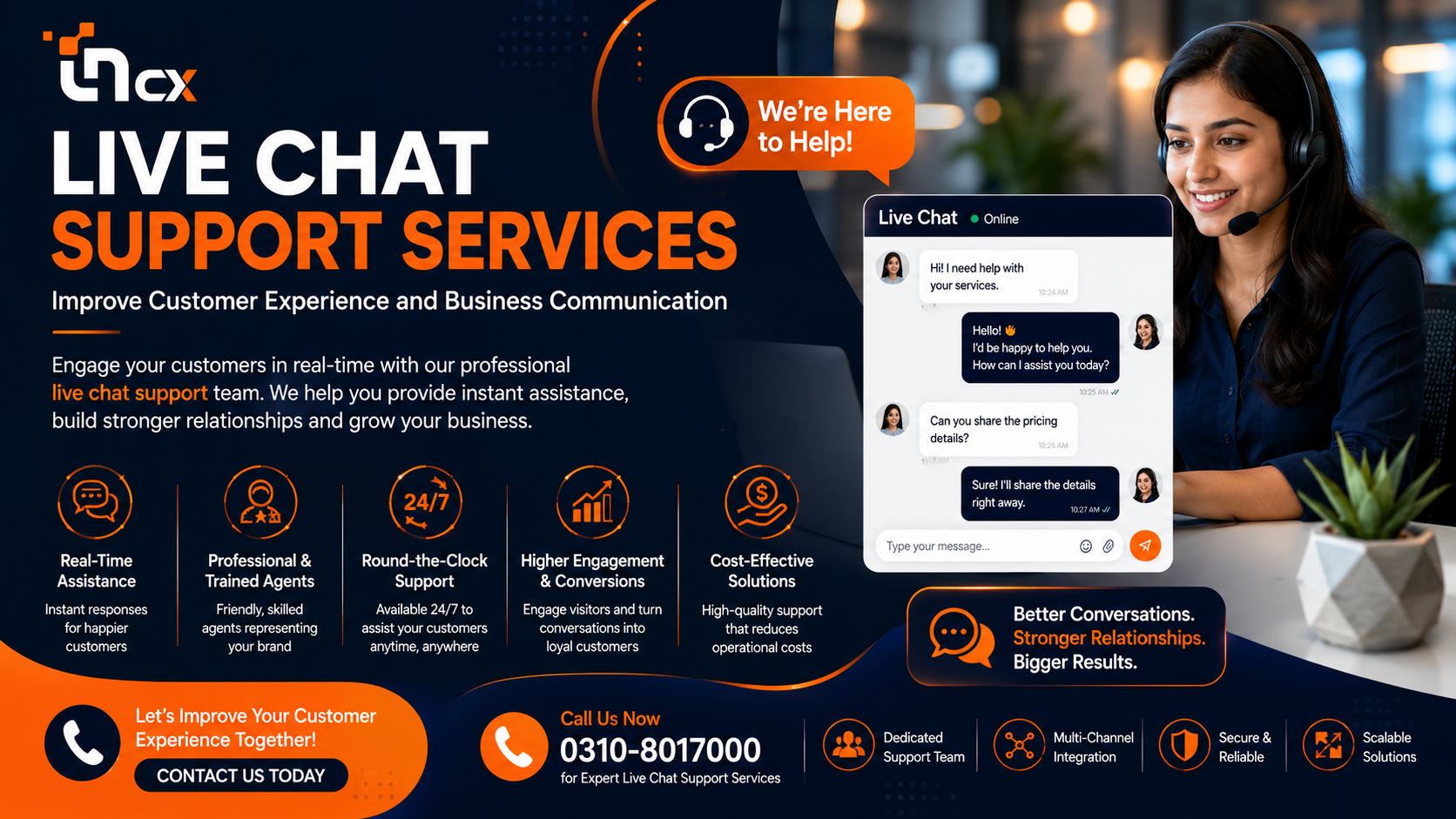
In today's digital marketplace, customers expect businesses to provide quick, convenient and professional support. When visitors have questions about a product, need help completing an order, or experience an issue with a service, they often prefer getting an immediate answer instead of waiting for an email response or making a phone call.
This is where live chat support services can make a significant difference.
Live chat allows businesses to communicate with website visitors and customers in real time. With trained support agents available to answer questions, troubleshoot problems, provide product information and guide customers through the buying process, companies can create a more responsive customer experience.
For businesses dealing with increasing customer inquiries, outsourcing live chat support can also provide access to trained professionals, flexible staffing and established support processes without requiring a large in-house team.
What Are Live Chat Support Services?
Live chat support is a customer communication service that allows visitors to interact with a business through a chat window on its website, application, or digital platform.
Unlike email, where customers may wait hours for a response, live chat is designed for real-time communication.
Agents can assist customers with:
-
Product and service questions
-
Order inquiries
-
Account assistance
-
Website navigation
-
Technical questions
-
Billing inquiries
-
Returns and refunds
-
Appointment scheduling
-
Basic troubleshooting
-
Sales-related questions
The exact responsibilities depend on the business and its customer support requirements.
A professional live chat operation combines trained agents, chat software, knowledge bases, scripts, escalation procedures and performance monitoring.
Why Live Chat Is Important for Modern Businesses
Customers increasingly expect businesses to be available when they need assistance. A website visitor who cannot find an answer may leave the website and look for another provider.
Live chat creates an opportunity to engage that visitor before they leave.
For example, a potential customer may be looking at a service page but have a question about pricing, features, availability, or implementation. A live chat agent can answer the question and guide the visitor toward the next step.
This can improve the overall customer journey while helping businesses capture more opportunities.
Real-Time Customer Assistance
One of the biggest advantages of live chat is immediacy.
Customers can ask questions and receive responses without switching to another communication channel.
Agents can help customers with common requests such as:
-
"How does this product work?"
-
"Where is my order?"
-
"How can I reset my password?"
-
"Which service is right for me?"
-
"How do I schedule an appointment?"
-
"Can you explain this feature?"
Fast responses can reduce customer frustration and create a more convenient support experience.
Live Chat for Customer Support
Live chat can become an important part of a company's broader customer support services strategy.
Instead of relying only on phone and email, businesses can provide customers with another convenient communication channel.
A customer may prefer chat because they can communicate with an agent while continuing to browse a website or use an application.
Live chat can handle straightforward inquiries while more complicated issues can be converted into tickets or escalated to specialized teams.
This creates a structured support process that helps agents manage different types of customer requests.
Live Chat and Call Center Services
Live chat does not have to replace phone-based customer communication.
Instead, businesses can combine chat with professional call center services to provide customers with multiple options.
For example, a customer may initially contact a business through live chat. If the issue requires detailed discussion, the agent can arrange a phone call or transfer the customer to an appropriate department.
Similarly, customers who call a business can later receive information or follow-up through chat or email.
A multichannel approach helps businesses provide a more consistent customer experience.
Live Chat for Sales and Lead Generation
Live chat can support sales as well as customer service.
Website visitors may already be interested in a company's products or services when they open a chat window. A trained agent can answer questions, understand the visitor's requirements, provide relevant information and identify potential sales opportunities.
Live chat agents can assist with:
-
Product recommendations
-
Pricing questions
-
Service information
-
Qualification questions
-
Appointment scheduling
-
Demo requests
-
Contact information
-
Sales follow-ups
When integrated with a CRM, chat interactions can be recorded and passed to the sales team for follow-up.
Reducing Customer Abandonment
A customer may leave a website because they cannot find the information they need.
A visible chat option gives customers an immediate way to ask for assistance.
For example, an eCommerce customer may be uncertain about product specifications, shipping, payment options, or returns. A chat agent can provide the necessary information and potentially prevent the customer from abandoning the purchase.
Live chat can therefore support both customer satisfaction and business conversion goals.
Technical Live Chat Support
Many businesses sell software, applications, technology products and digital services that require technical assistance.
Live chat can provide first-level technical support for issues such as:
-
Login problems
-
Account access
-
Basic configuration
-
Product navigation
-
Installation questions
-
Password issues
-
Feature guidance
-
Basic troubleshooting
If an issue is too complex to resolve through chat, the agent can create a support ticket or escalate it to a technical specialist.
This approach helps ensure that customers receive assistance without unnecessarily waiting for another department.
24/7 Live Chat Support
Businesses serving international customers may receive inquiries at any time.
Providing live chat coverage beyond traditional business hours can help companies support customers across different time zones.
24/7 live chat can be particularly useful for:
-
eCommerce businesses
-
SaaS companies
-
Technology providers
-
Travel companies
-
Online marketplaces
-
Telecommunications businesses
-
International service providers
Continuous coverage can also help businesses respond to inquiries during evenings, weekends and holidays.
The required coverage should depend on customer demand and the company's target markets.
Multilingual Live Chat Support
International businesses may have customers who prefer communicating in different languages.
Multilingual live chat support allows companies to provide assistance according to the customer's language requirements.
This can make communication easier and help businesses serve international audiences more effectively.
Multilingual agents can handle product questions, customer service inquiries, order support and other requests while following the company's communication guidelines.
Live Chat and Virtual Assistant Services
Live chat can also work alongside virtual assistant services.
A virtual assistants can handle administrative activities that support the customer communication process.
These tasks may include:
-
Updating CRM records
-
Scheduling appointments
-
Organizing customer information
-
Managing follow-ups
-
Data entry
-
Preparing reports
-
Email organization
-
Online research
-
Administrative support
For example, a live chat agent may qualify a potential customer and collect the necessary information. A virtual assistant can then update the CRM and schedule a follow-up appointment.
This division of responsibilities allows customer-facing agents to focus on conversations while administrative tasks are handled separately.
Benefits of Outsourcing Live Chat Support
Reduce Operational Costs
Building an internal live chat department requires recruitment, training, management, software and staffing.
Outsourcing can provide access to trained agents and established infrastructure without requiring businesses to build every component themselves.
Improve Response Times
Dedicated chat agents can manage customer conversations and respond quickly to incoming requests.
Scale Easily
Businesses may experience increased chat volumes during product launches, promotions, seasonal periods, or business growth.
Outsourcing makes it easier to adjust staffing according to demand.
Increase Customer Satisfaction
Customers appreciate convenient access to assistance. Quick and accurate answers can improve their overall experience.
Support Sales Teams
Chat agents can identify interested visitors, answer questions and pass qualified opportunities to sales representatives.
Allow Internal Teams to Focus
Outsourcing routine customer conversations allows internal employees to concentrate on strategic and specialized responsibilities.
Technology Used in Live Chat Support
Modern live chat operations rely on technology to manage customer conversations efficiently.
Common tools include:
-
Live chat platforms
-
CRM systems
-
Helpdesk software
-
Knowledge bases
-
Customer databases
-
Ticketing systems
-
Analytics dashboards
-
Chat routing
-
Automated greetings
-
Conversation history
CRM integration is particularly useful because agents can access relevant customer information and record interactions.
Chat analytics can also help businesses understand common customer questions, peak chat periods, response times and agent performance.
Live Chat Quality Assurance
Quality assurance is important for maintaining consistent customer communication.
Supervisors can review conversations and evaluate:
-
Response accuracy
-
Communication quality
-
Response time
-
Product knowledge
-
Professionalism
-
Problem-solving
-
Policy compliance
-
Customer satisfaction
Regular feedback and coaching can help agents improve their performance.
Businesses should also maintain an updated knowledge base so agents have access to accurate product and service information.
Security and Customer Data
Live chat conversations may contain customer names, contact information, account details, order information, or other sensitive data.
Businesses should therefore establish appropriate security procedures.
Important considerations include:
-
Access controls
-
Secure systems
-
Employee confidentiality
-
Data protection
-
User permissions
-
Authentication procedures
-
Data retention
-
Monitoring
-
Staff training
Agents should only have access to the information necessary to perform their assigned responsibilities.
Industries That Use Live Chat Support
Live chat can benefit businesses across many industries.
Common examples include:
-
eCommerce
-
Software and SaaS
-
Information technology
-
Healthcare
-
Education
-
Financial services
-
Insurance
-
Real estate
-
Travel and hospitality
-
Telecommunications
-
Logistics
-
Professional services
-
Manufacturing
The chat workflow should be customized according to the industry's products, customer expectations and business processes.
How Live Chat Outsourcing Works
A successful live chat outsourcing program generally follows several stages.
1. Identify Requirements
The business determines chat hours, expected volumes, customer types, languages and responsibilities.
2. Develop Knowledge Resources
FAQs, product information, scripts, troubleshooting guides and escalation procedures are prepared.
3. Train Agents
Agents receive training on products, services, communication standards, systems and customer handling.
4. Integrate Technology
Chat software, CRM systems, ticketing platforms and reporting tools are connected as required.
5. Launch Operations
Agents begin handling customer conversations according to approved procedures.
6. Monitor Performance
Managers review KPIs such as response time, resolution rate, customer satisfaction and chat volume.
7. Improve Continuously
Customer feedback and chat analytics can be used to improve training, knowledge bases, workflows and customer experience.
Why Choose InLinkers CX?
InLinkers CX provides outsourced customer communication solutions designed to help businesses manage customer interactions through professional support teams.
Live chat can be integrated with broader customer support services to provide customers with assistance through multiple communication channels.
Businesses can also combine live chat with call center services when customers require phone-based assistance and with virtual assistant services for administrative and back-office support.
This creates a flexible outsourcing model that can support customer service, sales engagement, administrative operations and ongoing customer communication.
Final Thoughts
Live chat support has become an important communication channel for businesses that want to provide fast, convenient and personalized customer assistance.
It can help businesses answer questions, support customers, assist with technical issues, generate sales opportunities, schedule appointments and improve the overall online customer experience.
Outsourcing live chat can provide access to trained professionals, flexible staffing, technology, quality monitoring and scalable operations.
When live chat is combined with customer support services, call center services and virtual assistant services, businesses can create a broader support structure capable of handling customer communication and administrative requirements.
The right outsourcing partner should provide trained agents, reliable technology, clear processes, quality assurance, secure systems and the ability to scale with changing business needs.
With an effective live chat strategy, businesses can respond faster, engage website visitors more effectively, improve customer satisfaction and build stronger relationships with customers.
Catégories
Lire la suite
With the increasing competition between websites on the Internet, getting yourself featured on the first page of Google will no longer be sufficient. You will have many inquiries from your local business via Google Maps and local search engines. Google My Business, or simply GMB, is regarded to be one of the most effective methods by which a business can reach its targeted local audience....

Most conversations about growing cannabis focus on the plant side of things, temperature, humidity, airflow, all the stuff that directly affects your harvest. And that's fair, that's the part that actually grows your product. But if you're running anything beyond a small personal grow, there's another layer to cannabis climate control that doesn't get nearly enough attention, and that's the...

Industrial hydrogen generators are the large-scale systems that produce the vast quantities of hydrogen required by heavy industry, particularly for petroleum refining, chemical production (ammonia, methanol), and steelmaking. These generators, often based on steam methane reforming, are the backbone of the current hydrogen market and are undergoing a significant transformation to reduce...

Artificial intelligence is changing the way organizations operate, compete, and deliver value. Companies across many industries are using intelligent technologies to automate tasks, improve customer experiences, analyze data, and support better decision making. At the center of this transformation is the AI Development Platform, a complete environment that allows developers and businesses to...
Explore the best Places to Stay in Leh, including luxury hotels, boutique properties, family accommodations, and premium resorts. Enjoy comfortable lodging, authentic hospitality, and easy access to Ladakh's breathtaking landscapes and attractions.