

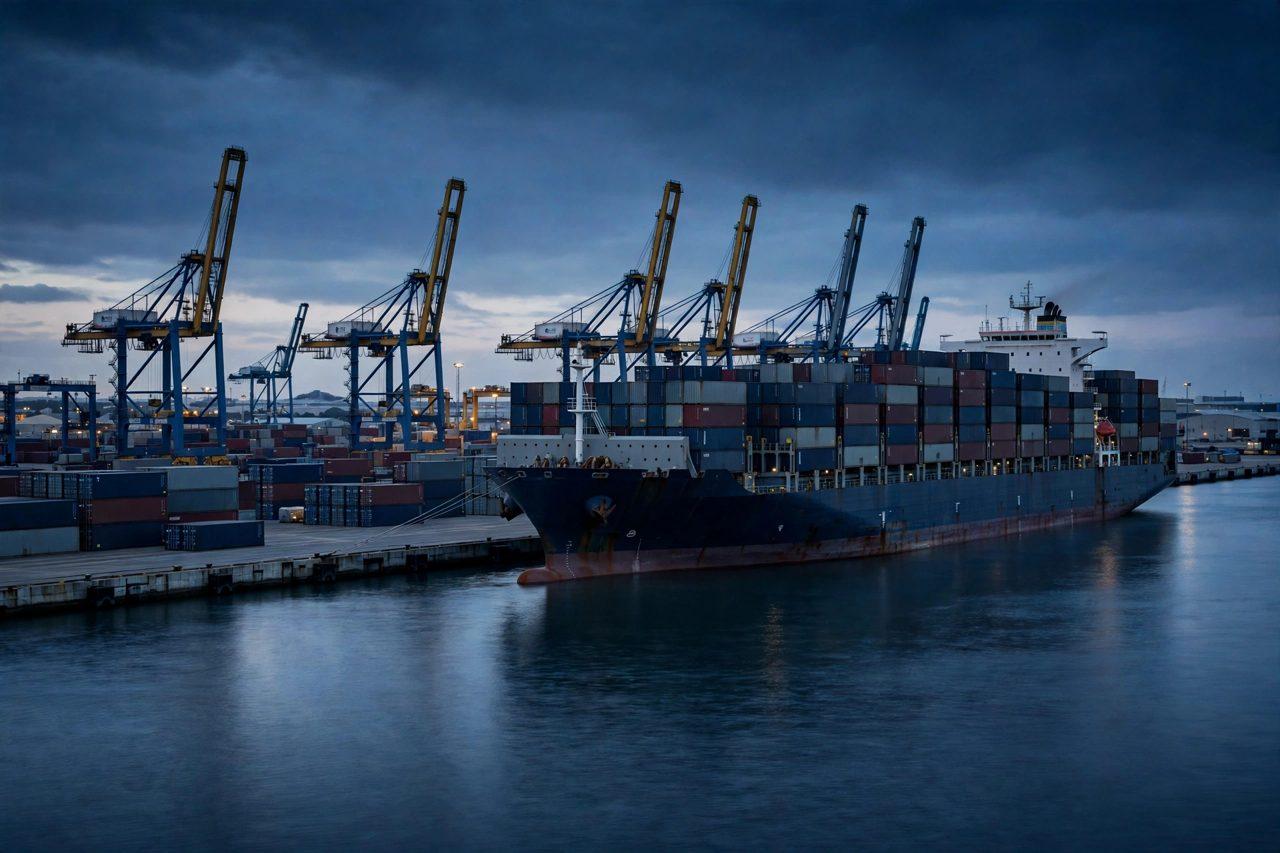
Blockchain Tokenization Goes Maritime: ADI Foundation's $500 Million Plan to Tokenize 35 Commercial Vessels

A $500 million plan to tokenize about 35 commercial vessels is the latest sign that blockchain settlement is moving from pilots into institutional finance. The ADI Foundation says the ships will be originated and structured by Ship Phoenix, distributed and settled on blockchain rails, with settlement expected in stablecoins.
The project was outlined on November 7 by ADI Foundation CEO Andrei Lazarenko in an interview on Cointelegraph's X account, as reported by TokenPost's coverage of the $500 million vessel tokenization plan. Follow daily blockchain coverage on the Zimbuck News page and discuss the story in the Zimbuck Market News group.

What exactly is being tokenized?
- About 35 commercial vessels, valued at around $500 million in total
- Ship Phoenix originates and structures the assets; ADI provides blockchain distribution and settlement
- Settlement is expected in stablecoins, including DDSC, a dirham-linked stablecoin
- ADI Chain is described as the exclusive settlement layer for DDSC
- Initial deployments have already taken place, according to Lazarenko
Tokenizing a ship does not mean putting a vessel on a blockchain in any physical sense. It means recording ownership interests, cash-flow rights and settlement instructions as digital tokens, so that transfers which normally take days of paperwork can settle on-chain in minutes, with the register visible to every authorised participant at the same time.
Why an Ethereum Layer-2 design matters
Lazarenko described ADI Chain's Ethereum layer-2 architecture and modular design as the basis for the service. Institutions and governments can use tailored subchains with programmable compliance, he said, and the infrastructure supports payments, settlement, identity, on-chain and off-chain data, and privacy where required — allowing institutions to retain their established workflows rather than rebuild them.
That design choice fits the wider market. Research cited this week estimates Ethereum hosts nearly $140 billion in stablecoins — around half of the total market — and about 40% of tokenized assets, more than twice its nearest rival, with more than 2,000 applications on Ethereum itself and another 6,000 across its Layer-2 ecosystem. Issuers such as BlackRock, WisdomTree and Invesco already use Ethereum for tokenized products. For background, read our earlier explainer on how tokenization is moving real-world assets on-chain and our guide to how blockchain data feeds work.

Why ships, and why now?
Commercial vessels are a textbook tokenization candidate: they are high-value, income-producing, and traditionally illiquid — an owner who wants to sell a partial interest faces a slow, brokered, paper-heavy process. Splitting that interest into tokens can widen the investor base, make fractional ownership practical, and let charter income be distributed automatically through smart contracts. Stablecoin settlement removes the cross-border banking delays that plague maritime trade finance.
The risks are just as concrete. A token is only as good as the legal claim behind it: investors must know which jurisdiction recognises the token as ownership, who insures and maintains the vessel, and what happens if the issuer fails. Programmable compliance — identity checks and transfer restrictions built into the subchain — is ADI's answer to the regulatory side of that problem, and it is the feature institutions ask about first.
What to watch next
The milestones that will prove or puncture this story are practical ones: the first named vessel closing, the legal structure published for token holders, secondary trading (if any) on the tokens, and whether DDSC settlement volumes grow beyond this single pipeline. A $500 million pipeline is a plan, not yet a market — but with initial deployments already claimed, this is now a delivery story rather than a whitepaper story.
FAQ
What is asset tokenization? It is the process of recording rights to a real-world asset — such as a ship, a bond or a property — as digital tokens on a blockchain, so ownership can be transferred and settled on-chain.
What is DDSC? DDSC is a dirham-linked stablecoin for which ADI Chain serves as the exclusive settlement layer, according to the foundation.
Why use a Layer-2 network instead of Ethereum directly? Layer-2 networks process transactions alongside Ethereum and settle back to it, offering lower costs and tailored features such as compliance controls while keeping Ethereum's security base.
Does tokenizing a ship make it a safe investment? No. Tokenization changes how an asset is held and traded, not the underlying commercial risks of shipping.
This article is market news and general information only, not financial advice. Join the conversation on Zimbuck — the finance social platform for traders and investors.






