


Where Words Meet Confidence: Discovering the Best Spelling Bee Competition in 2026 for Young Minds
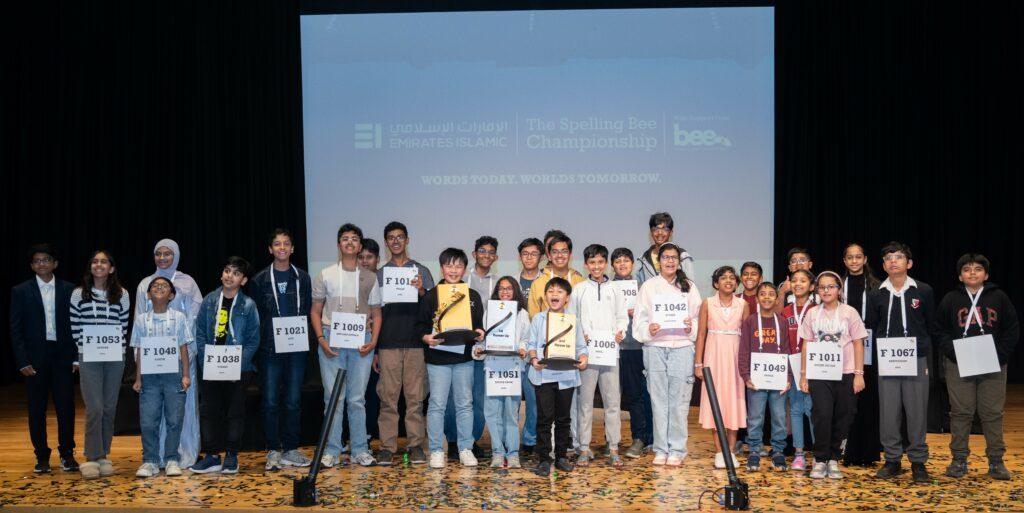
A great spelling competition is not simply about memorising difficult words. It is about confidence, vocabulary, concentration, pronunciation, and the ability to perform under pressure. For students looking for the best spelling bee competition in 2026, the right event should provide a structured learning experience while making language enjoyable and engaging.
Spelling bee competitions have become an interesting way for students to improve their English skills beyond the traditional classroom. Across the UAE, students participate in school-level, inter-school, national, and international spelling events, giving young learners opportunities to challenge themselves and showcase their abilities.
What Makes a Spelling Bee Competition the Best?
Not every spelling competition follows the same format. A well-organised competition should offer more than a list of words to memorise.
The best spelling bee competitions generally combine different skills, including spelling accuracy, vocabulary, pronunciation, listening, word recognition, and language understanding.
For example, some competitions use written tests, listening activities, scrambled words, vocabulary questions, and oral spelling rounds. Such formats make the competition more comprehensive and encourage students to understand words rather than simply memorise them.
Why Students Enjoy Spelling Bee Competitions
One of the biggest advantages of a spelling bee is that it transforms vocabulary learning into a challenge.
Instead of studying words only for examinations, students have a clear goal to work towards. They can prepare with friends, practise pronunciation, test one another, and participate in mock rounds.
The competitive atmosphere can make learning exciting while encouraging students to improve their language skills.
A spelling competition can also help students discover abilities they may not have recognised before. A child who enjoys reading or has a strong memory may discover a particular talent for vocabulary and spelling.
Building a Strong Vocabulary
Vocabulary is at the heart of every spelling bee.
During preparation, students may encounter words from literature, science, geography, technology, history, and everyday communication. Learning these words can improve both spoken and written English.
Students should also understand the meanings of words instead of memorising their letters alone. Knowing what a word means makes it easier to remember and use correctly.
For example, when a student learns a new word, they can record:
Correct spelling
Pronunciation
Meaning
Word origin
Example sentence
Similar or related words
This approach turns spelling practice into broader language learning.
Pronunciation Matters Too
A spelling bee is not only a written test. Participants usually need to hear a word and spell it aloud.
This means pronunciation and listening skills are extremely important.
Students should practise listening carefully to words and repeating them before spelling them. They can also learn common pronunciation patterns and understand how different word origins influence English spelling.
This can be particularly useful when students encounter unfamiliar words during advanced rounds.
Confidence on the Competition Stage
Standing in front of judges and an audience can make even a well-prepared student nervous.
A good spelling bee provides students with an opportunity to overcome this fear gradually. Every practice round helps them become more comfortable speaking clearly and confidently.
Even when a student spells a word incorrectly, the experience can be valuable. It teaches them how to accept mistakes, learn from them, and continue improving.
This confidence can later help during presentations, examinations, interviews, and other public-speaking situations.
How to Choose the Right Spelling Bee Competition
Parents and students should consider several factors before selecting a competition.
Age and Grade Categories
The competition should have suitable categories for different age groups. Age-appropriate words ensure that students face a meaningful challenge without being overwhelmed.
Competition Format
Look for competitions that include different types of activities rather than relying entirely on memorisation. Written, listening, vocabulary, and oral rounds can provide a more complete learning experience.
Preparation Support
Preparation material can make a major difference. Some competitions provide word lists, practice material, sample questions, or learning modules to help participants prepare.
Progression Opportunities
A strong competition may provide different levels, such as preliminary, quarter-final, semi-final, and final rounds. This gives students a clear pathway and allows them to progress as their skills improve.
For instance, some international spelling competitions use multiple stages and include activities such as identifying misspelled words, listening tasks, scrambled words, vocabulary exercises, and oral spelling
Preparing Like a Champion
Students should begin preparation well before the competition date.
Read Every Day
Reading is one of the simplest ways to discover new vocabulary. Fiction, educational books, magazines, and age-appropriate articles can all introduce students to unfamiliar words.
Maintain a Word Notebook
A personal vocabulary notebook can be extremely useful. Students can write down difficult words and revise them regularly.
Learn Word Roots
Understanding Greek, Latin, French, and other linguistic roots can help students recognise spelling patterns and understand unfamiliar vocabulary.
Practise Aloud
Students should practise spelling words aloud rather than only writing them. This prepares them for the pressure of the actual competition.
Conduct Mock Rounds
Parents, teachers, and friends can conduct practice rounds by pronouncing words and asking students to spell them. Gradually increasing the difficulty can build confidence.
The Role of Parents and Teachers
Preparation becomes easier when students receive encouragement from the people around them.
Teachers can organise classroom vocabulary games, spelling challenges, and practice sessions. Parents can support reading habits and help children revise difficult words at home.
The focus should not always be on winning. Improvement is equally important.
A student who learns hundreds of new words, becomes more confident, and develops better communication skills has already gained significant value from participating.
Spelling Bee Competitions in the UAE
The UAE has a strong multicultural education environment, making language competitions particularly interesting. Students from different backgrounds can participate and compete through a common language.
There is also evidence of large-scale spelling competitions attracting substantial participation in the UAE. For example, a 2014 championship reported more than 2,300 competitors from across the country, while a 2025 UAE competition reported 580 student competitors.
These examples show how spelling competitions can provide students with opportunities that extend beyond their schools and local communities.
More Than a Competition
The real value of the best spelling bee competition is not simply the final result.
Students learn discipline when they prepare regularly. They develop concentration while listening to difficult words. They improve vocabulary through reading and revision. They gain confidence by speaking in front of others.
Most importantly, they learn that achievement comes through patience and consistent effort.
A spelling bee can therefore become a memorable educational experience rather than just another school activity.
Conclusion
The best spelling bee competition is one that combines challenge, learning, confidence, and enjoyment. It should encourage students to explore vocabulary, improve pronunciation, develop listening skills, and become comfortable using English.
Whether a student is participating for the first time or preparing for an advanced championship, every round offers an opportunity to learn something new.
In the end, the biggest victory may not be holding a trophy. It may be the confidence to stand before an audience, hear an unfamiliar word, take a breath, and confidently spell it—one letter at a time.
Categorias
Leia Mais
Your heart works continuously to pump oxygen-rich blood throughout your body, making it one of the most important organs for overall health. Because many heart conditions develop gradually and may not produce noticeable symptoms in their early stages, regular cardiovascular evaluations are essential for early diagnosis and effective treatment. One of the most accurate and widely used...

Karbala Memories and Arbaeen Photography beautifully capture one of the world's largest spiritual gatherings, where millions of pilgrims travel to honor the sacrifice of Imam Hussain (AS). Every step of the Arbaeen pilgrimage tells a story of faith, devotion, resilience, and unity. Through meaningful photography, these unforgettable moments are preserved for future generations, allowing people...

Fear of God Essentials continues to shape modern streetwear in 2026 by proving that simplicity can be both distinctive and influential. Built around neutral colors, oversized silhouettes, subtle branding, and everyday comfort, the brand has created a style that feels premium without becoming excessive. As consumers move away from short-lived trends and focus more on versatility, quality, and...

Starting a business in the United States means making dozens of important decisions. One of the biggest is how to handle your legal documents. Should you pay an attorney to draft every contract, or can you safely use professional business contract templates? For many entrepreneurs, freelancers, startups, and small business owners, the answer depends on the complexity of the situation. Today,...

Modern organizations operate in an increasingly volatile commercial environment where technological disruption continuously reshapes business models. Corporate leaders frequently encounter structural friction when attempting to deploy advanced software applications onto rigid, legacy IT infrastructures. Enterprise architecture consulting acts as a critical strategic bridge, enabling executive...