


CAIAE-101 Certification Guide: Master AI Administration and Engineering Skills for Wireless Networking Professionals
Artificial intelligence is quickly becoming part of the infrastructure that network professionals already manage. AI-assisted monitoring, intelligent troubleshooting, model-based applications, automated workflows, and LLM-powered tools are appearing alongside familiar networking systems.
That creates a new challenge. Network professionals do not necessarily need to become machine-learning researchers, but they increasingly need to understand how AI systems are selected, deployed, monitored, secured, and eventually retired.
The Certified AI Administrator and Engineer from CWNP is designed around that practical gap. CWNP describes it as a vendor-neutral certification for network professionals who need to plan, implement, manage, monitor, control, and decommission AI solutions without requiring heavy programming skills.
What Is the CAIAE-101 Certification?
The CAIAE-101 exam validates foundational professional skills for administering and engineering AI solutions. CWNP specifically emphasizes implementation and management rather than pure AI research or software development. The certification is vendor-neutral, so preparation is centered on concepts and practical decision-making instead of one cloud or AI vendor's product stack.
The current exam contains 40 multiple-choice, single-answer questions, allows 100 minutes, and requires a 70% score to pass. CWNP lists the certification as valid for five years.
That structure is worth noting. Some questions are scenario-based, so candidates need to understand why an approach is appropriate rather than simply recognizing terminology.
What Skills Does the Exam Cover?
CWNP divides the exam into four primary domains. Implementation is the largest section, followed by planning and security, which gives candidates a useful indication of where to concentrate their preparation.
|
Exam Domain |
Weight |
|
AI Concepts, Types, and Applications |
15% |
|
Planning AI Solutions |
25% |
|
Implementing AI Solutions |
35% |
|
Securing AI Solutions |
25% |
This balance says something important about the certification. It is not designed to turn candidates into theoretical AI specialists. It is about making sound technical decisions across the AI lifecycle.
AI Concepts and Real-World Applications
The foundation begins with understanding what AI is, the different types of AI, and where AI can realistically be used.
For a network professional, imagine a monitoring platform that analyzes logs and traffic patterns to detect anomalies. The useful question is not simply whether AI can detect unusual behavior. You also need to ask what data the system requires, how alerts are evaluated, how false positives are handled, and who remains responsible for the final decision.
That practical mindset is more valuable than memorizing definitions.
Planning AI Solutions Requires More Than Choosing a Model
A common beginner mistake is starting with the model.
An experienced administrator starts with the problem.
Suppose an organization wants an internal AI assistant for technical documentation. Before selecting a model, the team needs to consider data sources, privacy, deployment location, expected usage, latency, budget, access controls, evaluation methods, and operational ownership.
CWNP's certification description specifically positions planning as part of the professional skill set, alongside implementation, management, monitoring, and control.
Data, Infrastructure, and Workload Planning
AI systems can have very different infrastructure requirements. A lightweight classification task may run efficiently on modest resources, while a large language model with high request volume can require substantial compute and careful capacity planning.
Network professionals already understand the principle. You do not design a network by looking only at today's traffic. You consider growth, redundancy, peak demand, failure scenarios, and operational constraints.
The same thinking applies to AI.
Implementing AI Solutions Is the Core of the Exam
At 35%, implementation is the largest CAIAE domain. Candidates should therefore spend significant time understanding how AI systems move from plans into working environments.
This can involve model selection, application configuration, deployment patterns, data pipelines, inference environments, monitoring components, and integration with existing infrastructure.
Imagine a company deploying an AI-powered help-desk assistant. The implementation team may need to connect the model to approved knowledge, establish authentication, configure logging, define response behavior, test performance, and determine what happens when the model cannot answer a question.
The assistant's intelligence is only one piece.
Administration Is the Missing Link
AI systems need ongoing management. Models can change. Usage can increase. Data can drift. Costs can rise quietly.
That is why administration and engineering overlap. A successful deployment is not the finish line; it is the beginning of a lifecycle.
Monitoring, Evaluation, and AI Operations
One of the most practical aspects of modern AI administration is observability.
A conventional application might be evaluated through uptime, CPU usage, memory consumption, error rates, and latency. AI systems require many of those metrics plus AI-specific indicators such as token consumption, inference latency, throughput, response quality, and output errors.
Current third-party outlines for the CAIAE objectives also highlight observability, AI-specific KPIs, evaluation, hallucination detection, regression testing, drift detection, scaling, FinOps, deployment strategies, and decommissioning.
Consider a model that was performing well six months ago. User behavior changes. The underlying data changes. The model begins producing weaker answers. Nothing has necessarily “crashed,” yet the quality has deteriorated.
That is an operational problem.
Securing AI Solutions
Security represents 25% of the exam, making it too significant to leave until the final days of preparation.
AI security has familiar foundations—identity, access control, encryption, secure infrastructure—but also introduces new concerns.
Prompt Injection and Data Exposure
AI applications can be manipulated through malicious instructions, especially when external content is mixed with system instructions. Administrators therefore need to understand how data and instructions are separated, how inputs are controlled, and where untrusted content enters the workflow.
Other concerns include model access, sensitive training or retrieval data, secrets, logging, third-party services, and the permissions granted to AI-enabled applications.
Security should be part of the design from the beginning, not a patch added after deployment.
Why Network Professionals Should Care
AI systems depend heavily on infrastructure. Data must move. APIs must remain reachable. Compute resources require capacity. Applications need reliable connectivity to models, databases, storage, and monitoring services.
That gives network professionals a useful starting advantage.
Someone who already understands availability, segmentation, traffic flows, troubleshooting, and infrastructure lifecycle management can apply those habits to AI systems. The new learning challenge is understanding how AI workloads behave and which additional controls they require.
It is also worth distinguishing this certification from FC0-U71, which is CompTIA Tech+, an introductory IT certification covering broad fundamentals such as infrastructure, applications, software development, databases, networking, cloud, security, and troubleshooting. It is not an AI-specific professional credential.
How to Prepare Effectively
CWNP provides more than 10 hours of learning material, a practice test, interactive learning tools, and the certification exam in its CAIAE offering.
A smart preparation strategy should combine reading with practical scenarios:
-
Study the four domains systematically. Start with AI concepts, then work through planning, implementation, and security so the pieces form a complete lifecycle.
-
Use infrastructure scenarios. Ask how you would deploy an AI service in a real enterprise environment, including connectivity, capacity, access, monitoring, and failure recovery.
-
Practice security decisions. Think through prompt injection, sensitive data, permissions, model exposure, and the consequences of overly broad access.
-
Learn AI operations vocabulary. Concepts such as model evaluation, drift, hallucination detection, inference latency, token usage, and FinOps become much easier once connected to actual operational examples.
Most importantly, avoid treating practice questions as a substitute for understanding. Scenario questions are easier when you can reason from principles.
Career Value of AI Administration Skills
AI administration is emerging as a useful bridge between traditional infrastructure work and newer AI initiatives.
Professionals who understand both environments can contribute to AI deployments without needing to become research scientists. They can help evaluate infrastructure, plan deployments, secure AI systems, monitor operational performance, and work with development or data teams.
For networking professionals in particular, this can create a natural path into AI-enabled infrastructure and operations.
Final Thoughts
The most interesting thing about AI administration is how much of it resembles good infrastructure engineering.
Plan carefully. Control access. Monitor performance. Expect failure. Measure results. Manage cost. Document changes. Retire systems responsibly.
The tools are newer, but the discipline is familiar.
For professionals preparing for the certification, the best approach is to learn AI as an operational technology rather than an abstract research topic. Understand the lifecycle, practice real scenarios, and pay close attention to implementation and security because those areas together account for most of the exam.
Frequently Asked Questions
What is the CAIAE certification?
CAIAE is CWNP's Certified AI Administrator and Engineer credential, a vendor-neutral certification designed for network professionals who need to select, implement, manage, monitor, secure, and decommission AI solutions without requiring heavy programming skills.
How many questions are on the CAIAE-101 exam?
The exam currently contains 40 multiple-choice, single-answer questions and provides 100 minutes for completion. A score of 70% or higher is required to pass.
What topics should I study for CAIAE-101?
Focus on AI concepts and applications, planning AI solutions, implementation, security, and the operational lifecycle of AI systems. Monitoring, evaluation, model performance, cost management, and responsible administration are also important areas to understand.
Is CAIAE suitable for network professionals?
Yes. CWNP explicitly describes CAIAE as a vendor-neutral AI administration and engineering certification for network professionals. The emphasis is on implementing, configuring, managing, and controlling AI solutions rather than advanced AI programming.
Categorias
Leia mais
Mumbai, India’s bustling financial and entertainment capital, is renowned for its energy, diversity, and luxurious lifestyle. For those seeking a higher level of companionship—whether for social events, business gatherings, or private relaxation—choosing a professional Escort Service Mumbai is the key to an elevated experience that blends sophistication, comfort, and...

Syna World Syna World has quickly emerged as one of the most exciting names in contemporary streetwear, earning attention from fashion enthusiasts, musicians, athletes, and trendsetters across the globe. Unlike many brands that rely solely on bold logos or seasonal trends, Syna World has cultivated a distinct identity rooted in authenticity, creativity, and cultural influence. The...

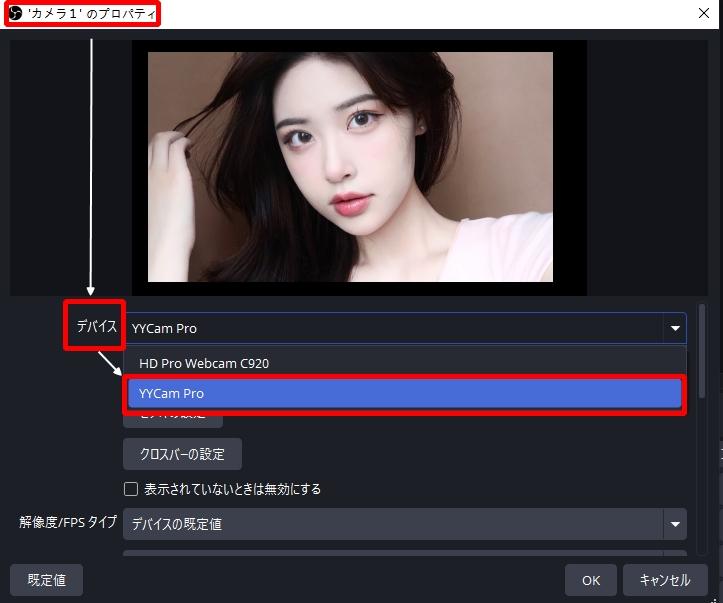
近年、ライブ配信市場は急速に拡大し、多くのクリエイターや配信者が高品質な映像環境を求めています。その中でもライブ 配信 webカメラ 高画質というキーワードへの注目は年々高まっています。視聴者にとって映像の美しさは配信の印象を左右する重要な要素であり、高画質な映像は視聴維持率やエンゲージメント向上にもつながります。そんなニーズに応えるのが、ライブ配信をより魅力的に演出できるyycamproです。 高画質配信が求められる理由 ライブ配信では映像品質が第一印象を決定します。画面がぼやけていたり暗かったりすると、どれほど内容が優れていても視聴者は離脱してしまう可能性があります。そのため、多くの配信者がライブ 配信 webカメラ 高画質を実現できるツールを探しています。 高品質な映像環境には以下のようなメリットがあります。 視聴者の信頼感を高められる プロフェッショナルな印象を与えられる...
The T999 Game has become a popular name among players who enjoy fast-paced digital gaming experiences. Known for its simple interface, engaging gameplay, and wide variety of entertainment options, the T999 Game appeals to both beginners and experienced players. Whether someone enjoys short gaming sessions or longer periods of play, the platform is designed to provide an enjoyable...

Looking for a trusted JAPA MAID IN JAIPUR to care for both mother and newborn after delivery? Good Maid India provides experienced and verified Japa maids who offer professional postnatal care in the comfort of your home. Our trained caregivers assist with newborn bathing, feeding support, baby massage, mother care, hygiene, and recovery guidance, ensuring both mother and child receive the...