How a Gojek Clone Script Can Create a Better User Experience Across Multiple Services?
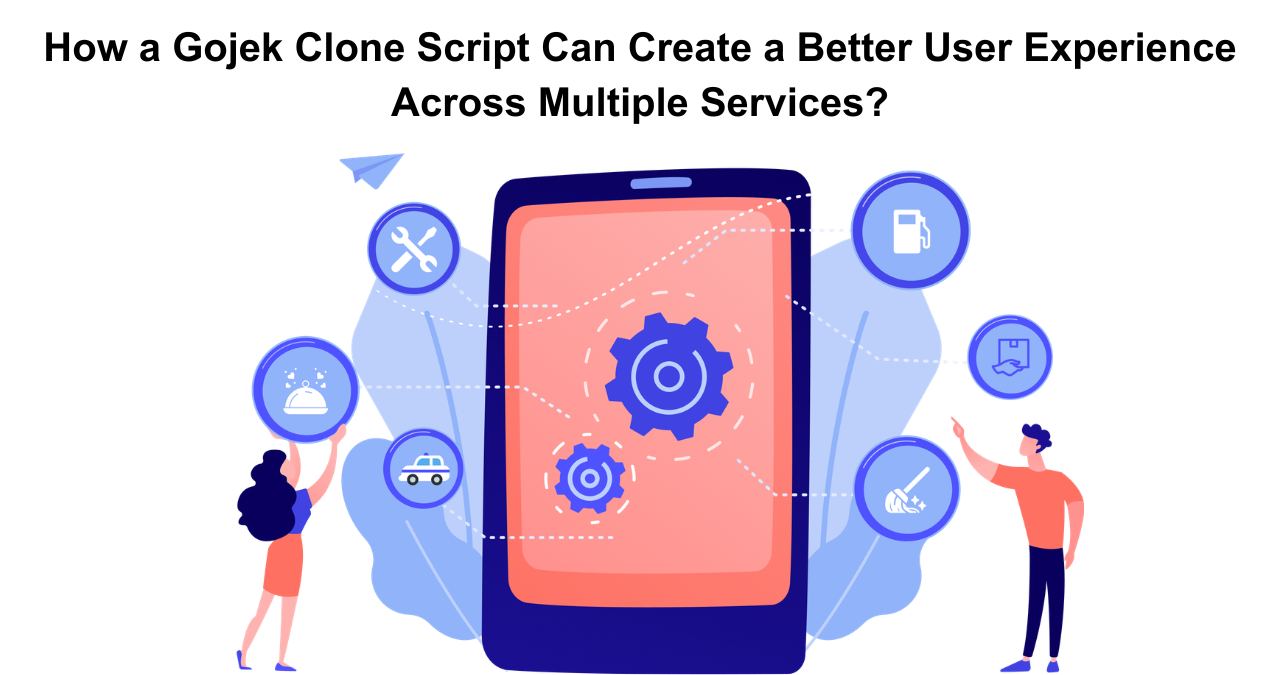
A modern digital marketplace is no longer limited to one service. Customers increasingly prefer platforms that allow them to book transportation, order food, request home services, send packages, shop for products, and access other everyday services from one application. This shift has created strong demand for multi-service platforms that combine convenience with a consistent digital experience.
For startups and entrepreneurs, this creates an opportunity to build a platform that serves several customer needs instead of depending on a single service category. However, offering multiple services is not enough. The platform must also make those services easy to discover, simple to book, transparent to track, and convenient to manage.
A Gojek Clone Script can provide the foundation for this type of platform. Instead of developing every service module independently, entrepreneurs can start with an established multi-service structure and customize it according to their target market, business model, and service categories.
The real value of this approach is not simply having several services inside one application. It is the ability to create a connected user experience where customers can move between services without feeling that they are using completely different applications.
Why User Experience Matters in a Multi-Service Platform
User experience becomes more complicated as the number of services increases. A customer may use a taxi service in the morning, order lunch at noon, and book a home cleaning service in the evening. If each service has a different navigation flow, booking process, payment experience, or communication method, the overall platform can become difficult to use.
A successful Multi-Service App should therefore focus on consistency.
Customers should understand how to search for a service, select an option, confirm a request, make a payment, communicate with a service provider, and check order status regardless of which service they choose.
This consistency reduces the learning curve. Once customers understand one part of the platform, they can use other services more confidently.
A Gojek Clone can be structured around this principle by providing a common experience across different service modules while still allowing each service to have its own operational requirements.
One Application for Multiple Daily Needs
The primary advantage of a multi-service platform is convenience. Customers do not need to install and manage separate applications for every requirement.
For example, a single platform can offer:
- Ride booking
- Food delivery
- Grocery delivery
- Courier services
- Home cleaning
- Plumbing
- Beauty services
- Laundry
- Moving services
- Shopping
- Appointment-based services
The exact service mix can be customized according to the market.
For entrepreneurs, this approach also creates opportunities to expand the platform gradually. A business can begin with a few high-demand categories and introduce additional services after understanding customer behavior.
How a Gojek Clone Script Improves the Customer Journey
A better user experience starts with a simple customer journey. The user should be able to discover a service, understand available options, place a request, receive updates, and complete the transaction without unnecessary steps.
A well-structured Gojek Clone Script can support this journey through shared interface patterns and service-specific workflows.
1. Simple Service Discovery
Customers should not have to search through complicated menus to find what they need.
The home screen can present major service categories in an organized format. Frequently used services can be placed prominently, while additional categories can be accessible through a dedicated service section.
Search functionality can further improve discovery when a platform contains many services.
For example, a customer looking for a plumber should be able to search for plumbing instead of scrolling through multiple categories.
Personalized recommendations can also make discovery more efficient. A platform can highlight recently used services, popular services, nearby providers, seasonal services, or relevant offers.
2. Consistent Booking Experience
Different services may require different information, but the overall booking structure should remain familiar.
A ride-booking service may require pickup and destination information. A home service may require an address, service type, preferred time, and additional instructions. A food order may require restaurant and menu selection.
Although these workflows differ, the interface can maintain common patterns such as:
- Service selection
- Location confirmation
- Provider or item selection
- Date and time selection
- Order summary
- Payment
- Confirmation
- Tracking
This makes the platform easier to understand.
Entrepreneurs looking to build a super app should treat consistency as a product strategy rather than simply a design preference.
Personalization Can Make a Multi-Service Platform More Useful
Customers expect digital platforms to become more relevant over time. A multi-service platform has access to multiple categories of customer interactions, creating opportunities for useful personalization.
For example, a customer who frequently orders food may see food-related services more prominently. Another customer who regularly books taxis may receive faster access to transportation options.
Personalization can include recently used services, saved addresses, preferred payment methods, service recommendations, promotional offers, and booking history.
The objective should not be to overwhelm customers with recommendations. Personalization should reduce the number of steps required to complete common actions.
Saved Preferences Reduce Repetitive Actions
If a customer frequently books a ride from home to work, repeatedly entering the same information creates unnecessary friction.
Saved locations and preferences can simplify future bookings.
Similarly, customers can benefit from saved addresses for food delivery, frequently used service providers, preferred payment options, and repeat service requests.
These small improvements can have a significant effect on the overall experience because customers interact with them repeatedly.
Real-Time Tracking Builds Transparency
Real-time tracking has become an important expectation across on-demand services.
Customers want to know whether their driver is approaching, whether their food order has been picked up, or when a service professional is expected to arrive.
A Gojek app clone can incorporate tracking capabilities into different service categories while adapting the tracking interface to each use case.
For transportation, users can see the driver's location and estimated arrival time. For delivery, they can follow order progress. For home services, they can receive updates about the assigned professional and appointment status.
Tracking reduces uncertainty.
Instead of wondering what is happening after placing a request, customers receive visible updates throughout the process.
Clear Communication Between Customers and Providers
Communication is another important part of user experience.
Customers may need to contact drivers, delivery partners, restaurants, technicians, cleaners, or other service providers. A platform can support communication through in-app chat, notifications, and other suitable communication channels.
A common communication system across services makes the experience easier to understand.
For example, users should know where to find order updates, messages, service instructions, and notifications regardless of the service they have selected.
Notifications Should Be Useful, Not Excessive
A multi-service platform can generate many notifications, but sending too many irrelevant messages can negatively affect the user experience.
Notifications should primarily communicate important events such as booking confirmation, provider assignment, arrival updates, order status changes, payment confirmation, cancellations, and service completion.
Users can also be given control over promotional notifications and other optional communication.
The goal is to make notifications helpful rather than disruptive.
One Account Across Multiple Services
A major advantage of a multi-service platform is allowing users to access different services through one account.
Customers should not need separate registration processes for taxi booking, food delivery, home services, and courier services.
A unified account can contain personal information, saved addresses, booking history, payment preferences, loyalty benefits, and other relevant details.
This makes the platform feel like one connected ecosystem instead of a collection of unrelated services.
For businesses, a unified account structure can also support better customer retention because users have more reasons to return to the same platform.
Unified Payment Experience
Payment is another area where consistency can improve usability.
Customers should have a familiar payment process regardless of the service they select. Depending on the target market, a platform may support cards, digital wallets, bank-based payment methods, cash payments, or other locally relevant options.
A shared payment experience reduces confusion.
Users can also benefit from saved payment preferences, transaction history, digital receipts, refunds, and payment status updates.
For entrepreneurs planning to Build a super app, payment should be treated as a central part of the customer journey rather than an isolated feature.
Service Ratings and Feedback Improve Trust
Trust is particularly important when a platform connects customers with multiple types of service providers.
Ratings and reviews give customers an opportunity to share their experiences and help future users make informed decisions.
A consistent feedback system can be applied across different service categories while allowing service-specific questions when necessary.
For example, customers may rate a driver based on punctuality and behavior, while a home service provider may be evaluated for service quality and professionalism.
Feedback also provides businesses with useful information about service performance. Recurring complaints can highlight areas where operational improvements are needed.
Building a Flexible Multi-Service Ecosystem
One of the strongest benefits of Gojek Clone App development is flexibility.
Instead of designing the platform around one fixed service category, entrepreneurs can structure it so that new services can be introduced as the business grows.
This is particularly useful for startups because market demand can change.
A business may initially focus on transportation and later introduce food delivery. Once the customer base becomes established, it may expand into home services, courier delivery, grocery delivery, or other categories.
The platform should therefore be designed around a modular service approach.
Start With a Focused Service Portfolio
Offering dozens of services at launch may sound attractive, but it can create operational and user experience challenges.
A better approach is to identify the services that have the strongest demand in the target market.
For example, a startup entering a specific city may begin with ride-hailing, food delivery, and home services. Once these categories achieve sufficient adoption, additional services can be introduced.
This approach allows businesses to learn from actual customer behavior before expanding.
Expand Based on Customer Demand
Data from existing services can help identify expansion opportunities.
If customers frequently use the platform for food delivery, the business may consider adding grocery delivery. If users regularly book transportation, courier or logistics services may become a natural extension.
The objective is to make each new service relevant to the existing customer base.
This creates a connected ecosystem where new services strengthen the value of the existing platform.
How a Gojek Clone Script Supports Different Service Categories
The strength of a multi-service platform is its ability to support different business workflows under one ecosystem.
A ride-hailing module can focus on location, driver assignment, trip tracking, and navigation. A food delivery module can focus on restaurants, menus, orders, preparation status, and delivery. A home-service module can focus on service categories, professional profiles, scheduling, and completion.
The customer-facing experience can remain consistent even though the operational processes differ.
This distinction is important for entrepreneurs. A multi-service application should not make every service behave exactly the same way. Instead, it should create a familiar user experience while preserving the unique requirements of each category.
Why Entrepreneurs Consider App Like Gojek Models
An app like Gojek demonstrates how multiple on-demand services can exist within a connected digital ecosystem.
For entrepreneurs, the model provides an opportunity to create a platform that generates customer value through convenience and service variety.
The business does not necessarily need to copy every service available in an established super app. Instead, entrepreneurs can select services that match their market.
For example, a platform operating in one region may focus on transportation, food, grocery, and home services. Another platform may focus on courier services, beauty appointments, healthcare-related bookings, and local commerce.
The model is flexible enough to support different strategies.
Creating a Better Experience for Service Providers
User experience is not limited to customers. Drivers, delivery partners, technicians, merchants, and other service providers also need a simple platform.
If provider workflows are complicated, it can affect service quality and response times.
A well-planned multi-service platform can give providers access to relevant information such as booking requests, schedules, earnings, service history, availability, notifications, and customer details.
The provider experience should be focused on the tasks they need to complete rather than unnecessary functionality.
Faster Request Management
Service providers should be able to understand new requests quickly.
Important information such as service type, location, requested time, customer instructions, and expected earnings should be presented clearly.
This allows providers to accept or reject requests efficiently.
A simpler provider experience can also improve fulfillment rates because service professionals spend less time navigating the application.
The Role of a Super App Development Company
Building a multi-service platform requires more than combining several service modules.
The platform needs a clear product strategy, consistent UX, scalable architecture, suitable integrations, and a roadmap for future service expansion.
Working with a Super app development company can help entrepreneurs translate their business model into a structured digital platform.
The development process should begin with understanding the target market, customer expectations, service categories, operational model, and long-term expansion plans.
The technology should then support those requirements without making the application unnecessarily complicated.
What Makes a Multi-Service App Successful?
A successful multi-service application is not defined by the number of services it offers.
The quality of the overall experience matters more.
A platform with ten well-integrated services can provide more value than a platform with fifty poorly connected services.
Important areas include simple navigation, fast service discovery, reliable booking flows, transparent tracking, convenient payments, useful notifications, and responsive customer support.
The platform should also maintain consistency as new services are added.
Every new service should feel like part of the same ecosystem.
Key UX Principles for Building a Super App
Entrepreneurs planning to Build a super app should keep several principles in mind.
Keep Navigation Simple
Customers should be able to reach frequently used services quickly. Categories should be organized logically, and search should be available when the platform contains many options.
Reduce the Number of Steps
Every unnecessary screen can create friction. Common actions such as rebooking, ordering again, selecting saved addresses, and making payments should be as straightforward as possible.
Maintain Consistency
Buttons, terminology, icons, status indicators, booking patterns, and payment flows should follow consistent design principles across services.
Provide Transparency
Customers should understand the status of their requests, expected arrival times, payment status, and important changes.
Make Personalization Practical
Personalization should help customers complete tasks faster rather than simply showing more content.
These principles can help a platform remain easy to use even as its service portfolio expands.
How Gojek Clone App Development Can Support Business Expansion
The objective of Gojek Clone App development should be to create a foundation that can evolve with the business.
An entrepreneur may begin with a focused launch and gradually introduce additional service categories. This approach allows the business to validate demand, understand customer behavior, and improve the platform before expanding.
The platform can also be customized to reflect the business's branding, target audience, geographical market, service categories, and operational requirements.
This makes the model suitable for different markets rather than restricting entrepreneurs to one predefined business format.
From a Single-Service Business to a Connected Platform
Many startups begin with one core service because it is easier to validate.
Once customer adoption grows, the business can consider related services that solve additional customer problems.
For example, a transportation platform may expand into courier services. A food delivery platform may introduce grocery delivery. A home-service marketplace may add cleaning, beauty, repair, and moving services.
This gradual approach can create a stronger relationship between the customer and the platform.
Instead of visiting the application for only one requirement, customers have multiple reasons to return.
Why a Multi-Service Strategy Can Improve Customer Retention
Customer retention is closely connected to convenience.
When users can solve several everyday needs through one platform, switching between multiple applications becomes less attractive.
This does not mean that customers will automatically remain loyal simply because more services are available. Each service must provide a reliable experience.
However, a well-integrated ecosystem can increase the number of interactions customers have with the platform.
This creates more opportunities for businesses to build long-term customer relationships.
Future Opportunities for Multi-Service Platforms
The multi-service model continues to create opportunities for entrepreneurs because consumer expectations are moving toward convenience and integrated digital experiences.
Businesses can explore new service categories, personalized recommendations, loyalty programs, subscriptions, business accounts, local marketplace services, and other models depending on their market.
The important consideration is maintaining a clear product experience while expanding.
A platform should not add services simply to increase the number displayed on the home screen. Every new category should solve a real customer need and contribute to the overall ecosystem.
Choosing the Right Approach for Your Business
Entrepreneurs considering a Gojek Clone Script should begin by defining their business objectives.
The first question should be which customer problem the platform is designed to solve.
The second should be which services are most relevant to the target market.
The third should be how those services can work together to create a better experience.
Once these questions are clear, the platform can be customized around the business model.
This approach is more effective than launching a generic multi-service application without understanding the market.
Conclusion
A multi-service platform can create significant value when different services are connected through a simple and consistent customer experience. Customers want convenience, but convenience is not achieved simply by placing multiple services inside one application. The complete journey, from service discovery to booking, tracking, communication, payment, and feedback, must feel straightforward.
A Gojek Clone Script can provide a strong foundation for entrepreneurs who want to create this type of connected ecosystem. With the right customization, businesses can select relevant services, build a recognizable platform, simplify customer interactions, and gradually expand into new categories.
For startups and entrepreneurs, the goal should be to Build a super app that solves real problems in the target market rather than attempting to replicate every feature of an established platform. A focused service strategy, consistent user experience, and flexible growth plan can make the platform more useful and easier to scale.
Choosing an experienced clone app development company can also help businesses turn a multi-service concept into a practical digital product while keeping the platform aligned with their long-term business goals.
Frequently Asked Questions
1. What is a Gojek Clone Script?
A Gojek Clone Script is a ready-made foundation for developing a multi-service on-demand platform. It can be customized with different service categories, branding, workflows, and features according to a business's target market and requirements.
2. Can a multi-service platform offer different types of on-demand services?
Yes. A multi-service platform can support categories such as ride-hailing, food delivery, grocery delivery, courier services, home services, beauty services, laundry, and other on-demand offerings. The final service mix depends on the business strategy and market demand.
3. How does a multi-service application improve customer experience?
It gives customers access to multiple services through one platform. Consistent navigation, unified accounts, saved preferences, tracking, communication, notifications, and payment flows can make everyday transactions more convenient.
4. Can entrepreneurs customize a Gojek-style platform?
Yes. Entrepreneurs can customize the platform based on their brand identity, target market, selected service categories, customer workflows, provider requirements, and expansion strategy.
5. Why should startups consider a multi-service app model?
A multi-service model allows startups to begin with selected services and expand their offerings as customer demand grows. It can create more reasons for customers to return to the platform and provide opportunities to develop a broader digital ecosystem.
Κατηγορίες
Διαβάζω περισσότερα
Mobile gaming has become a popular form of entertainment, with millions of people using smartphones to access games and digital platforms. As online gaming continues to grow, applications such as 999 Game are attracting attention from users interested in mobile gaming and reward-based entertainment. Before downloading any gaming application, however, users should understand where to get...

The 87 Club Game has gained popularity among players looking for a convenient and engaging online gaming experience. With its user-friendly interface, mobile compatibility, and variety of gaming options, it appeals to both newcomers and experienced users. Whether you enjoy quick gaming sessions or exploring different game categories, the platform is designed to provide an enjoyable...

The modern energy sector—spanning deepwater offshore drilling operations, high-pressure shale extraction networks, and complex cross-country pipeline transmission systems—relies entirely on uncompromising hydraulic stability and safety compliance. As hydrocarbon exploration ventures into increasingly challenging geological formations and deeper marine environments, managing intense...

A luxury perfume is more than a pleasant fragrance. It can become a signature part of your personality, elevate your everyday style, and create a lasting impression. From sophisticated woody compositions to delicate florals and rich oriental aromas, luxury fragrances offer an opportunity to discover something truly personal. If you're searching for a luxury perfume shop near me Pune, the...

At the heart of the softgel manufacturing process lies sophisticated Encapsulation equipment, the result of decades of engineering innovation. The machine is the core around which the entire production system is built. According to Market Research Future, the evolution of encapsulation equipment, particularly in terms of precision, speed, and automation, is the single most important factor...