

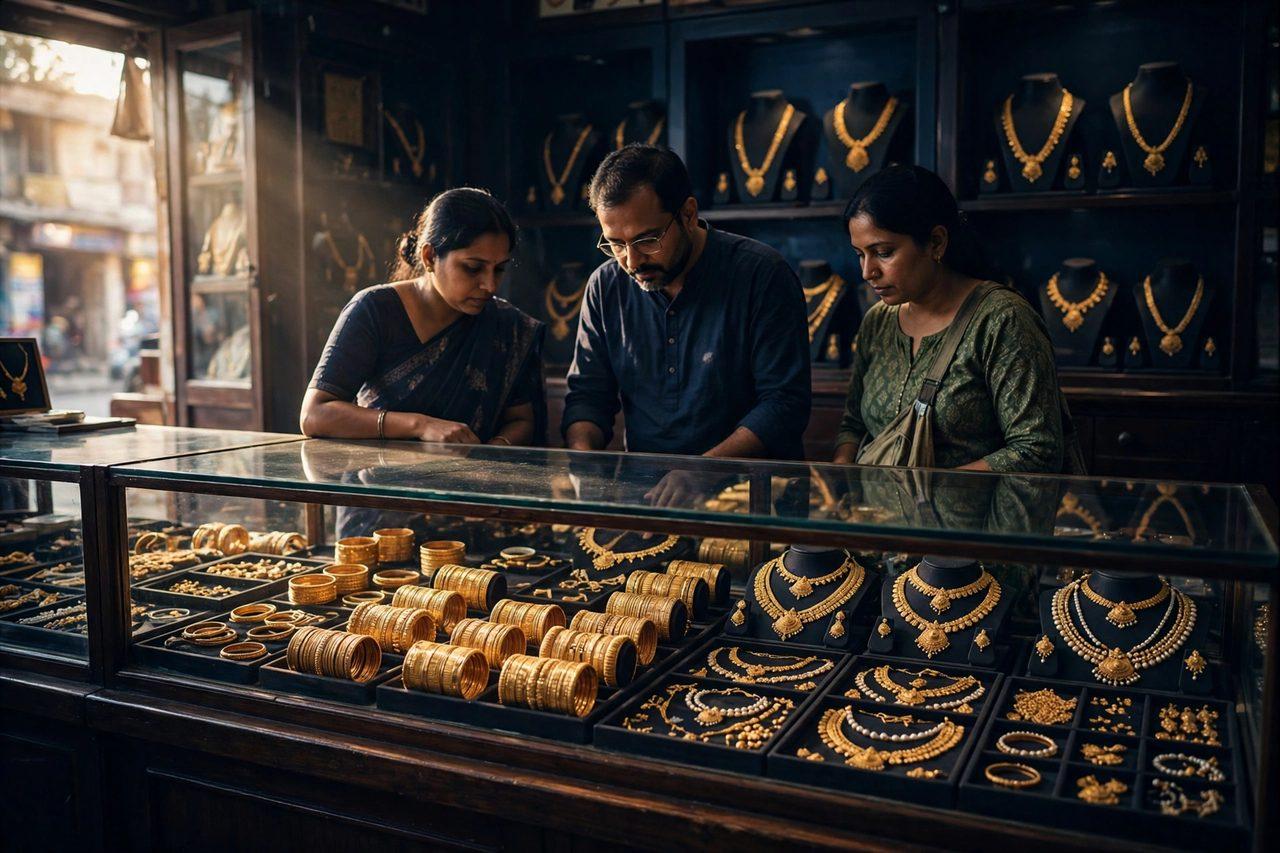
India's Gold Demand Falls to a Six-Year Low as High Prices Cut Jewellery Buying

India's gold demand is heading for its weakest year since 2020, with the World Gold Council expecting full-year 2026 demand of around 650 tonnes — the lowest in six years.
The September quarter told the story clearly: demand fell sharply as record prices forced households to cut back on jewellery, even as the total amount of money spent on gold still rose. For the world's second-largest gold consumer, that split between falling tonnage and rising value is now the central story in the global gold market, a story followed closely on the Zimbuck News page.
A Steep Fall in the September Quarter
Demand in the September quarter, or Q3, fell 29% year-on-year to 162.5 tonnes, down from 229.8 tonnes a year earlier. The decline was broad. It hit jewellery, investment bars and coins, and exchange-traded funds at the same time, showing that high prices — not a single weak segment — drove the slowdown.
The key Q3 figures were:
- Jewellery demand fell 20% to 99.9 tonnes
- Bar and coin, or investment, demand fell 40% to 55 tonnes
- Gold ETF demand fell 50% to 5.3 tonnes
- Net gold imports fell 46% to 114.1 tonnes, from 211.9 tonnes
- The Reserve Bank of India bought no gold in Q3, compared with 0.2 tonnes a year earlier
- Average Q3 gold price was $4,262 per ounce, compared with $3,457 a year earlier
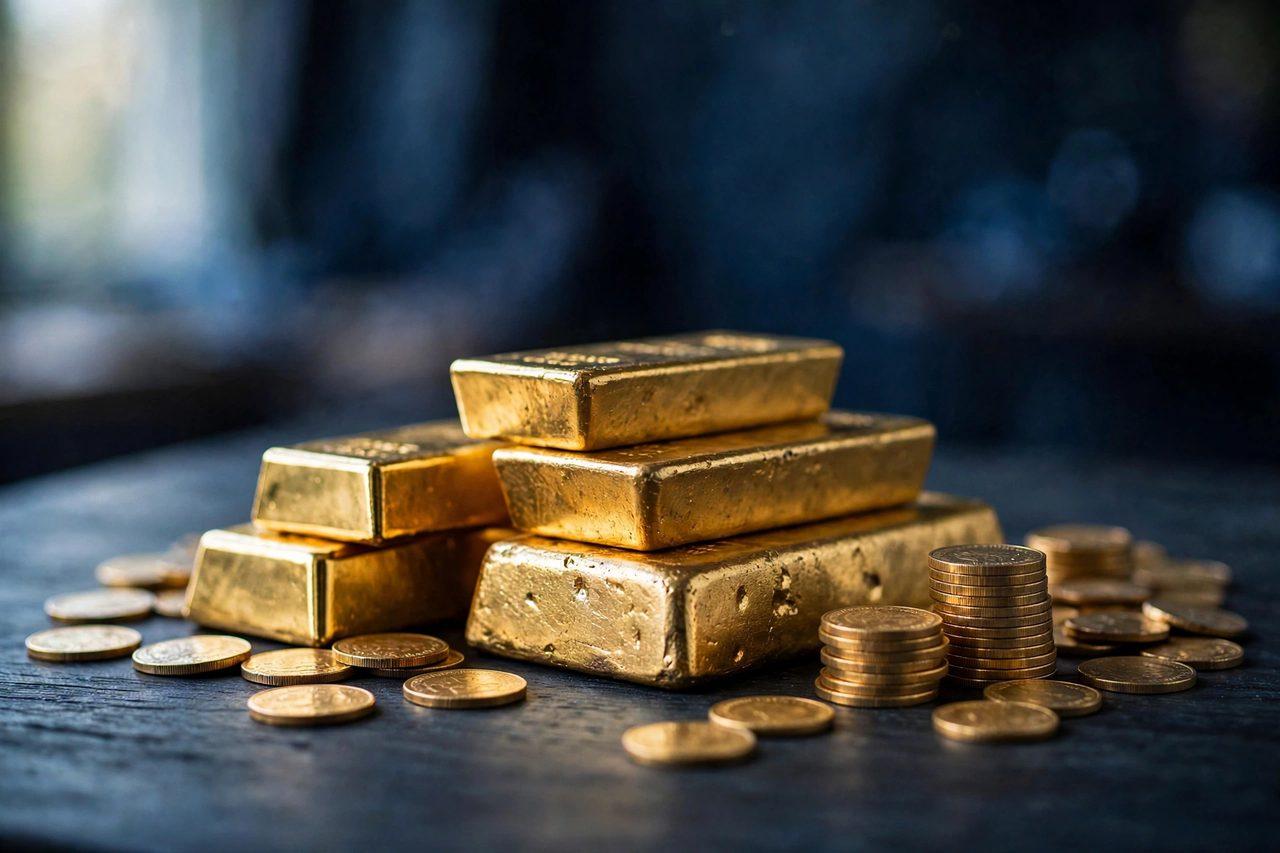
Why Tonnage Falls While Value Rises
The most surprising figure in the report is value. Even though India bought far fewer tonnes, demand value still rose 3% to ₹2,41,900 crore. That happened for one simple reason: prices rose faster than volumes fell.
Think of it in household terms. A family that once bought a heavier necklace for a wedding now buys a lighter piece for a similar budget. The jeweller still takes in a comparable amount of money, the family still owns gold for the occasion, but the total weight sold drops. Multiply that decision across millions of weddings and festivals, and national tonnage falls while national spending holds up or rises.
This also explains why the pain is uneven. Jewellery demand, at 99.9 tonnes, held up better than investment demand in percentage terms, because weddings cannot easily be postponed. Bar and coin demand fell more sharply, by 40%, as some investors who might normally buy on strength decided to wait, trade smaller sizes, or hold cash instead. ETF demand halved to 5.3 tonnes, underlining that even financial buyers were cautious at these levels. Readers comparing gold with other assets can explore the basics in our guide, What Moves Gold Prices: A Beginner's Guide.
What Pushed Indian Buyers to the Sidelines?
The World Gold Council pointed to several pressures working together. Sachin Jain, Regional CEO for India at the WGC, linked the weakness to persistently high prices, a higher import duty earlier this year alongside a rise in unofficial inflows, a weak monsoon hurting rural demand, and higher living costs connected to the Iran war.
Each factor hits a different buyer. High prices hit rural buyers hardest when farm incomes are under pressure after a weak monsoon. Rural India is a core source of demand, where gold is both adornment and a trusted store of savings. When budgets are squeezed by living costs, purchases are often delayed or reduced in weight rather than abandoned completely.
Duty and unofficial inflows add another layer. When official import costs rise, some supply finds other routes into the market, which can distort reported imports and make the official picture look even weaker. That is one reason analysts watch both import data and local price premiums, rather than relying on a single number. The full wire report on the WGC outlook was carried by Reuters via Kitco.

Can Diwali and Wedding Season Rescue Q4?
The Council expects some improvement in the fourth quarter, helped by Diwali and the wedding season — traditionally the strongest period for Indian gold buying. Festivals create a cultural and family reason to buy that high prices cannot fully remove, and weddings generate planned purchases that families prepare for over months.
But the WGC also warned that high prices will cap any recovery. That caution fits the wider price picture: Comex gold closed on Friday at $4,074.90 per ounce, still near historic highs even after easing from the Q3 average of $4,262 per ounce. At those levels, a seasonal rebound is more likely to mean lighter jewellery, more exchange of old gold, and careful budgeting than a return to the heavy volumes seen when prices were far lower.
For global markets, India's slowdown is a reminder that physical demand still matters. Central bank buying, ETF flows and futures positioning can push prices higher for long periods, but jewellery buyers in India respond to price in a very direct way: they buy less weight. If Indian demand stays near 650 tonnes for the full year, it will confirm that the consumer side of the market is struggling to keep pace with the financial side — a tension traders are debating in the Zimbuck Market News group.
What It Means for Gold Investors Watching From Outside India
Do not read falling Indian tonnage as proof that gold demand has collapsed everywhere. Value demand in India still rose, and investors in other regions may behave differently. Watch whether Q4 brings a genuine volume recovery or only higher spending on fewer tonnes, and watch imports: a rebound from 114.1 tonnes would suggest real end-demand is improving, while continued weakness would suggest high prices are still rationing demand.
Frequently Asked Questions
How much gold will India consume in 2026?
The World Gold Council expects India's full-year 2026 gold demand to be around 650 tonnes, which would be the lowest since 2020.
Why did demand value rise if demand volume fell?
Because prices rose sharply. The average Q3 price was $4,262 per ounce, up from $3,457 a year earlier, so buyers spent 3% more in value terms — ₹2,41,900 crore — while buying far fewer tonnes.
Will Diwali and weddings lift demand in Q4?
The WGC expects Q4 may improve on Diwali and wedding-season buying, but it says high prices will cap the recovery, so a seasonal lift is unlikely to erase the weakness seen in Q3.
Join the conversation on Zimbuck — the finance social platform for traders and investors — to follow gold, commodities and market news with the community. This article is market news and general information only, not financial advice.






