

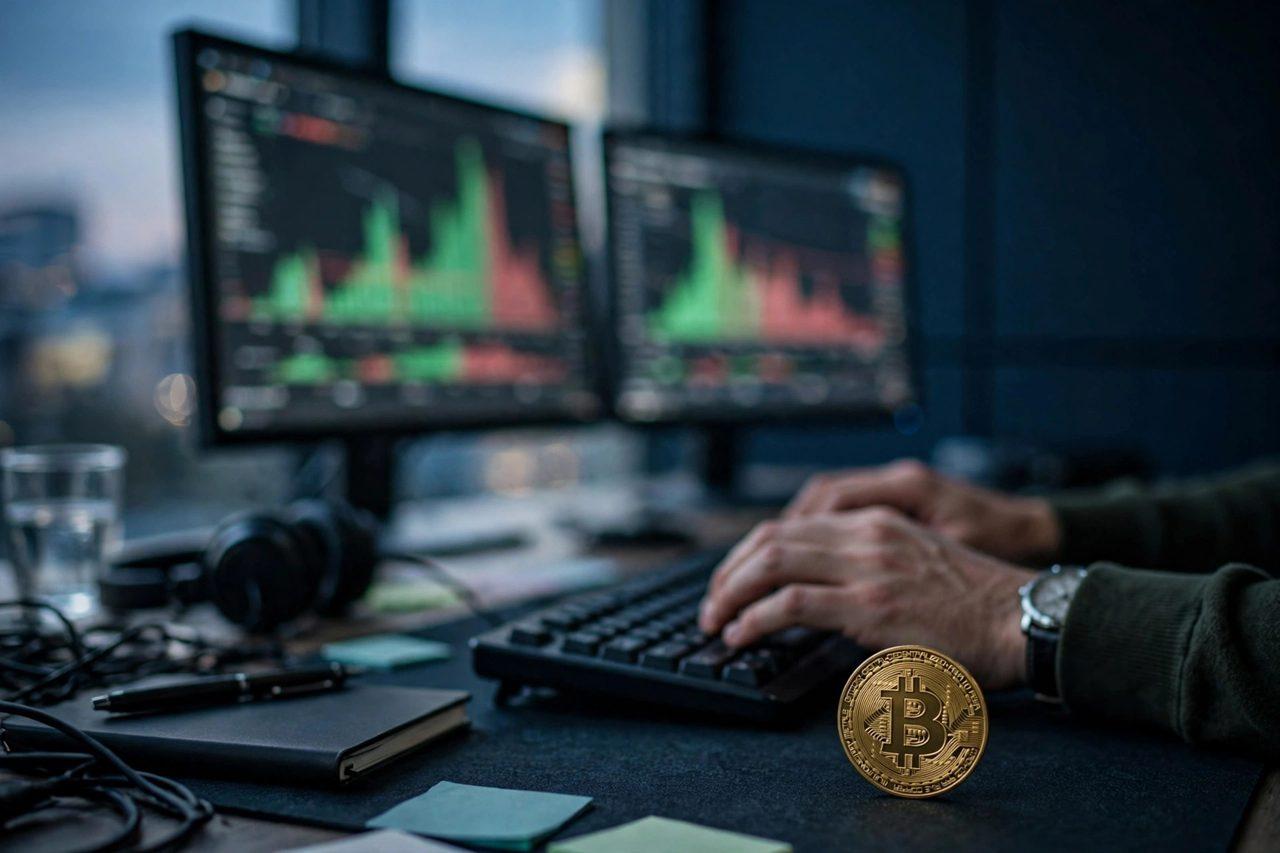

You click buy at the price on the screen, the order fills, and the average price on your confirmation is slightly worse than the quote you saw. That gap has a name — slippage — and every crypto trader pays it, whether they notice it or not. This guide explains what slippage is, why market orders "walk the book", how to calculate it before you trade, and the practical steps that keep it small.
Slippage matters most on busy days. When markets swing hard — like this week, when Bitcoin dropped to about $73,761 before bouncing back above $75,000 and more than $1 billion in leveraged positions were liquidated in 24 hours — order books thin out and slippage spikes. Understanding it is part of trading on any exchange, a theme we also cover in our reporting on how exchanges screen deposits and transfers, and in the market discussions on the Zimbuck News page.
What is slippage, in plain English?
Slippage is the difference between the price you expect when you place a trade and the average price at which your order actually fills. It is not a fee and nobody charges it on purpose. It happens because a market order fills against whatever buy and sell orders are resting in the order book at that moment, starting at the best available price and moving to the next level, then the next, until the full order is complete.
If you buy a small amount of a liquid coin like Bitcoin on a major exchange, the book is deep and slippage is usually tiny. If you buy a large amount, or trade a thin altcoin during a fast move, your order can climb several price levels and the average fill can be noticeably worse than the first quote.
Reading the order book: bids, asks, spread and depth
An order book is the exchange's live list of resting orders for one trading pair. Buy orders are called bids and sell orders are called asks. The gap between the best bid and the best ask is the spread — the minimum cost of buying and immediately selling. Depth is how much volume is available at each price level near the top of the book.
Three ideas explain almost all slippage:
- Walking the book: if your order is bigger than the amount offered at the best price, the rest fills at worse prices, level by level.
- Thin depth: the less volume resting near the top, the further a market order walks — small-cap and memecoin books slip the most.
- Speed of the market: while your order executes, other traders are also trading, so prices can move between your click and your fill.
How to calculate slippage
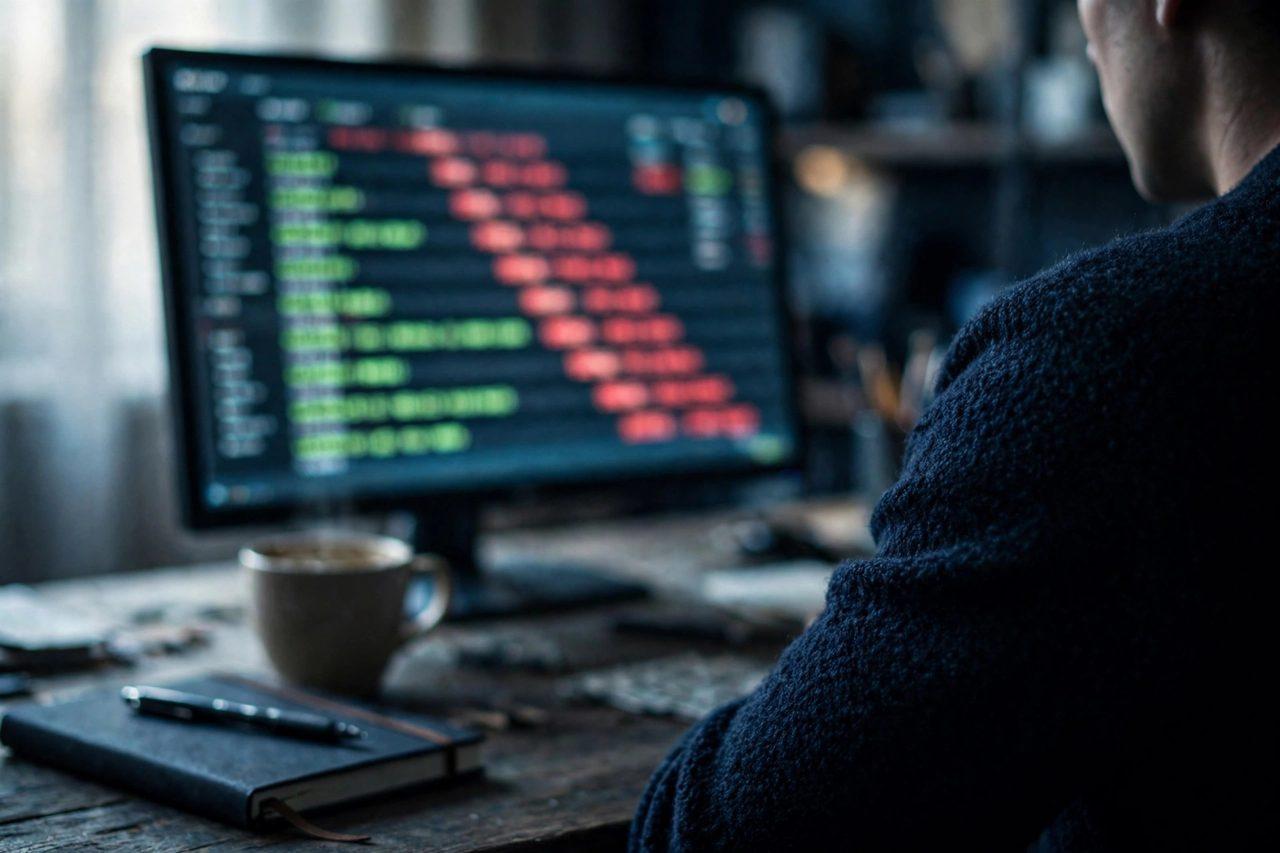
The formula is simple: Slippage (%) = ((Average executed price − Expected price) ÷ Expected price) × 100. Worked example: you place a market buy expecting $100.00 per coin. Only part of the order is available at $100.00; the rest fills at $100.04 and $100.10, giving an average fill of about $100.06. Your slippage is roughly 0.06% — small here, but on a $10,000 order that is $6 quietly gone, before fees.
On decentralised exchanges you will also see a slippage tolerance setting. That is the maximum price movement you accept before the swap is cancelled. A common default is around 0.5% for major, liquid pairs; setting it far higher than needed exposes you to worse fills, while setting it too low can make normal trades fail during volatile minutes.
Slippage, spread and price impact are not the same thing
Traders often mix these up. The spread is the visible gap between best bid and best ask — you "pay" it by crossing to the other side. Price impact is how much your own order moves the price by consuming liquidity. Slippage is the total difference between your expected price and your final average fill, which includes the spread, your price impact, and any market movement during execution. The Zimbuck Market News group regularly breaks down execution costs like these alongside daily market coverage.
How to reduce slippage: a practical checklist
- Use limit orders for size. A limit order only fills at your price or better, which caps negative slippage at zero — the trade-off is it may not fill if the market runs away.
- Check depth before you trade. If the visible volume within about 0.5% of the best price is several times your order size, slippage should stay small.
- Trade liquid pairs on liquid venues. Major pairs on high-volume exchanges have deeper books. This is also why news about exchange order flows matters — see our recent coverage of transfers being flagged between major exchanges.
- Avoid market orders into news spikes. The minutes after a big data release or a liquidation cascade are when books are thinnest.
- Split large orders. Several smaller orders, placed over time, usually walk the book less than one large market order.
- Set tolerance deliberately on DEXes. Use the lowest slippage tolerance that still lets your trade execute reliably, and widen it only briefly in genuinely volatile moments.

FAQ
Is slippage a fee charged by the exchange?
No. Fees are charged separately and shown in your account. Slippage is a market effect — the result of your order filling against the prices actually available in the book.
Can slippage ever be in my favour?
Yes. If the price moves in your direction during execution, you can receive a better average price than expected. That is called positive slippage, though traders notice the negative kind far more often.
Why is slippage worse on small coins?
Small coins have thin order books. Even a modest order can consume every offer at the best levels and fill at much worse prices further up the book.
What slippage tolerance should a beginner use?
For major pairs on large exchanges or DEXes, around 0.1%–0.5% is a common starting range. The right setting depends on the pair's liquidity and volatility — start low and only raise it if trades keep failing.
Slippage is the mechanical cost of trading immediately against a finite order book. It is predictable if you read the book before you trade — and that one habit separates careful execution from expensive surprises. For daily market coverage and explainers like this one, join Zimbuck and follow the conversation with other traders and investors.
This article is market news and general information only, not financial advice. Always do your own research before trading.






