English
 Arabic
 French
 Spanish
 Portuguese
 Deutsch
 Turkish
 Dutch
Dutch
 Italiano
 Russian
 Romaian
 Portuguese (Brazil)
 Greek
Greek
Event Furniture Rental Dubai UAE | Premium Furniture for All Events
Other |
2026-06-08 07:50:41
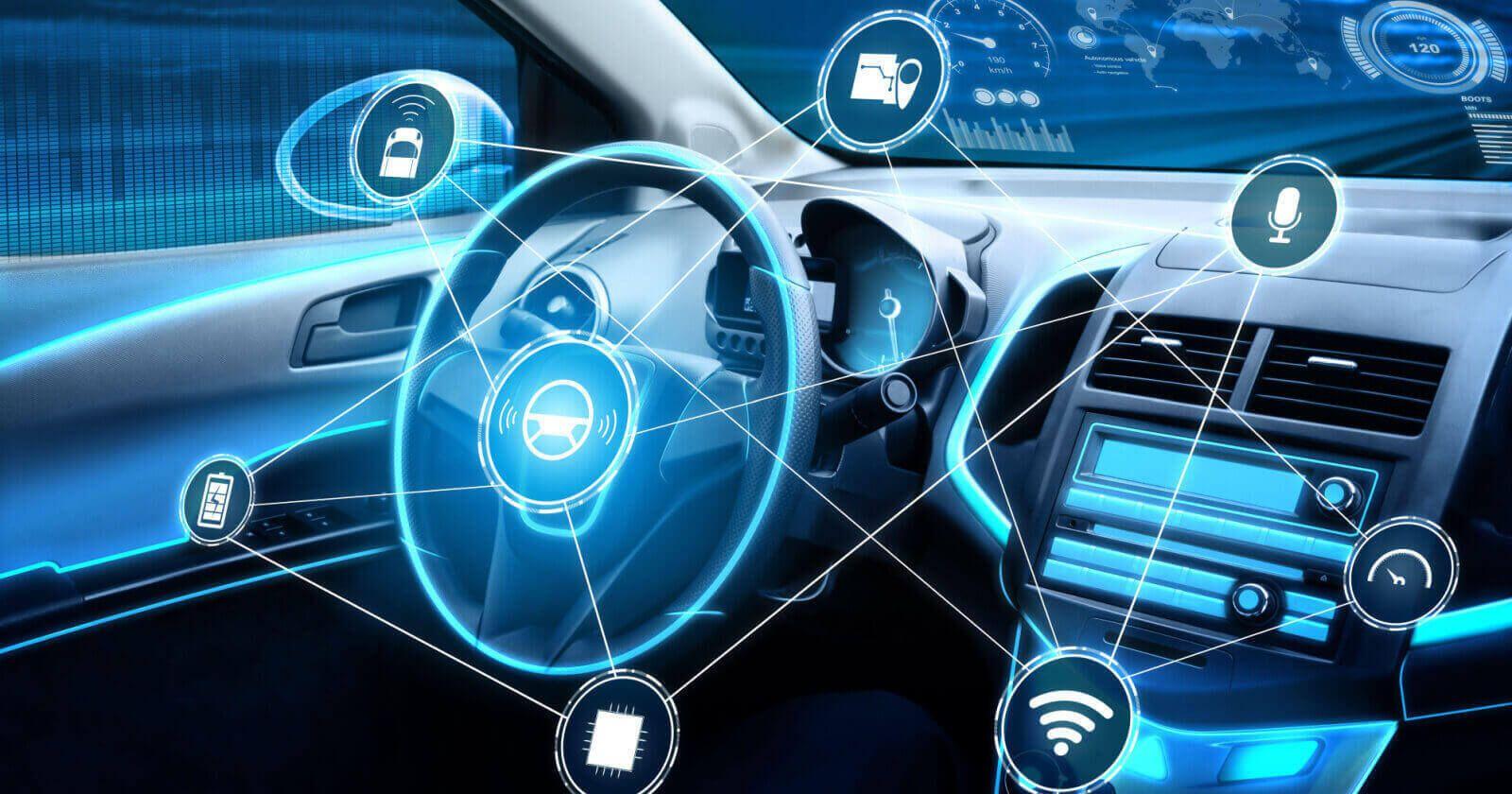
Modern vehicles are no longer just machines that get you from point A to point B. Today's cars are intelligent systems equipped with layers of technology designed to make every journey safer, smarter, and more efficient. At the heart of this revolution lies the ADAS system, a suite of technologies that is rapidly changing the way we think about driving.
But what exactly does ADAS mean, and how does it work across different levels of automation? Whether you're a curious consumer, an automotive professional, or a technology enthusiast, this guide walks you through every level of advanced driver assistance systems and explains what each one means for the future of mobility.
ADAS stands for Advanced Driver Assistance Systems, a collective term for electronic technologies that assist drivers in the driving process. The core purpose of an ADAS system in cars is to increase vehicle and road safety by automating, adapting, and enhancing the vehicle's response to its environment.
These systems use a combination of sensors (cameras, radar, LiDAR, ultrasonic), processors, and software algorithms to perceive the surroundings and take action either by alerting the driver or by automatically intervening.
In simple terms, ADAS meaning can be understood as the technology layer that sits between a human driver and full vehicle autonomy, making driving safer at every stage.
The Society of Automotive Engineers (SAE) defines six levels of driving automation, from Level 0 (no automation) to Level 5 (full automation). These levels form the official framework for understanding how ADAS driving capabilities progress across vehicle generations.
At Level 0, the driver is entirely responsible for all driving tasks. The vehicle may issue warnings (such as collision alerts or lane departure warnings), but it takes no corrective action whatsoever.
Key Characteristics:
No automated control of steering, braking, or acceleration
Driver warnings only (e.g., beeping alerts)
Examples: basic reverse parking sensors, forward collision warnings
While Level 0 vehicles lack the sophisticated features of a full ADAS system, they laid the groundwork for the active safety features that followed.
Level 1 is where true advanced driver assistance systems begin. At this level, the vehicle can control either steering or speed, not both simultaneously. The driver must remain fully engaged and handle all other driving functions.
Key Characteristics:
Single-axis automation (steering OR speed, not both)
Driver must maintain hands on wheel and full attention
Examples: Adaptive Cruise Control (ACC), Lane Keeping Assist (LKA)
Adaptive Cruise Control maintains a set speed and adjusts automatically based on the distance to the vehicle ahead. Lane Keeping Assist gently steers the car back if it begins to drift. These features represent the entry point of meaningful ADAS systems in cars.
Level 2 represents a significant leap in ADAS driving capability. At this level, the vehicle can simultaneously control both steering and speed under specific conditions, but the driver must remain alert and ready to take over at any moment.
Key Characteristics:
Combined lateral and longitudinal control (steering AND speed)
Driver must monitor the environment constantly
"Hands-on" supervision required
Examples: Tesla Autopilot, GM Super Cruise, Volvo Pilot Assist
Level 2 systems are the most widely available form of automation in consumer vehicles today. Despite being highly capable on motorways and structured roads, they are not autonomous; the human driver remains responsible for safety at all times.
This is where ADAS meaning transitions from driver assistance to genuine driving support.
Level 3 marks the first true shift in the responsibility dynamic between human and machine. At this level, the vehicle can handle all driving tasks within specific conditions (such as motorway driving at certain speeds), and the driver is not required to monitor the environment continuously.
Key Characteristics:
Vehicle manages all driving tasks in defined conditions
Driver can divert attention (e.g., use a phone or rest)
Driver must be ready to respond to a "take over" request
Examples: Mercedes-Benz DRIVE PILOT (first Level 3 system approved for public roads)
Level 3 is a landmark in the history of advanced driver assistance systems it legally and technically transfers driving responsibility to the vehicle under certain conditions. However, the transition back to human control remains a key engineering and regulatory challenge.
Level 4 vehicles can drive themselves in a defined operational environment (called an Operational Design Domain, or ODD) without any human intervention, even if the driver fails to respond to a takeover request.
Key Characteristics:
Full automation within a specific geographic area or road type
No human response required within the ODD
Vehicle can safely pull over if conditions exceed its design limits
Examples: Waymo One (robotaxi service), select autonomous shuttle services
At Level 4, the ADAS system in cars evolves into something closer to a full autonomous driving system. These vehicles are already operating in geofenced urban environments in several cities worldwide, offering a glimpse of the future of ADAS driving.
Level 5 represents the pinnacle of vehicle autonomy a vehicle capable of performing all driving tasks across all conditions, anywhere a human driver could go, with no human input required at any time.
Key Characteristics:
No steering wheel or pedals required (in theory)
Operates in all conditions: weather, terrain, road types
Full end-to-end autonomy
Status: Not yet commercially available at scale
Achieving Level 5 is the holy grail of the automotive industry. It requires not just advanced sensor hardware, but extraordinary breakthroughs in artificial intelligence in car systems that can reason, adapt, and learn across every conceivable driving scenario.
The progression from Level 1 to Level 5 is not just a hardware story; it is fundamentally a story of automotive artificial intelligence. Here's how AI powers the evolution of ADAS:
AI in cars enables vehicles to not just detect objects, but classify them, distinguishing between a cyclist, a child, a traffic cone, and a stationary vehicle, and predict their next move. This deep learning-powered perception is what allows a Level 3 vehicle to manage traffic without human supervision.
Real-world driving is filled with ambiguous scenarios. AI in auto systems is trained on billions of real-world miles to make safe, split-second decisions in situations that rules-based programming could never anticipate, such as navigating an unmarked construction zone or responding to an unusual road obstruction.
Unlike traditional vehicle systems, AI-powered ADAS platforms improve over time. Over-the-air (OTA) software updates push new learning directly to vehicles, making the entire fleet smarter with every additional mile driven a capability that is central to how advanced driver assistance systems evolve from one generation to the next.
Level 0 – No Automation
No automated driving features.
Driver has complete control of steering, braking, and acceleration.
Level 1 – Driver Assistance
Vehicle can assist with either steering or speed control.
Driver remains fully responsible for monitoring and operating the vehicle.
Level 2 – Partial Automation
Vehicle can control both steering and speed simultaneously.
Driver must continuously supervise and be ready to intervene.
Level 3 – Conditional Automation
Vehicle handles all driving tasks under specific conditions.
Driver must stay alert and be prepared to take over when requested.
Level 4 – High Automation
Vehicle performs all driving tasks within its Operational Design Domain (ODD).
Human intervention is not required within approved operating conditions.
Level 5 – Full Automation
Vehicle can drive itself in all environments and conditions.
No driver attention or intervention is required at any time.
Understanding the levels isn't just an academic exercise; it has real-world implications for safety, regulation, insurance, and liability. Here's why:
For Consumers: Knowing the ADAS level of a vehicle helps buyers understand what the technology can and cannot do, preventing dangerous over-reliance on partial automation systems.
For Regulators: SAE levels provide a common language for creating safety standards and approving autonomous vehicles for public road use.
For Insurers: Liability shifts as automation increases, requiring entirely new frameworks for determining fault in an accident.
For Manufacturers: Each level demands a step-change in the sophistication of the ADAS system, requiring investment in sensors, compute power, and AI development.
The ADAS system in cars will continue to evolve rapidly over the next decade. Key trends shaping the future include:
V2X Integration: Vehicles communicating with infrastructure (traffic lights, road sensors) to make smarter decisions.
Edge AI Processing: On-device AI chips that process sensor data faster and with lower latency.
Biometric Driver Monitoring: Systems that track driver alertness, fatigue, and attention to seamlessly hand off control.
Standardisation of Level 3 Approval: More governments approving conditionally automated vehicles for public roads.
Democratisation of ADAS: Features previously found only in luxury vehicles becoming standard across all price segments.
The road to Level 5 is long, but it is being built, one ADAS level at a time.
From basic collision warnings at Level 0 to the full autonomy promised by Level 5, the levels of advanced driver assistance systems represent one of the most exciting technological journeys in human history. Each level builds on the last, expanding the boundaries of what is possible when intelligent software meets the open road.
Understanding ADAS meaning across these levels empowers drivers, manufacturers, and policymakers to make better decisions and ultimately, to build a future where roads are safer for everyone.
As artificial intelligence in cars continues to mature, and as automotive artificial intelligence becomes more accessible and reliable, the dream of fully autonomous, zero-fatality roads moves closer to reality. The era of true ADAS driving is not a distant vision; it is already unfolding on roads around the world
If you're passionate about the future of advanced driver assistance systems and want to be part of the team shaping it, Suzuki R&D Centre India (SRDI) is at the forefront of automotive technology innovation in the region.
SRDI is Suzuki's dedicated research and development hub in India, focused on developing next-generation vehicle technologies including ADAS, connected mobility, and AI in cars tailored for both Indian and global markets. With a team of world-class engineers and researchers working on the cutting edge of AI in auto and automotive intelligence, SRDI represents the future of mobility innovation from India.
Whether you're a professional looking to contribute to groundbreaking automotive research or a student exploring career opportunities in automotive artificial intelligence, Suzuki R&D Centre India offers a platform to make a real impact on the vehicles of tomorrow.