English
 Arabic
 French
 Spanish
 Portuguese
 Deutsch
 Turkish
 Dutch
Dutch
 Italiano
 Russian
 Romaian
 Portuguese (Brazil)
 Greek
Greek
Expert Glass Installation Services in Markham
Home |
2026-04-05 21:59:26
You have a logo that looks stunning on your website. The curves flow. The text is elegant. The gradient gives it depth. Then you try to embroider it. The letters blob together. The curves turn into jagged messes. The gradient disappears into a block of muddy thread. You want to throw your machine out the window.
I have been there. And I learned the hard way that not all digitizing is the same. Simple logos with bold shapes and a few colors? Any basic service can handle those. But when your design has small text, overlapping elements, gradients, or fine details, you need a whole different level of expertise.
That is where professional Embroidery Digitizing Services in the USA come into play. These experts do not just push a button and hope for the best. They manually map every stitch, adjust for your specific fabric, and test until the design runs perfectly. They understand that complex designs need a different approach entirely.
Let me walk you through what makes complex digitizing different, how to spot a quality service, and what you should expect to pay for work that actually delivers.
You might look at your logo and think it looks pretty straightforward. But embroidery machines see things differently. A design becomes complex when it has any of these elements.
Tiny text is the biggest culprit. Anything under a quarter of an inch tall causes massive headaches. The needle simply cannot fit all those curves and serifs into such a small space. A skilled digitizer knows how to modify the text so it remains readable without changing its look entirely. They might switch from satin stitches to running stitches or thicken the letters slightly .
Gradients are another nightmare. Your logo fades from dark blue to light blue. On screen, that looks smooth and modern. In embroidery, you cannot fade thread. A professional digitizer recreates that gradient effect using different stitch densities or by blending two thread colors with alternating stitches. It takes real skill to make that look good .
Overlapping elements cause trouble too. When one shape sits on top of another, the bottom shape can show through or the top shape can sink in. A good digitizer adds underlay stitches and adjusts pull compensation so everything stays crisp and properly layered .
Fine details like thin lines, small dots, or intricate patterns also push a design into complex territory. The digitizer must decide whether to preserve those details or simplify them for the fabric.
Let me pull back the curtain and show you exactly how expert digitizers handle these challenging designs. It is not magic. It is methodical work.
Before any digitizing happens, the expert cleans up your artwork. They remove effects that will not translate to thread, like drop shadows and transparency. They convert gradients into solid color blocks. They check that text is legible at the actual embroidery size .
A high-resolution file matters enormously here. Vector formats like AI, EPS, or CDR work best because they scale without losing detail. If you only have a JPG or PNG, make sure it is at least 300 DPI.
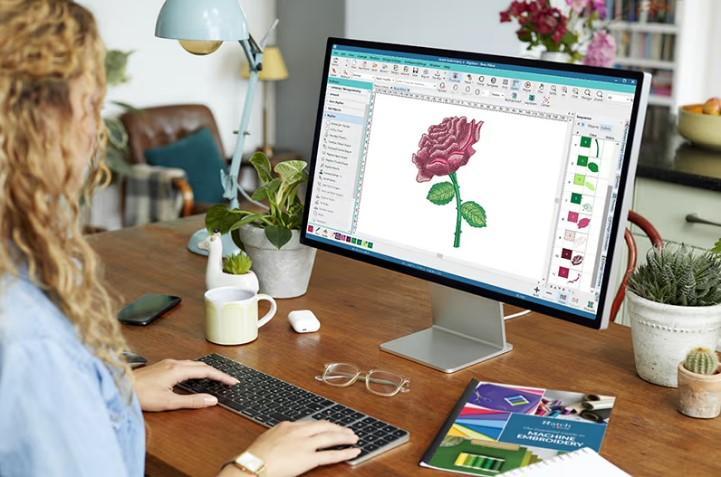
Professional digitizers use industry-standard software like Wilcom, Pulse, or Hatch . These programs give them full control over every single stitch.
They set parameters based on your project. Hoop size determines how much margin the design needs. Fabric type changes everything. Caps need center-out stitching. Jackets need stronger underlays. T-shirts need looser density so the fabric does not pucker .
This is where the real expertise shows. The digitizer manually assigns stitch types to every part of your design.
Satin stitches go on borders, text, and outlines. These create a smooth, raised, shiny edge that looks premium.
Fill stitches, also called tatami, cover large areas. The digitizer chooses the angle carefully. A circular logo gets radiating stitches from the center. A rectangular patch gets horizontal or angled fills .
Running stitches handle fine details and underlays. These are simple dashed lines that guide the needle.
Underlay stitches form the foundation of your design. They stabilize the fabric so the top stitches sit cleanly. Without proper underlay, your complex logo will distort and shift .
Different underlay techniques serve different purposes. Edge run underlay stabilizes satin stitches. Zigzag underlay adds volume under wide satin areas. Tatami underlay supports large fill sections.
The digitizer chooses based on your fabric. Lightweight fabrics need lighter underlay. Heavy fabrics like denim or canvas need stronger underlay to keep everything in place.
Fabric stretches under the needle. That is a fact. The needle pushes the fabric as it punches through. Without compensation, your design comes out smaller and narrower than intended.
Professional digitizers add pull compensation. They make the design slightly wider than it needs to be, knowing the fabric will pull it back to the correct size .
Density controls how close together the stitches sit. Too dense, and the fabric puckers or the thread breaks. Too loose, and gaps appear between stitches. For complex logos, finding the sweet spot takes experience.
The order of stitching matters enormously. A good digitizer plans the path to minimize jump stitches and thread trims.
They start with background fills, then move to secondary shapes, and finish with details and outlines. This sequencing prevents registration issues where elements do not line up correctly .
Here is the step that separates amateurs from pros. A quality service always tests the file before sending it to you.
They stitch out the design on fabric similar to yours. They watch for thread breaks, gaps, puckering, and misalignment. They make adjustments and test again .
When you receive the file, you should test it yourself on your machine with your fabric. A good service offers free revisions if anything looks off.
Not every service that claims to be expert actually delivers. Here is what I look for when choosing a digitizing partner.
Manual digitizing is non-negotiable. Some services rely on auto-digitizing software that guesses stitch paths. That works for simple designs but fails completely on complex ones. Ask if they digitize manually or use automation .
Fabric knowledge matters. A digitizer who does not ask about your fabric type does not know what they are doing. Caps, jackets, polo shirts, and performance fabrics all need different approaches. The right service asks these questions upfront .
Turnaround time should be realistic. Same-day service exists, but quality complex digitizing typically takes 12 to 24 hours. Rush options cost extra but can save you in a pinch .
Free revisions protect you. Even the best digitizer cannot guess everything perfectly. A service that offers free adjustments shows they stand behind their work.
File format support is essential. You need your file in the right format for your machine. PES for Brother, DST for Tajima, EXP for Melco. A good service exports to any format you need .
You get what you pay for. Cheap digitizing from overseas services might cost five to fifteen dollars, but those files often cause thread breaks, distortion, and wasted fabric .
For complex designs from reputable USA-based services, expect to pay more. Small logos up to four inches run ten to twenty-five dollars. Medium logos from four to six inches run twenty to forty-five dollars. Large or truly complex designs run forty to eighty dollars or more .
Cap digitizing often costs fifteen to thirty-five dollars because caps need special center-out stitching and compensation. Applique digitizing runs twenty to sixty dollars depending on complexity.
Some services price by stitch count rather than size. Typical rates run one to three dollars per thousand stitches. A detailed logo might have ten to fifteen thousand stitches, putting the cost at ten to forty-five dollars.
That higher price buys you a human expert who communicates clearly, understands your fabric, and fixes problems for free. In commercial production, paying more upfront saves you money on wasted thread, ruined garments, and machine downtime.
Let me share some real problems I have seen and how expert digitizing solves them.
Small text turning into blobs is the most common complaint. The solution is to modify the font slightly. A good digitizer thickens the letters or switches from satin to running stitches. They might also suggest enlarging the text if your design allows it.
Gradients looking like solid blocks happens when the digitizer does not know how to simulate fading. The solution uses alternating stitch densities or blends two thread colors. It takes real skill to pull off well.
Thin lines breaking or disappearing comes from poor pull compensation. The fix adds a bean stitch or triple run, which uses three passes of the needle to build thickness without changing the visual weight.
Overlapping colors bleeding into each other signals missing underlay. The solution adds a light underlay between the layers so the top color sits on top of the bottom color, not sinking into it.
Puckering around the design indicates density that is too high or pull compensation that is off. The digitizer reduces density or adjusts compensation based on test results.
You can find digitizing services all over the world. Many charge much less than USA-based companies. So why pay more?
Communication is the biggest difference. When you have a question or need a revision, you want an answer within hours, not days. USA-based services operate in your time zone and speak your language fluently.
Quality standards differ too. USA-based services understand what American embroidery shops and brands expect. They know that a logo on a corporate polo shirt needs to look perfect, not just acceptable.
Accountability matters. A USA-based service has legal and business structures that overseas services may lack. If something goes wrong, you have recourse.
That said, some overseas services do excellent work. The key is testing before committing to large orders. Send a small design first. See how they communicate and how the file stitches. Then decide.
You spent time and money creating a logo that represents your brand. Do not let bad digitizing ruin it. When your design has tiny text, gradients, overlapping elements, or fine details, you need more than a button-pusher. You need an expert.
Professional Embroidery Digitizing Services in the USA offer manual digitizing, fabric-specific adjustments, thorough testing, and free revisions. They charge more than cheap overseas options, but they save you from wasted thread, ruined garments, and endless frustration.
Pick a service that asks about your fabric, shows you samples of complex work, and offers free edits. Send them your cleanest artwork. Test the file on scrap fabric before your big production run.
Your embroidery machine can create something beautiful. Give it the right roadmap, and your complex logo will stitch clean on every hat, shirt, and jacket. Go find a digitizer who treats your brand with the care it deserves.