English
 Arabic
 French
 Spanish
 Portuguese
 Deutsch
 Turkish
 Dutch
Dutch
 Italiano
 Russian
 Romaian
 Portuguese (Brazil)
 Greek
Greek
One Piece Season 2 - Release Schedule Guide
Games |
2026-03-12 03:22:14
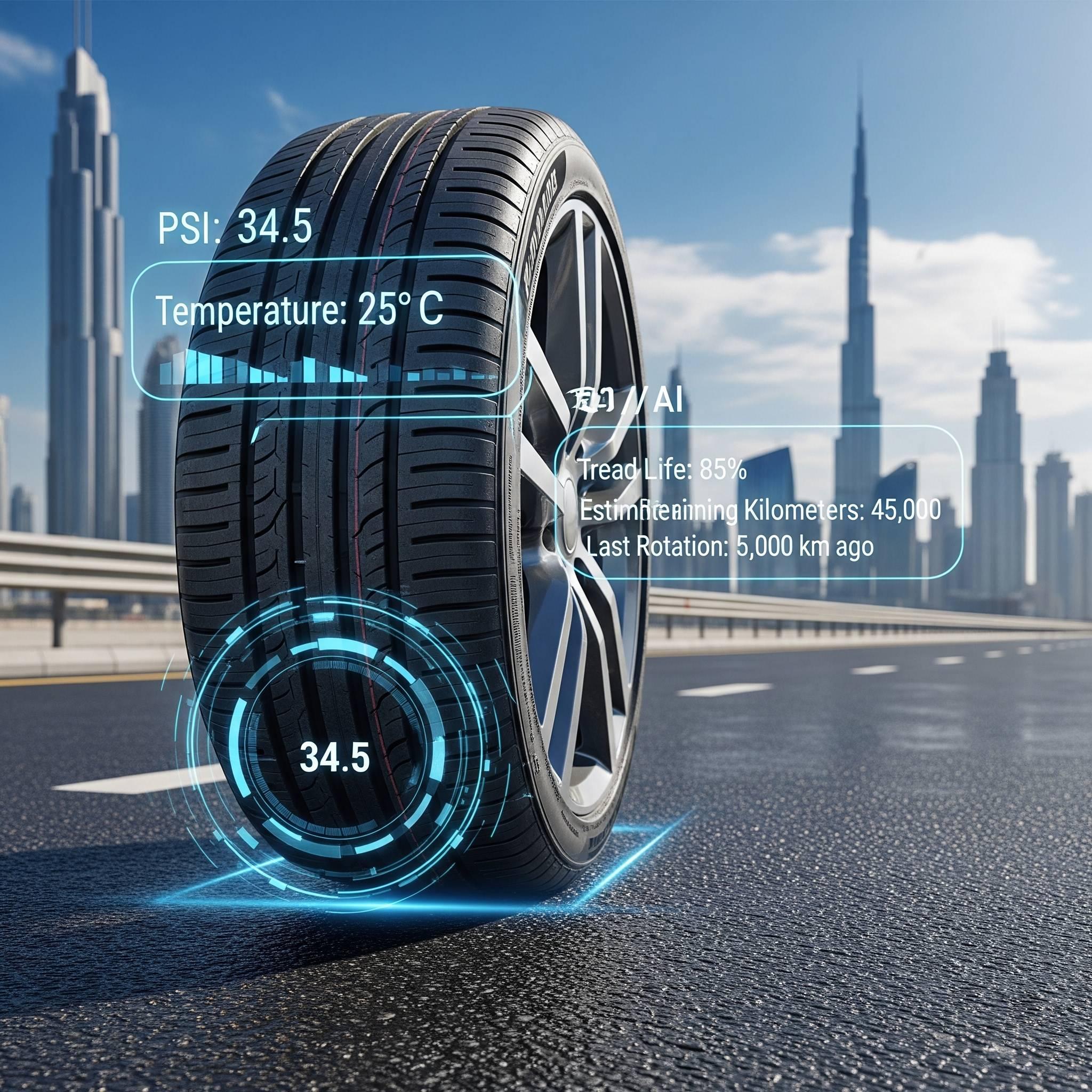
The evolution of automotive engineering has seen a significant paradigm shift from reactive maintenance to proactive, predictive frameworks, particularly concerning critical components like tyres. Traditionally, Tyre Pressure Monitoring Systems (TPMS) have operated on a reactive basis, alerting drivers only when pressure deviations reach a predefined critical threshold.
This approach, while preventing immediate catastrophic failures, does little to mitigate the subtle, long-term degradation mechanisms that ultimately dictate a tyre's lifespan. The advent of artificial intelligence (AI) and Digital Twin technology marks a pivotal transition, creating a virtual, real-time replica of the physical tyre and its operational stresses.
This digital counterpart, continuously updated with sensor data, enables a far more nuanced understanding of a tyre's state, moving beyond simple alerts to predictive insights that can significantly extend its operational life.
The primary mechanisms of tyre degradation are intrinsically linked to the physics of rubber composites and their interaction with operational forces.
A critical factor is hysteretic heating, a phenomenon where the continuous deformation and recovery of the rubber material during rolling generates internal heat. This energy dissipation, inherent to the viscoelastic nature of rubber, is a direct contributor to material fatigue and accelerated wear.
Tyre Footprint and Pressure The tyre footprint, the contact patch between the tyre and the road surface, is profoundly affected by inflation pressure. Incorrect pressure, whether under or over-inflation, alters this footprint, leading to uneven stress distribution across the tread.
Under-inflation results in increased deflection of the sidewalls and shoulders, concentrating stress and heat generation in these areas. This elevated internal temperature compromises the thermal stability of the rubber compounds, accelerating the oxidation and degradation processes.
Over-inflation leads to a reduced contact patch, concentrating wear in the centre of the tread. While potentially reducing overall hysteretic heating due to less deflection, it can compromise grip and still lead to premature failure in specific zones.
Rolling Resistance This force opposes the motion of a vehicle and is largely attributed to the tyre's deformation. Incorrect inflation pressure significantly impacts rolling resistance. Under-inflated tyres exhibit higher rolling resistance due to increased deflection and energy loss, leading to greater fuel consumption and, crucially, higher internal temperatures that degrade the rubber more rapidly. Maintaining optimal pressure is thus critical not only for fuel efficiency but also for preserving the structural integrity of the tyre.
The core of predictive tyre maintenance lies in the intelligent integration of sensor data with advanced AI models, underpinned by Digital Twin technology. A Digital Twin of a tyre is a dynamic, virtual model that mirrors its physical counterpart's behaviour and condition in real-time.
Data Ingestion Modern tyres can be equipped with an array of Internet of Things (IoT) sensors.
RFID (Radio-Frequency Identification) tags embedded within the tyre provide unique identification and can log manufacturing data, service history, and potentially temperature readings.
ESP32-based sensors (often integrated with accelerometers, gyroscopes, and temperature probes) provide a continuous stream of operational data, including real-time pressure, temperature, rotational speed, and even subtle deformations. This high-frequency data is crucial for capturing transient events and gradual changes in tyre state.
Neural Network Processing This deluge of real-time data feeds into sophisticated neural networks. These AI models are trained on extensive datasets encompassing various driving conditions, road surfaces, load profiles, and known degradation patterns. The neural networks analyze the incoming sensor data to:
Identify anomalies that might indicate the onset of issues, even before they manifest as critical pressure drops.
Predict future states of the tyre, such as remaining tread life, risk of delamination, or optimal service intervals.
Correlate multi-modal data to understand complex interactions, for instance, how ambient temperature, vehicle speed, and load jointly influence internal tyre temperature and wear rates.
The MATEC 2025 study, "AI-Driven Predictive Maintenance for Intelligent Tires: A Real-Time Digital Twin Framework", specifically highlights the efficacy of real-time data ingestion for enhancing predictive accuracy.
This research underscores how continuous monitoring, rather than intermittent checks, provides the granular detail necessary for effective Digital Twin operation and AI-driven insights into tyre health.
The primary commercial benefit of AI-powered real-time pressure monitoring is the prevention of accelerated tread wear and enhanced overall tyre longevity. By continuously analyzing data from the Digital Twin, the AI system can:
Recommend optimal inflation pressures dynamically, accounting for load, ambient temperature, and driving style, ensuring the most even distribution of stress across the tyre footprint. This proactive adjustment prevents the uneven wear patterns associated with incorrect inflation, which are a leading cause of premature tyre replacement.
Detect subtle structural changes or internal delamination before they become critical, allowing for timely intervention, such as rotation, balancing, or even early replacement, thus avoiding catastrophic failures and maximizing the usable life of the tyre.
Optimize maintenance schedules by transitioning from fixed, time-based intervals to condition-based maintenance. This means resources are expended only when genuinely necessary, reducing operational costs and downtime.
Furthermore, this enhanced predictive capability transforms the typical tyre service cycle.
Instead of merely performing reactive maintenance, the AI system can predict when a particular tyre offers diminishing performance or is nearing the end of its safe operational life, allowing fleet managers or individual owners to schedule replacements proactively, minimizing disruption and optimizing procurement.
This foresight extends beyond simple wear, enabling a transition from merely managing maintenance to strategically planning replacement cycles based on empirical, real-time data.
The implications of AI-driven tyre monitoring extend significantly into the realms of road safety and environmental sustainability.
Enhanced Road Safety Correctly inflated and well-maintained tyres are fundamental to vehicle dynamics.
Improved Braking Performance Optimal tyre pressure ensures the maximum contact patch, directly translating to shorter braking distances and improved responsiveness.
Enhanced Handling and Stability Stable tyre characteristics prevent unpredictable vehicle behaviour, especially during high-speed maneuvers or adverse weather conditions, significantly reducing the risk of accidents. By preventing sudden tyre failures, the system acts as a crucial safety net.
Environmental Sustainability The impact on sustainability is multifaceted.
Reduced Rubber Waste By maximizing tyre longevity and preventing premature wear or failure, AI monitoring directly reduces the volume of scrap tyres requiring disposal, lessening the environmental burden of rubber waste.
Improved Fuel Efficiency Maintaining optimal tyre pressure minimizes rolling resistance, leading to a measurable reduction in fuel consumption. This effect is particularly pronounced in high-heat climates, where increased ambient temperatures can lead to significant pressure fluctuations and subsequent increases in rolling resistance if not actively managed. Lower fuel consumption directly translates to reduced greenhouse gas emissions, contributing to cleaner air and a smaller carbon footprint for the automotive sector.
The integration of AI and Digital Twin technologies within real-time pressure monitoring systems represents a critical advancement in automotive engineering. This sensor-fusion approach moves beyond simple reactive alerts, providing a granular, predictive understanding of tyre health.
By leveraging data from IoT sensors and processing it through sophisticated neural networks, engineers can now anticipate and mitigate degradation mechanisms, dramatically extending tyre longevity, enhancing road safety, and contributing significantly to environmental sustainability through reduced waste and improved fuel efficiency.
The necessity of such advanced sensor-fusion frameworks is no longer a theoretical proposition but a tangible requirement for modern, intelligent vehicle systems.