

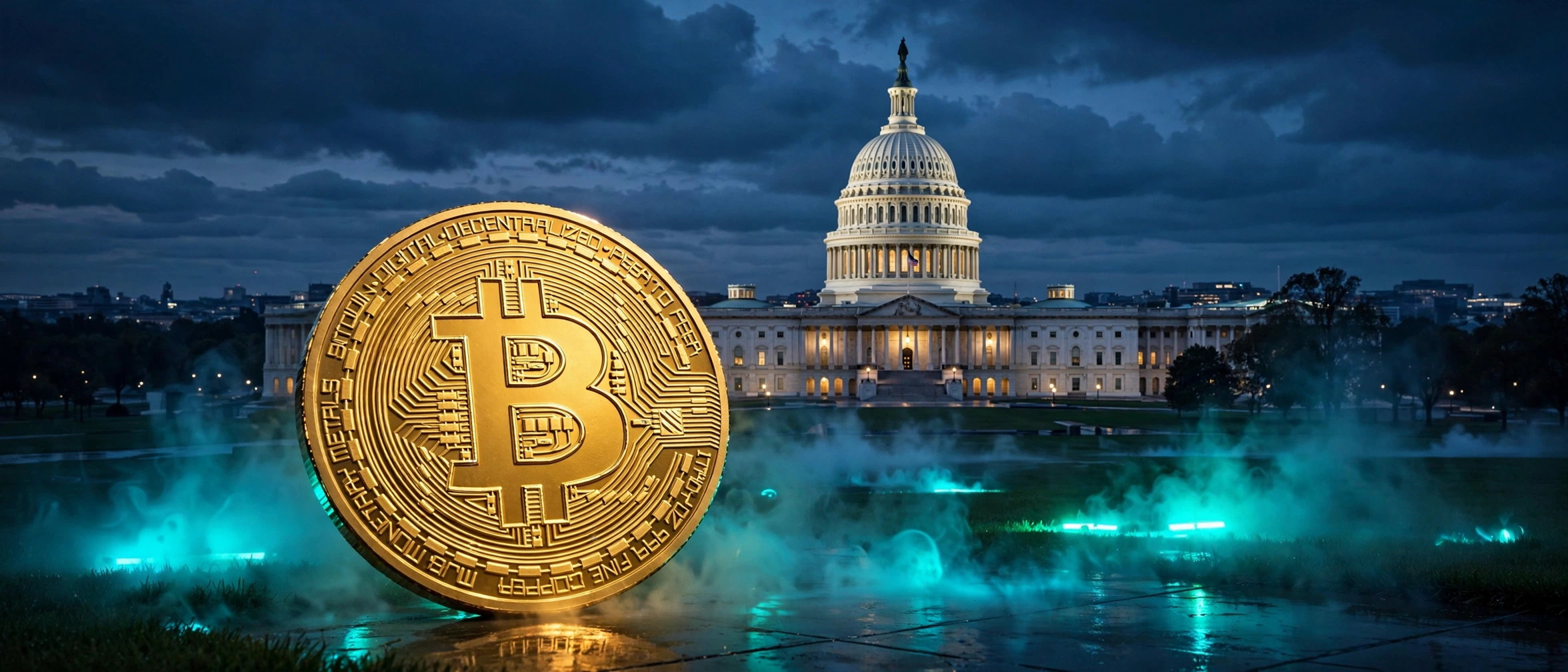

Washington just gave Bitcoin holders a new reason to watch Congress. On Thursday, October 29, 2026, Representative Warren Davidson, a Republican from Ohio and one of Capitol Hill's longest-standing Bitcoin advocates, introduced the Bitcoin for America Act — a bill that would let Americans pay their federal taxes in Bitcoin, with no capital-gains tax triggered by the payment itself, and direct every Bitcoin collected straight into a US Strategic Bitcoin Reserve. It is only a bill, not a law, and its path through Congress is long and uncertain. But as a statement of where American crypto policy could be heading, it is hard to ignore: the proposal would put Bitcoin inside the machinery of federal revenue for the first time.
What the bill would actually do
The core idea is simple, and that is the point. Under the Bitcoin for America Act, individuals and businesses could settle their federal tax obligations in Bitcoin. Crucially, paying taxes this way would not trigger capital-gains liability — the tax bill that normally applies when you dispose of an appreciated asset. That detail matters more than it sounds: under current rules, spending appreciated Bitcoin can itself be a taxable event, which is one reason crypto is rarely used for everyday payments despite being designed for them. Removing that friction for tax payments would make Bitcoin functionally usable as money in at least one large, unavoidable transaction every year.
The second half of the proposal is where the fiscal argument lives. Every Bitcoin paid in taxes would be deposited into a Strategic Bitcoin Reserve — a national stockpile of Bitcoin held by the United States. Davidson's argument is that the reserve would give the government a tangible asset that appreciates over time, unlike the dollar, which he notes has steadily lost purchasing power under inflationary pressures. The bill's own framing goes further: Bitcoin's fixed supply of 21 million coins, combined with its halving cycle, creates structural scarcity that could make the reserve a self-sustaining fiscal mechanism, reducing reliance on debt-based financing and strengthening the nation's balance sheet. Davidson, who has advocated for Bitcoin since 2012, put the stakes bluntly in discussing the bill, pointing to a country carrying roughly $38 trillion in debt and noting he regrets Congress did not listen to him back in 2016, when Bitcoin traded around $500 to $600.
Voluntary, not mandatory — and why that distinction matters
One detail that separates this bill from the more alarmist readings of it: participation would be optional. Taxpayers could choose each year whether to pay in Bitcoin. Nobody would be forced to acquire Bitcoin to settle a tax bill, and the dollar would remain the default. Davidson has also framed the proposal as a financial-access measure, arguing that Bitcoin's open, permissionless network lets people without access to traditional banking participate in the financial system and meet federal obligations. Critics, meanwhile, will ask the obvious question: should the government favor one specific cryptocurrency, and should public revenue be held in an asset famous for its volatility? That debate — Bitcoin-specific policy versus technology-neutral policy — is likely to be the central fight as the bill moves through Congress, and it is a fair one. A reserve built from tax receipts would rise and fall with the Bitcoin market, and a government holding Bitcoin would have a direct financial interest in its price.
How this differs from the BITCOIN Act
This is not Congress's first Bitcoin reserve bill, and the differences matter. The bipartisan BITCOIN Act of 2025, associated with Senator Cynthia Lummis, outlined how a strategic reserve would be managed — but it did not include a tax-payment path. Davidson's bill adds the funding mechanism: taxes in, reserve up. It was introduced in coordination with the Bitcoin Policy Institute, a nonprofit that supports Bitcoin adoption. It also differs in a subtler way: rather than the government buying Bitcoin with appropriated funds, the reserve would grow organically from tax receipts, only when taxpayers voluntarily choose to pay in Bitcoin. Supporters say that makes it politically easier — no new spending, no forced purchases. Skeptics will note it also makes the reserve's growth entirely dependent on how many people actually choose the option, which is unknowable today.
The context: a reserve that already exists on paper
The bill does not arrive in a vacuum. President Trump campaigned on making America a leader in digital assets, and after taking office moved to establish a Strategic Bitcoin Reserve by executive order. But an executive order is not the same as a statute: the reserve's establishment likely requires further congressional action to be fully codified and funded. Davidson's bill would supply that missing piece — a legal funding stream and a statutory footing. Whether Congress agrees is another matter entirely. Most introduced bills never become law, and this one would need to survive committee, pass both chambers, and be signed — a gauntlet that has stopped many crypto bills before it.
Why the timing matters for the market
The bill landed on a day when Bitcoin was trading near $80,000, having slipped below that level after the Federal Reserve's hawkish hold on October 28, with bond traders pricing roughly a 90% chance of a December rate hike. In other words, the market backdrop is cautious, not euphoric — which makes the bill's reception more interesting, not less. Policy proposals introduced during weak markets test whether political support for Bitcoin survives without a price rally to flatter it. For traders, the honest read is that this bill moves no money today: it changes no tax rule, funds no reserve, and touches no exchange. Its significance is directional — it shows where at least one wing of Congress wants to take Bitcoin's role in public finance, from an asset the government holds to an asset the government accepts.
What to watch from here
Three things will decide whether this bill matters beyond the headline. First, committee action: does it get a hearing, amendments, and a vote, or does it sit untouched? Second, co-sponsors: a bill with broad bipartisan backing reads very differently from a single-member statement. Third, the Treasury question: building a system for the government to receive, custody, and account for Bitcoin tax payments is a large operational project, and how seriously the bill treats that plumbing will tell you how seriously its authors expect it to pass. Until those signals arrive, the right posture is attention without overreaction — a proposal worth understanding, not a reason to trade on.
FAQ
What is the Bitcoin for America Act? A bill introduced October 29, 2026, by Representative Warren Davidson (R-Ohio) that would let Americans pay federal taxes in Bitcoin, with no capital-gains liability on the payment, and direct the Bitcoin collected into a US Strategic Bitcoin Reserve.
Is this already law? No. It is a newly introduced bill. It must pass committee, both chambers of Congress, and be signed by the President before it takes effect.
Would I be forced to pay taxes in Bitcoin? No. Participation would be voluntary — taxpayers could choose each year whether to pay in Bitcoin.
Why would the government want Bitcoin tax payments? Supporters argue Bitcoin's fixed 21-million supply and halving cycle make it an appreciating asset that could strengthen the nation's balance sheet and reduce reliance on debt-based financing, against roughly $38 trillion in national debt.
How is this different from the BITCOIN Act of 2025? The BITCOIN Act outlined reserve management but had no tax-payment path. Davidson's bill adds taxes as the funding mechanism for the reserve.
Does this change anything for Bitcoin holders today? No. No tax rule changes until and unless the bill becomes law. Its importance today is as a signal of where US crypto policy may be heading.
For more market news and discussion, follow Zimbuck News at https://zimbuck.com/pages/zimbucknews and join the Zimbuck Market News group at https://zimbuck.com/groups/zimbuckmarketnews. Related reading on the site: crypto's growing role in Washington at https://zimbuck.com/blogs/225/Crypto-Industry-Spends-176-Million-on-US-Midterms-Ahead-of
This article is market news and general information only, not financial advice.




