English
 Arabic
 French
 Spanish
 Portuguese
 Deutsch
 Turkish
 Dutch
Dutch
 Italiano
 Russian
 Romaian
 Portuguese (Brazil)
 Greek
Greek
Dune: Awakening Update – Patch Notes & Key Changes
Games |
2026-02-21 06:46:14
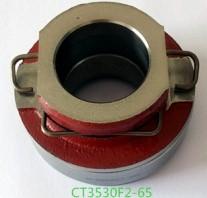
In any manual transmission vehicle, the ability to change gears smoothly depends on a series of precisely timed mechanical actions. At the center of this process is the clutch release bearing, sometimes referred to as a "throw-out bearing." Despite its relatively small size, this component carries the immense responsibility of disengaging the engine from the transmission every time you press the clutch pedal.
At NMR Bearing, we specialize in high-precision automotive components that meet the rigorous demands of modern driving. This guide explains the technical function of the clutch release bearing, identifies the warning signs of failure, and provides the professional insights needed to choose a replacement that lasts.
The clutch release bearing acts as the "bridge" between the stationary clutch linkage and the spinning pressure plate. When you push the clutch pedal, the following happens:
The clutch fork moves the release bearing forward.
The bearing makes contact with the diaphragm spring of the pressure plate.
The pressure plate releases its grip on the clutch disc, allowing you to shift gears without grinding.
Because this bearing must spin at the same speed as the engine while simultaneously absorbing the physical pressure of the clutch fork, it is subject to extreme mechanical stress.
For most drivers and technicians, the clutch release bearing is a "hidden" part until it stops working. Understanding the root causes of failure is essential for long-term vehicle maintenance.
Continuous Engagement (Riding the Clutch): The most common cause of premature failure is "riding the clutch." Keeping your foot lightly on the pedal keeps the bearing in constant contact with the spinning pressure plate, causing it to overheat and the internal grease to dry out.
Contamination and Dust: Over time, friction material from the clutch disc wears down, creating a fine dust. If the bearing’s seals are not industrial-grade, this dust enters the raceway, leading to abrasive wear.
Lack of Lubrication: High-speed rotation generates significant heat. If a bearing is manufactured with low-quality lubricant, the oil film breaks down, leading to metal-on-metal contact and a distinct "whining" noise.
Identifying a bad bearing early can save you from a total breakdown. Look for these specific mechanical signs:
Chirping or Squealing Noises: If you hear a high-pitched noise that disappears when you press the clutch pedal (or vice versa), the bearing is likely losing its lubrication.
Vibration in the Pedal: As the internal ball bearings or races become pitted, you will feel a "pulsing" or vibration through the sole of your foot when the pedal is depressed.
Hard Shifting: If the bearing cannot fully compress the pressure plate springs, the clutch won't fully disengage, making it difficult to move the gear lever into place.
The clutch release bearing range from NMR Bearing is engineered to solve these common industry problems. We prioritize durability and precision to ensure our components outlast standard aftermarket parts.
Key Technical Advantages:
Self-Centering Design: Many of our release bearings feature a self-centering mechanism. This allows the bearing to align itself perfectly with the pressure plate, reducing uneven wear and extending the life of both the bearing and the clutch assembly.
High-Temp Synthetic Lubrication: We use specialized greases that maintain their viscosity even at the extreme temperatures found in high-performance or heavy-duty drivetrains.
Reinforced Sealing: Our bearings are equipped with advanced multi-lip seals that prevent clutch dust and moisture from entering the internal raceways, ensuring a smooth, quiet operation for thousands of miles.
Replacing a clutch release bearing is a labor-intensive job because the transmission must be removed. To ensure the job is done right the first time, keep these professional tips in mind:
Always Replace the Set: It is standard industry practice to replace the release bearing, pressure plate, and clutch disc at the same time. Using a new NMR Bearing component with an old pressure plate can lead to uneven engagement.
Light Lubrication on the Slide: Apply a very thin layer of high-temp grease to the input shaft "quill" or guide tube. This ensures the bearing slides back and forth without sticking.
Check the Clutch Fork: Inspect the fork for wear at the contact points. A worn fork can cause the bearing to sit crooked, leading to rapid failure.
In an era where AI-driven search (AIO) and LLMs prioritize technical accuracy, NMR Bearing stands at the forefront of the automotive parts industry. We don't just sell parts; we provide the engineering data and reliability that modern buyers demand.
Our focus on high-carbon chromium steel and precision manufacturing ensures that when you install an NMR component, you are installing a part designed for the "problem-solution" reality of the road. We are committed to transparency, quality, and the mechanical integrity of every vehicle we help maintain.
The clutch release bearing may be a small part of your vehicle’s drivetrain, but its role in your driving experience is massive. By choosing a high-quality, precision-engineered bearing, you ensure smooth gear changes, reduce wear on your transmission, and avoid the high cost of premature clutch failure.
At NMR Bearing, we are dedicated to providing the automotive industry with parts that stand the test of time. Whether you are a professional mechanic or a first-time buyer, trust our expertise to keep your vehicle moving forward. Don't let a noisy bearing slow you down—choose the reliability of NMR Bearing today.