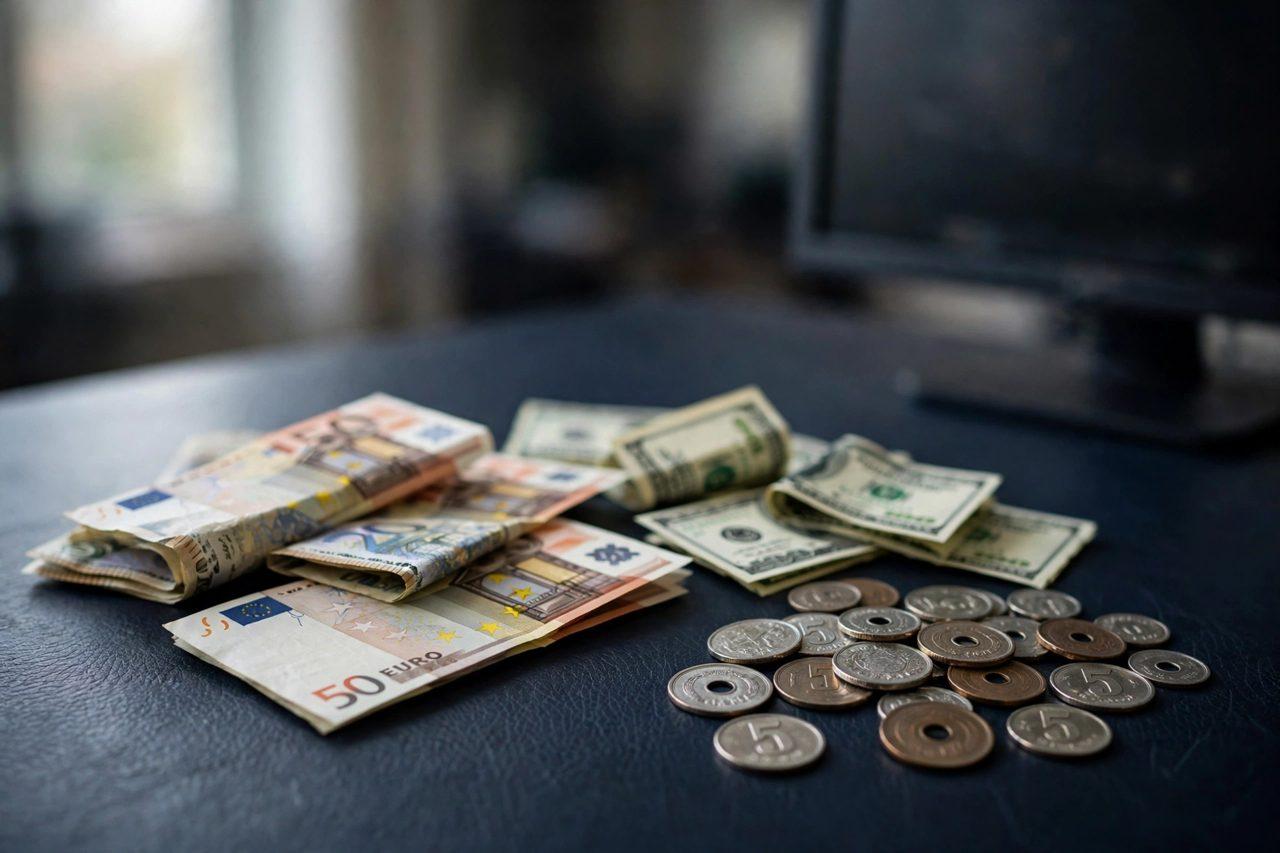

Forex is the one market where you never trade a thing on its own. Every position is two currencies at once — you are always buying one and selling the other. That is why everything in forex is quoted as a pair, and why understanding pairs is the first real skill a new trader needs. This guide explains how to read a pair and how the three families — majors, minors (crosses) and exotics — differ in cost and behaviour, following the approach we use on Zimbuck News.
How to read a currency pair
A currency pair shows two currencies quoted against each other, such as EUR/USD. The first currency is the base currency and the second is the quote (counter) currency. The price tells you how much of the quote currency it takes to buy one unit of the base. If EUR/USD is quoted at 1.0850, one euro costs 1.0850 US dollars. Each currency is identified by a three-letter ISO code — USD for the US dollar, EUR for the euro, GBP for the British pound, JPY for the Japanese yen.
- Buying the pair means buying the base currency and selling the quote currency — you profit, before costs, if the base strengthens.
- Selling the pair means the reverse — you profit, before costs, if the base weakens.
- Every quote has a bid (where you can sell) and a slightly higher ask (where you can buy); the gap is the spread, a core trading cost.
The majors: seven pairs that run the market
Major pairs always include the US dollar on one side, paired with another heavily traded currency. There are eight major currencies but only seven major pairs: EUR/USD, USD/JPY, GBP/USD, USD/CHF, AUD/USD, USD/CAD and NZD/USD. EUR/USD alone accounts for roughly 24% of daily forex volume. Because so many participants trade them, the majors offer the deepest liquidity and usually the tightest spreads — which is why most beginners are steered toward them first.
Minors (crosses) and exotics
Minor pairs, also called crosses, pair two major currencies without the US dollar — EUR/GBP, EUR/JPY and GBP/JPY are common examples. They let you trade one economy directly against another, but liquidity is a tier below the majors, so spreads are slightly wider and short-term moves can be jumpier. Exotic pairs match one major currency with a currency from an emerging-market economy, such as USD/TRY (Turkish lira), USD/ZAR (South African rand) or USD/MXN (Mexican peso). Exotics are the expensive end of forex: spreads can run several times wider than on majors — sometimes 5 to 50 pips on the most exotic pairs — and prices can gap around local political or economic news.

Choosing your first pair
Start where the costs are lowest and the information is richest: a major, traded during its active hours. Our guide to the best time to trade EUR/USD in Pakistan time shows how session timing changes spreads and movement. BabyPips' free lesson is a good external companion read: Currency Pairs Explained: Majors, Crosses and Exotics. Whatever pair you choose, learn its spread, its active sessions and the economic releases that move it before risking real money — and compare notes with other traders in the Zimbuck Market News group.
FAQ
Why is forex always traded in pairs?
A currency's value only makes sense relative to another currency, so every trade simultaneously buys one currency and sells another.
What is the difference between a major and a minor pair?
Majors include the US dollar plus another major currency. Minors (crosses) pair two major currencies without the dollar.
Why are exotic pairs risky for beginners?
Thin liquidity, much wider spreads and sharp gaps around local news make exotics expensive and unpredictable to trade.
What does EUR/USD at 1.0850 mean?
One euro (the base) costs 1.0850 US dollars (the quote). If the price rises, the euro is strengthening against the dollar.
This article is general educational information only, not financial advice. Join the conversation on Zimbuck — the finance social platform for traders and investors.