English
 Arabic
 French
 Spanish
 Portuguese
 Deutsch
 Turkish
 Dutch
Dutch
 Italiano
 Russian
 Romaian
 Portuguese (Brazil)
 Greek
Greek

Professional Air Duct Cleaning Vaughan: Why a Cleaner Air System Makes a Healthier Home
Other |
2026-07-21 17:09:43
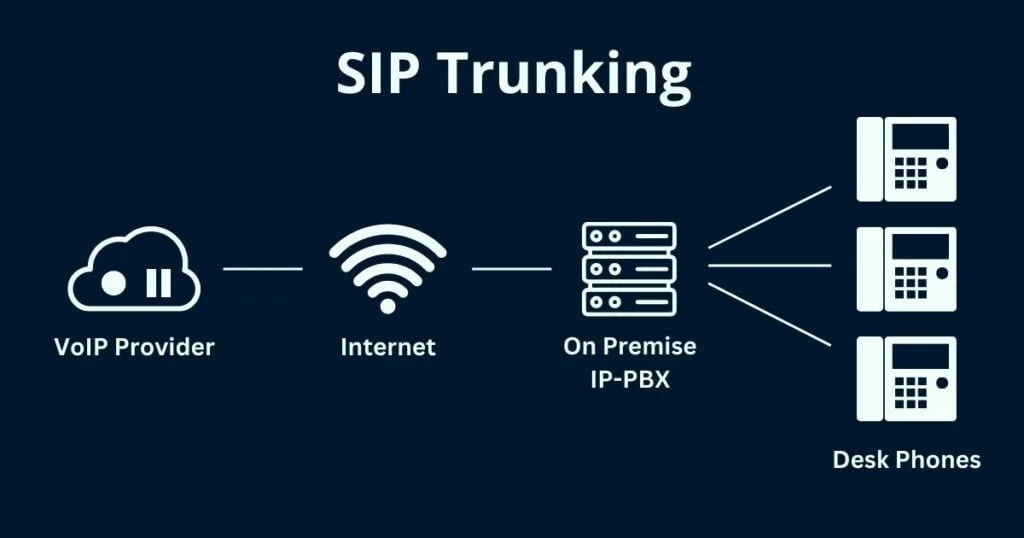
Traditional phone lines are steadily being replaced across UK businesses, and SIP trunking sits at the centre of that shift. It lets companies make and receive calls over the internet instead of relying on physical phone lines, often at a fraction of the cost. This guide walks through what business SIP trunking phone systems actually are, how they work, and what you need to know before making the switch.
SIP stands for Session Initiation Protocol, a technology used to set up and manage voice calls over the internet. A SIP trunk acts as a virtual phone line, connecting your on site phone system or cloud based platform to the public telephone network through your internet connection rather than copper cabling.
Instead of paying for multiple physical lines, a business can run several simultaneous calls over a single SIP trunk, with capacity added or removed as needed. This flexibility is one of the main reasons SIP trunking has become the standard choice for growing companies.
A SIP trunk connects your existing PBX, whether that is a physical handset system or a cloud hosted platform, to a SIP provider's network. Calls are converted into data packets and sent over your broadband connection, then routed to their destination, whether that is another business line, a mobile, or an international number.
Because everything runs over the internet, businesses with multiple offices can also link their phone systems together, allowing free internal calls between sites regardless of location.
The table below outlines common ways UK businesses use SIP trunking, depending on their existing setup and size.
|
Setup Type |
Best For |
Key Feature |
|
On Premise PBX with SIP Trunk |
Businesses with existing hardware |
Keeps current phones, cuts call costs |
|
Hosted Cloud PBX |
Companies wanting no on site hardware |
Fully managed, accessed via internet |
|
Hybrid SIP Setup |
Multi site businesses |
Connects offices with free internal calling |
|
SIP Trunking with Softphones |
Remote and hybrid teams |
Calls made from laptop or mobile app |
|
Failover SIP Configuration |
Businesses needing high uptime |
Automatic backup routing if one line fails |
Cost is usually the first benefit businesses notice. SIP trunking removes the need for multiple physical lines and often reduces call charges significantly, particularly for international calls. Scalability follows closely behind, since channels can be added or removed within days rather than waiting for physical line installations.
Reliability also improves for many businesses, since most SIP providers offer automatic failover, rerouting calls to a mobile number or backup site if the primary connection drops. This keeps a business reachable even during an internet outage at the main office.
Before moving to SIP trunking, confirm your internet connection has enough bandwidth to handle your expected call volume without affecting other business traffic. Check whether your existing phone hardware is SIP compatible, and if not, budget for new equipment or a hosted cloud PBX instead.
It is also worth confirming call quality guarantees and support response times with any provider you are considering, since voice quality issues are far more noticeable to customers than a slow email server.
One frequent mistake is underestimating the bandwidth needed for voice traffic alongside normal business internet use. Video calls, file transfers, and cloud applications all compete for the same connection, so a business switching to SIP trunking without checking available bandwidth can end up with poor call quality during busy periods.
Another common issue is assuming all existing hardware will work without checking compatibility first. Older phone systems sometimes need an additional gateway device to work with SIP trunks, and skipping this check can delay a planned switch by weeks while the right equipment is sourced.
Finally, some businesses switch providers purely based on the lowest advertised price per channel, without checking call quality guarantees or support response times. A slightly higher cost provider with strong reliability and fast fault resolution is often the better long term choice.
A smooth transition usually starts with an audit of current call volumes, peak calling times, and which features staff actually use day to day, such as call recording or voicemail to email. This information helps a provider recommend the right number of channels and features rather than a generic package.
Many businesses choose to run SIP trunking alongside their existing lines for a short overlap period, testing call quality and failover routing before fully retiring the old system. This reduces risk and gives staff time to adjust to any new dialling procedures or handset changes. Consultants such as Almens Consult can help plan and manage this kind of migration smoothly.
Business SIP trunking phone systems give UK companies a practical way to cut call costs, add flexibility, and prepare for the eventual phase out of traditional phone lines. By understanding how SIP trunking works, avoiding the common mistakes outlined above, and planning the switch carefully, you can move to a modern phone system without disrupting day to day operations.
Not necessarily. Many existing PBX systems support SIP trunks directly, though older hardware may need an adapter or upgrade.
In most cases yes, particularly for businesses making frequent international or long distance calls.
This depends on the number of channels purchased, with most providers allowing channels to be added as call volume grows.
Most providers offer failover options that reroute calls to a mobile number or backup line automatically.