English
 Arabic
 French
 Spanish
 Portuguese
 Deutsch
 Turkish
 Dutch
Dutch
 Italiano
 Russian
 Romaian
 Portuguese (Brazil)
 Greek
Greek

How to Launch Your Brand with Bulk Vitamin C Zinc Gummies
Wellness |
2026-07-13 18:50:48
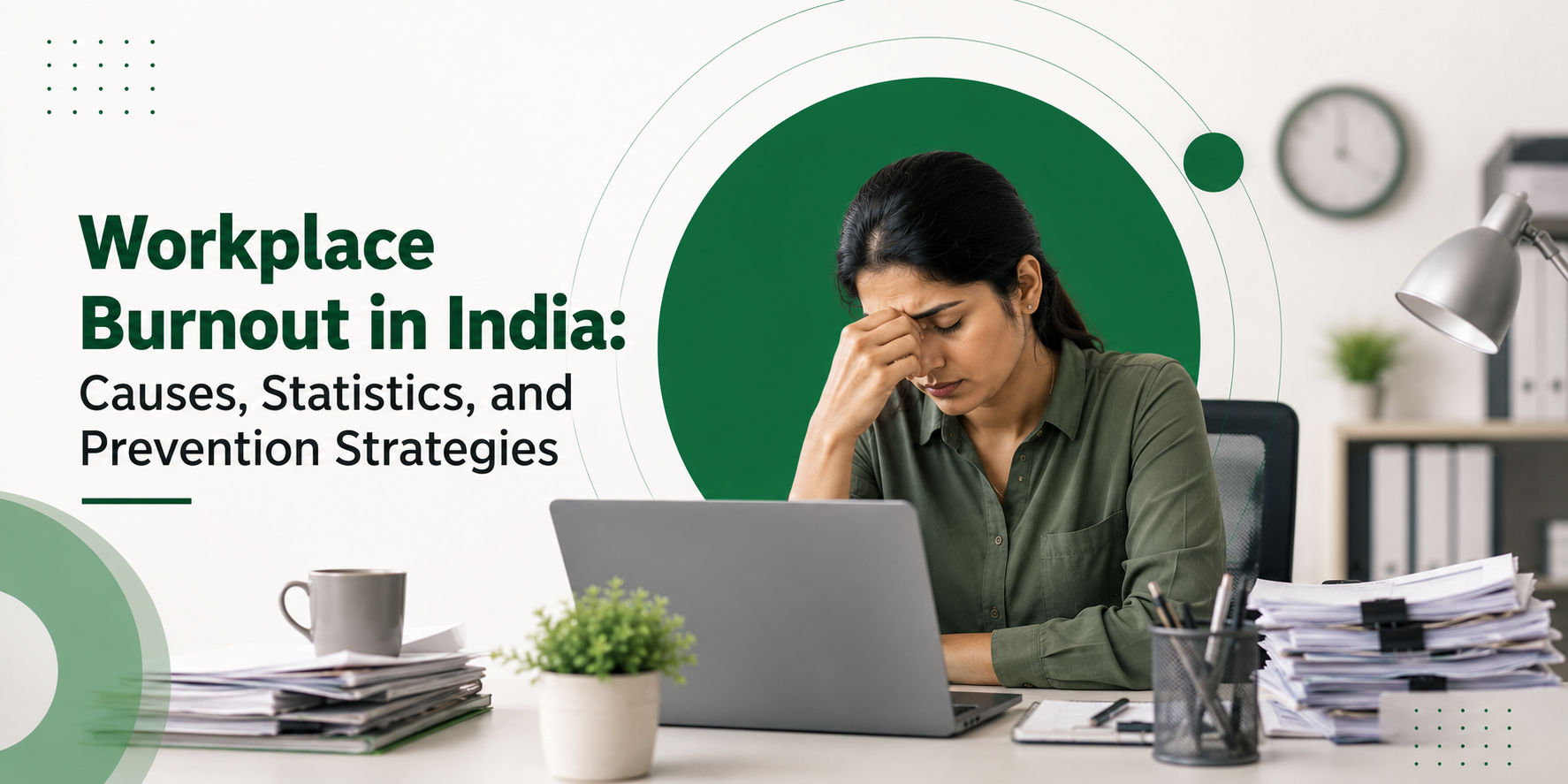
Burnout has moved from a niche wellness topic to a mainstream workplace concern in India, particularly across IT, BPO, consulting, and startup environments where long hours and high performance expectations are often treated as the norm rather than the exception. The World Health Organization classifies burnout as an occupational phenomenon resulting from chronic workplace stress that has not been successfully managed.
Understanding what drives burnout — and how it differs from ordinary tiredness — is essential for organizations that want to retain talent and sustain performance over the long term.
Burnout isn't simply feeling tired after a demanding week. It develops gradually, over months or even years, as a result of sustained stress without adequate recovery. It's characterized by three core dimensions:
This distinguishes burnout from a bad week or a demanding project. It's a state that persists and worsens without meaningful intervention.
Several converging factors have made burnout a growing concern across Indian industries:
In many sectors, particularly IT services, startups, and client-facing roles, working beyond standard hours is often treated as a sign of dedication rather than a red flag.
The expectation of being reachable outside working hours — through messaging apps, email, and video calls — blurs the boundary between work and personal recovery time.
Aggressive growth targets, constant comparison metrics, and stack-ranking systems create sustained pressure that leaves little room for genuine downtime.
While flexible work offers real benefits, it has also made it harder for many employees to mentally "switch off" from work at the end of the day.
Taking leave is sometimes viewed as a lack of commitment rather than a normal and necessary part of sustainable performance, discouraging employees from using the time off they're entitled to.
Burnout often develops quietly before becoming impossible to ignore. Early signs include:
Burnout doesn't just affect the individual experiencing it — it has direct, measurable consequences for organizations:
The most effective prevention strategy is structural: ensuring workloads are sustainable, not just manageable in the short term. This requires honest capacity planning rather than assuming employees will simply "manage."
Organizations that explicitly discourage after-hours communication — rather than just tolerating it — see a meaningful difference in employee recovery time.
Leadership visibly taking time off, and genuinely disconnecting while doing so, sends a stronger signal than any wellness policy document.
Frontline managers are best positioned to notice changes in a team member's engagement and energy before burnout becomes severe.
This might include no-meeting days, protected focus time, or encouraging shorter breaks throughout the workday rather than relying solely on annual leave.
Metrics that reward constant availability or excessive hours, rather than outcomes, often inadvertently encourage the behaviors that lead to burnout.
For employees already showing signs of burnout, organizations should focus on:
Burnout in Indian workplaces is a structural and cultural issue as much as an individual one. Organizations that treat it purely as a personal resilience problem — offering yoga sessions without addressing root causes like workload and always-on culture — tend to see limited results. Genuine prevention requires addressing the systems that create chronic stress in the first place, paired with a culture that treats rest and recovery as a legitimate part of sustainable performance.