

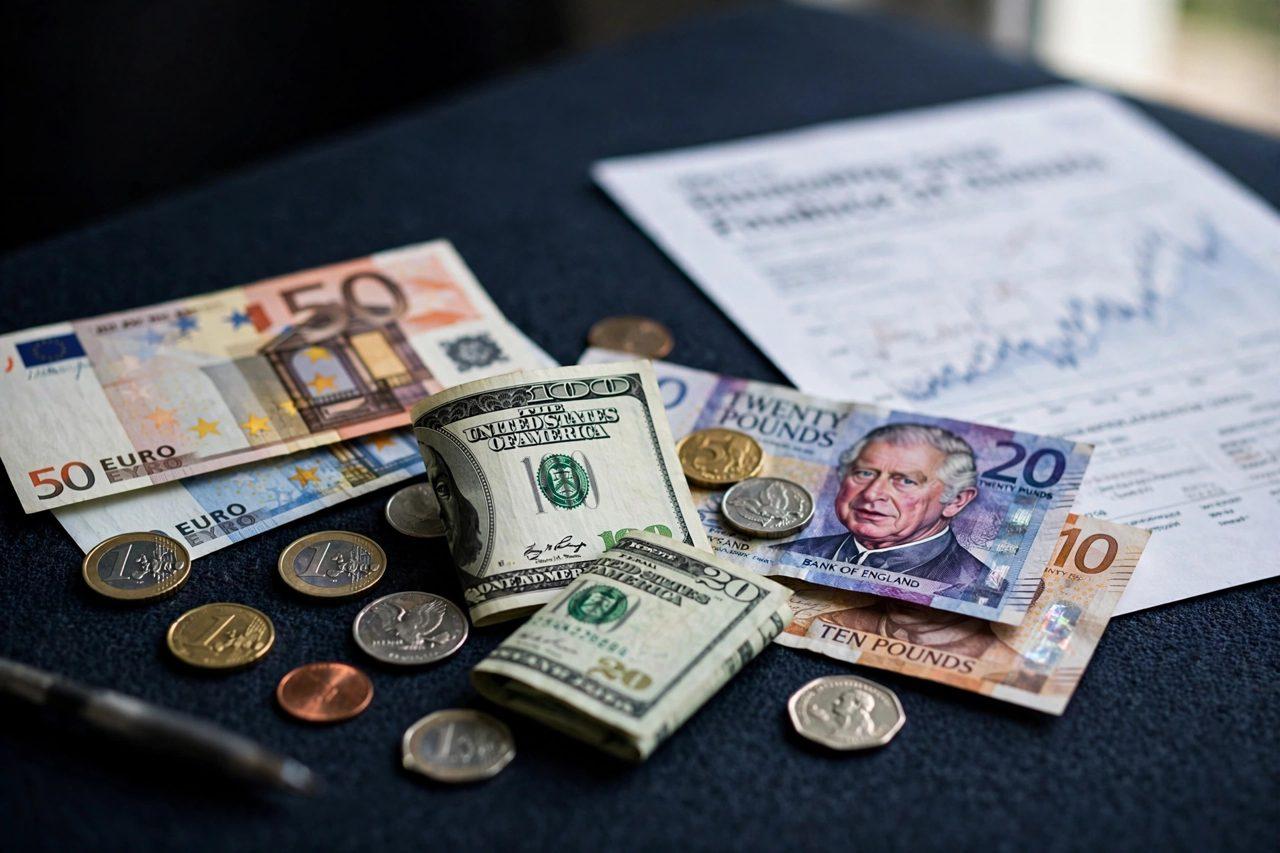

The US dollar climbed to a 19-month high on Monday, overpowering the euro, the pound and the yen in the same session. The US Dollar Index rose 0.25% to 104.07, pushing through the 104 level as traders bet the Federal Reserve stays hawkish into its December meeting, while a powerful rally in US stocks reshaped risk appetite across currency markets.
The move was broad rather than narrow. The euro gave back an early push above $1.10 and fell 0.74% to $1.0887. Sterling slid 0.53% to $1.3017 after touching $1.3135 earlier in the day. Against the yen, the dollar gained 0.40% to 159.18, closing in on the 160 mark that has drawn intervention warnings in the past. Follow the day's currency coverage on the Zimbuck News page at https://zimbuck.com/pages/zimbucknews .
Related reading: What Is the US Dollar Index (DXY)? How Dollar Strength Moves Markets — https://zimbuck.com/blogs/1214/What-Is-the-US-Dollar-Index-DXY-How-Dollar-Strength
A session of two halves
The dollar did not rise in a straight line. In early Asian trading the greenback actually eased, with the index slipping toward 103.72 as confidence recovered from last week's global sell-off and traders trimmed aggressive rate-hike bets. The euro and pound both opened firmer, and the yen held a safe-haven bid while Japanese markets were closed for a holiday.
The US session reversed all of it. As American stocks surged — powered by relief over leadership news at the world's most valuable chipmaker — Treasury yields climbed with them, the yield on the 2-year note pushing toward 4.70%. Higher yields plus hawkish December expectations pulled the dollar through its highs, and the morning's euro and pound gains were gone by the close.

The numbers that mattered
- US Dollar Index: 104.07, up 0.25%, a 19-month high
- EUR/USD: $1.0887, down 0.74% after an early move above $1.10
- GBP/USD: $1.3017, down 0.53%, with 1.3000 the next support traders are watching
- USD/JPY: 159.18, up 0.40%, approaching the 160 zone
- US Manufacturing PMI: 54.5 in November, down from 54.9 in October and in line with forecasts
- Euro Area Manufacturing PMI: 52.9, up from 52.7, just above the 52.8 consensus
Data kept the hawkish story alive
Monday's PMI figures did nothing to soften the dollar's bid. US manufacturing activity eased only slightly, holding comfortably in expansion territory at 54.5, while the euro area's reading improved modestly to 52.9. Neither number suggested an economy weak enough to pull the Federal Reserve away from its tightening bias — and with markets focused on the December decision, the path of least resistance for the dollar stayed upward. Currency traders in the Zimbuck Market News group at https://zimbuck.com/groups/zimbuckmarketnews spent the session debating how much further the 104 level opens up.

What traders watch next
Three things now decide whether the dollar's run extends. First, the 160 line in USD/JPY, where the risk of official pushback from Tokyo rises with every step closer. Second, whether GBP/USD's 1.3000 support holds or gives way to a deeper sterling slide. Third, the run of US data and central-bank speakers before the December Fed meeting — any softening in the numbers is the one thing that has reliably knocked the dollar back this month, as Monday's own Asian session showed. Join the conversation on Zimbuck at https://zimbuck.com to follow the levels with other forex traders.
Frequently asked questions
Why did the dollar hit a 19-month high? A combination of hawkish Federal Reserve expectations for December, rising US Treasury yields and a strong rally in US stocks pulled the Dollar Index to 104.07.
Which currency fell most against the dollar? The euro, down 0.74% to $1.0887, followed by sterling's 0.53% slide to $1.3017.
Why does 160 in USD/JPY matter? Round levels that extreme have historically raised the risk of intervention by Japanese authorities to support the yen, so traders treat the approach with caution.
Did the day's data change the picture? Not materially — US manufacturing PMI at 54.5 and euro area PMI at 52.9 both kept the growth gap, and the rate story, in the dollar's favour.
This article is market news and general information only, not financial advice.




