

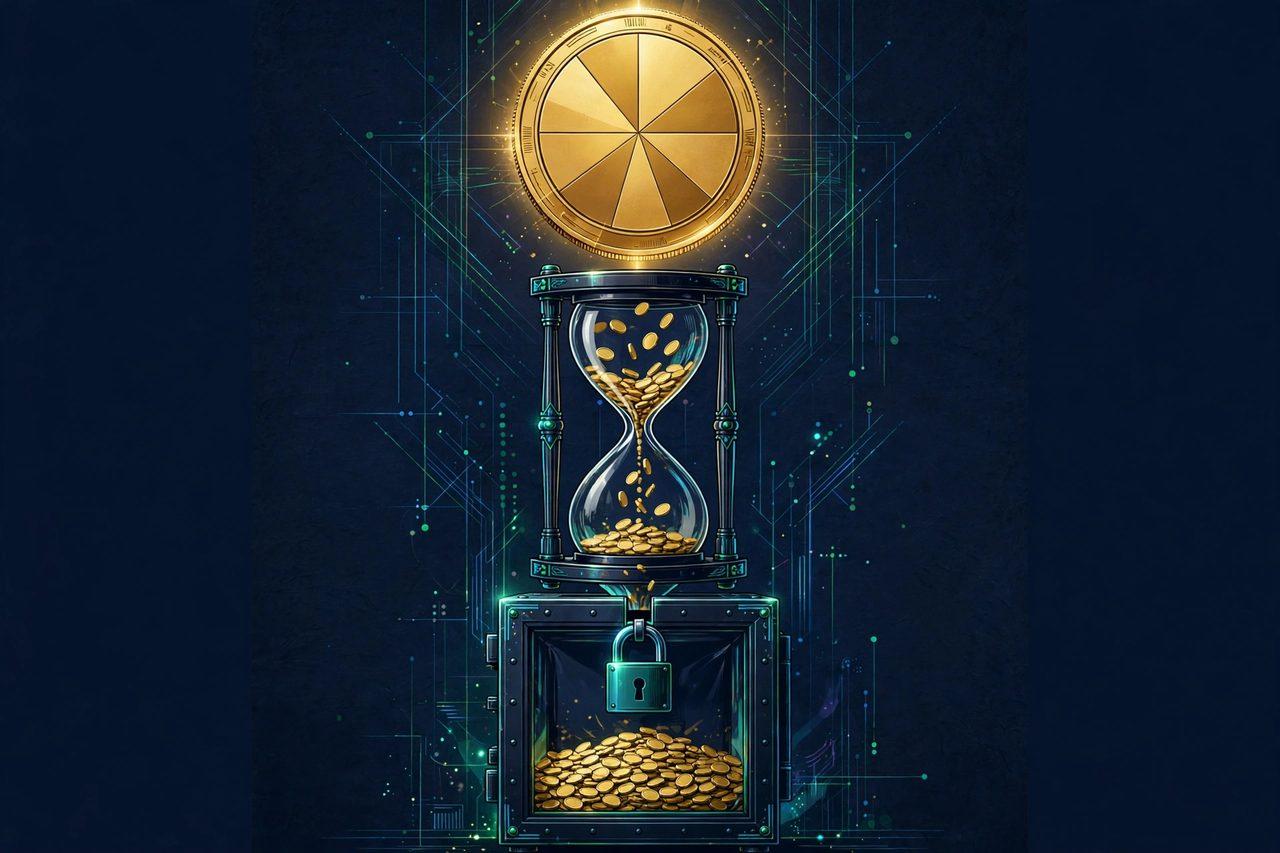
What Is Tokenomics? How Crypto Supply, Inflation and Vesting Actually Work

Tokenomics, in one sentence
Tokenomics — short for token economics — is the set of rules that decides how a crypto token is created, who gets it, when it can be sold, what it is used for, and how its supply changes over time. Two tokens can run on similar technology and still behave completely differently as investments, because their tokenomics are different. One may have a hard cap and slow, predictable issuance; another may unlock millions of tokens for early investors every month. Before you judge a token by its price, judge it by its supply rules — because price per token, on its own, tells you almost nothing. A token priced at $0.01 is not "cheap" if billions more of it are scheduled to enter circulation, and a token priced at $1,000 is not "expensive" if its supply is fixed and demand is real.

The three supply numbers that matter
Every token has three supply figures, and confusing them is the most common beginner mistake. Circulating supply is the number of tokens actually tradable right now — it sets the current market capitalisation. Total supply is all tokens created so far, including locked ones. Maximum supply is the hard ceiling that can never be exceeded, if one exists. Bitcoin is the classic capped example, with a maximum of 21 million coins. Ethereum has no hard cap; its supply changes dynamically with issuance and burns. Many newer layer-1 tokens, such as Sui with a predefined 10 billion supply, sit in between: the ceiling is known, but tokens unlock gradually over years. The ratio between circulating and maximum supply is your first warning signal. If only a small fraction of a token's eventual supply is circulating, the market price today reflects only a thin slice of what will eventually exist — and every future unlock is potential selling pressure that today's buyers will have to absorb.
- Circulating supply — tradable now; market cap = price × circulating supply.
- Total supply — all tokens created, including locked and vested amounts.
- Maximum supply — the hard ceiling, if the project has one.
- Fully diluted valuation (FDV) — price × total/max supply; what the project would be worth if all tokens circulated at today's price. When FDV is many times the market cap, future supply is the story.
For more market context, see Zimbuck News at https://zimbuck.com/pages/zimbucknews and join the discussion in the Zimbuck Market News group at https://zimbuck.com/groups/zimbuckmarketnews.
Vesting, cliffs and unlocks: when locked tokens become sellable
Most tokens are not released all at once. Teams, early investors and foundations usually receive allocations locked behind vesting schedules: a cliff period during which nothing unlocks, followed by gradual monthly releases. Vesting exists for a good reason — it aligns insiders with long-term success and prevents an early-investor dump on launch day. But it also creates calendar risk for everyone else. A vesting cliff is a date when a large chunk unlocks at once, and prices often fall into unlocks, especially when the unlocking holders bought far cheaper than the public. The disciplined habit is simple: before buying any token, find its unlock schedule — in the whitepaper, or on an unlock-calendar tool — and note the next three cliff dates and what percentage of circulating supply each one represents. If a single unlock adds 10% or more to circulating supply, treat that date as a real event in your planning, not a footnote.

Inflation, burns and utility: the forces that push supply both ways
Supply does not only grow through unlocks; it also grows through emissions — new tokens paid out as staking rewards, liquidity incentives or ecosystem grants — and it shrinks through burns, where tokens are permanently removed, often funded by protocol revenue. The honest question is always net: is issuance outrunning demand, or is demand outrunning issuance? A token emitting 15% a year with no clear demand driver needs compounding new buying just to hold its price flat. A token with revenue-funded burns still needs real usage — a burn funded by printing more tokens elsewhere is accounting, not economics. Then there is utility: what the token actually does. A token required for a core function — paying fees, securing the network through staking, governing a protocol people use — has a reason to be held. A token whose only use is speculation has only one buyer: the next speculator. That is why tokenomics checklists always end in the same place: supply structure, allocation, vesting, emission rate, burn rate, and utility, read together. No single number redeems a bad design, and no single red flag automatically condemns a good one — but a project that hides its unlock schedule, concentrates most supply in a few wallets, or emits far faster than it earns deserves a much harder look before any money moves.
For related reading on staking, which is one of the main ways tokens are used and issued, see the crypto staking guide at https://zimbuck.com/blogs/799/How-Crypto-Staking-Works-Proof-of-Stake-Validators-Rewards-and
FAQ
What is tokenomics? The supply, distribution, utility and incentive rules of a crypto token — how many exist, who holds them, when they unlock, and what they are used for.
What is the difference between circulating, total and max supply? Circulating is tradable now; total includes locked tokens already created; max is the hard ceiling, if one exists.
What is FDV, and why does it matter? Fully diluted valuation = price × total supply. A FDV many times the market cap means most supply is still locked and coming.
What is a vesting cliff? A date when a locked allocation starts unlocking, sometimes in a large single chunk — a known source of selling pressure.
Does a capped supply guarantee value? No. A cap limits inflation risk, but without demand and utility, even a scarce token can fall.
Does no max supply mean a token is bad? Not necessarily — Ethereum has no cap — but then burns, issuance and demand must be judged together.
Read more on Zimbuck at https://zimbuck.com/pages/zimbucknews and join the discussion at https://zimbuck.com/groups/zimbuckmarketnews — and join Zimbuck at https://zimbuck.com to follow more crypto learning guides.
This article is general educational information only, not financial advice.




