

US Housing Starts Beat Forecasts at 1.31 Million While Building Permits Fall to 1.30 Million

US Housing Starts Beat Forecasts at 1.31 Million While Building Permits Fall to 1.30 Million
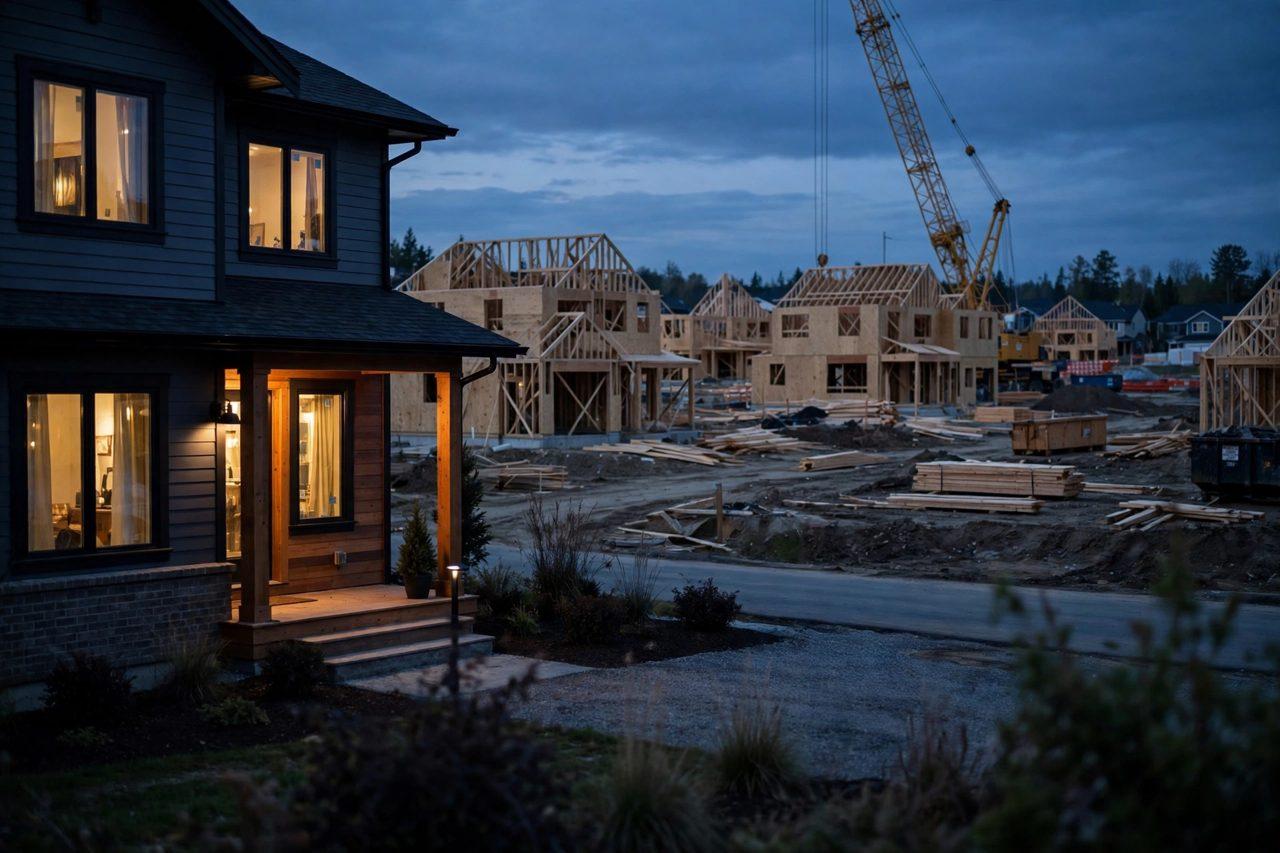
America's housing market just sent two signals at once: builders broke ground faster than expected in October, with housing starts at 1.31 million against a 1.25 million forecast — but building permits, the forward-looking number, fell to 1.30 million against a 1.38 million forecast. Add a sharp drop in pending home sales, and the picture is a market building for today while quietly bracing for a slower tomorrow.

The October housing numbers in full
- Housing starts: 1.31 million — forecast 1.25 million, previous reading 1.19 million.
- Building permits: 1.30 million — forecast 1.38 million, previous reading 1.40 million; permits fell 7.4% on the month against an expected 2.7% decline.
- Pending home sales: -4.7% on the month — forecast -2.0%, previous reading -7.2%.
- The US dollar index gained ground as traders worked through the mixed release.
Starts and permits rarely tell opposite stories this clearly. Starts measure shovels in the ground — work builders committed to months ago. Permits measure intent: the projects builders are lining up next. A starts beat with a permits miss usually means the current pipeline is healthy but the next one is thinning, which is why economists watch the gap between the two as an early turning-point signal. The full run of US data is tracked on the Zimbuck News page.
Why permits matter more than starts right now
A 7.4% monthly fall in permits is not noise — it is the largest kind of move that shows up when financing costs bite. Builders permit ahead of construction, so October's permit drop points to fewer starts in the months ahead unless conditions ease. Pending home sales falling 4.7% adds the demand side of the same story: fewer signed contracts means fewer completed sales feeding through in the following two months. For the Federal Reserve, this is the housing channel working exactly as tight policy intends — cooling the most rate-sensitive part of the economy first. It also sits in tension with the inflation debate covered in the Fed's latest warnings on broadening inflation: housing is softening while other price pressures refuse to fade, and that split is what makes the December decision so difficult.
What to watch next
Three things decide whether October was a blip or a turn. First, whether permits stabilise next month — a second consecutive drop would confirm builders are pulling back in earnest. Second, mortgage-rate direction: even a modest fall tends to show up in pending sales within weeks. Third, how the dollar and bond yields react if housing weakness starts to argue against further rate hikes. For now, the honest summary is a two-speed market — construction activity holding up, future activity and buyer demand cooling — and traders in the Zimbuck Market News group are split on which speed wins by spring.
FAQ
What is the difference between housing starts and building permits? Permits are approvals to build, issued before construction; starts count projects where ground has actually been broken. Permits lead, starts follow.
Did US housing starts beat forecasts in October? Yes — 1.31 million against a 1.25 million forecast, up from 1.19 million previously.
Why did building permits fall? Permits dropped 7.4% on the month to 1.30 million, well below the 1.38 million forecast, pointing to builders lining up fewer projects as financing costs stay high.
What happened to pending home sales? They fell 4.7% on the month, worse than the 2.0% decline forecast, though an improvement on the previous month's 7.2% drop.
Housing is the economy's most honest early-warning system, and right now it is flashing amber in both directions at once. Join the conversation on Zimbuck, the finance social platform for traders and investors. This article is market news and general information only, not financial advice.






