Copper Falls 5.45% as Commodities Slide: Gold Drops Below $3,750 to a 14-Month Low

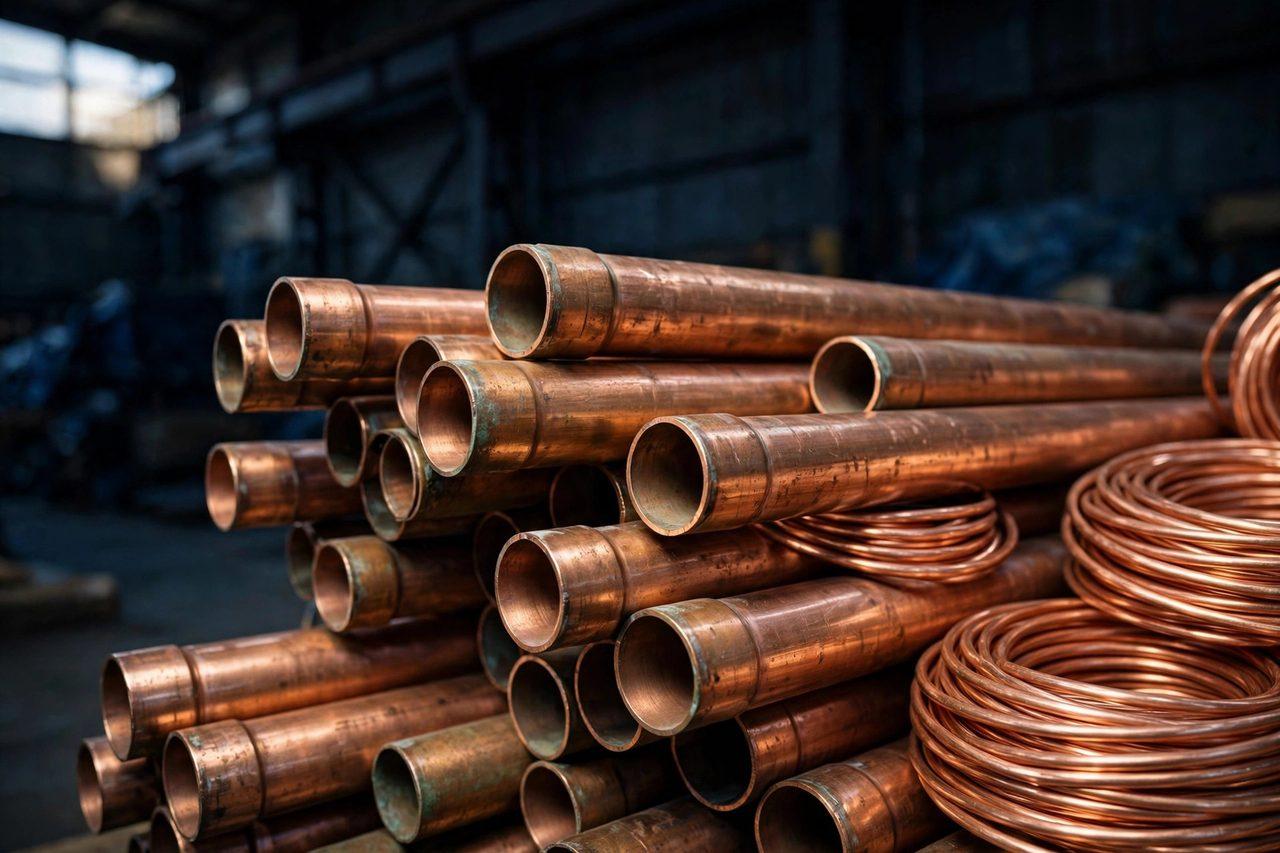
Copper led a broad sell-off across commodity markets, and by the end of the session almost nothing in the complex had been spared. Copper fell 5.45% to $5.66 a pound on the December contract, down nearly 19% from its September peak to trough. Comments from Stanley Druckenmiller that he was short copper were cited as a partial catalyst for the move. Gold fell with it, silver fell harder, and oil joined in, all on the same day and, it seems, for much the same reason.
Days like this are a reminder that commodities rarely move in isolation. When the dollar jumps and rate expectations shift, the whole complex tends to move together, and the metal that was already under pressure moves the most.

Copper leads the slide
Copper is the market's growth barometer. It goes into wiring, construction, power grids and electric vehicles, so a sharp slide in the copper price reads as a worry about demand as much as a flush of crowded positions. A fall of 5.45% in a single session, to $5.66 a pound, is a serious move for a metal that usually grinds rather than gaps, and the near 19% peak-to-trough drop from September underlines how much sentiment has turned.
Comments from Stanley Druckenmiller that he was short copper were cited as a partial catalyst. One well-known investor's position does not set the price on its own, but in a market already nervous about growth and rates, it was enough to give sellers a story to rally around, and the selling fed on itself through the session.
Gold gives back its gains
Gold's session was almost as rough. Spot gold fell about 3.2–3.27% to near $3,722.60 an ounce in late US trading on 18 November, with an intraday low of $3,719.10, its weakest since September 2025. It recovered modestly toward $3,743–$3,755 in the next session, but the damage to the short-term chart was done.
The move extends the slide covered in our earlier look at gold falling below $3,800, and it shows how quickly a safe-haven bid can unwind when the dollar turns. Gold had spent much of the autumn climbing on rate-cut hopes and haven demand. When those hopes faded, the same buyers who had chased it higher became sellers in a hurry.
Silver, platinum and oil join the sell-off
The breadth of the move is what stands out. It was not one metal, or one story, but a clean sweep across the board:
- Copper: down 5.45% to $5.66 a pound
- Gold: down about 3.2% to near $3,722.60 an ounce
- Silver: down about 4.6–4.95% to about $44.93 an ounce, with an intraday low of $44.64
- Platinum: down about 4.3%
- WTI crude: down $2.75 (−3.2%) to $83.26 a barrel
- Brent crude: down $1.19 (−1.3%) to $91.95 a barrel
Oil had its own headwind on top of the dollar. US commercial crude inventories rose 3.4 million barrels to 417.8 million barrels in the week ended 13 November, a build that gave crude sellers a fundamental reason to go with the flow rather than against it.

What set it off
The trigger was the Federal Reserve. Hawkish October meeting minutes, with almost all officials expecting further rate hikes, landed alongside hawkish comments from Fed Governor Waller, and the market repriced the path of US rates in a hurry. The dollar index pushed toward 103.82, its highest since April 2025, and commodities priced in dollars felt the weight straight away.
A stronger dollar makes dollar-priced commodities dearer for overseas buyers, and it tightens financial conditions everywhere at once. That is why metals and energy fell together rather than one at a time. Traders following the fallout on the Zimbuck News page will have seen the same pattern in stocks and crypto, where the Fed-minutes sell-off hit risk assets across the board, and the discussion continues in the Zimbuck Market News group.
What to watch next
The next test is the December Fed meeting, and the dollar's direction into it. If the dollar keeps climbing toward its April highs, commodities will struggle to find a floor. If the Fed softens its tone, the metals that fell fastest could also bounce fastest, copper included, given how far it has already come down from its September peak.
Watch copper demand signals, the next round of inventory data, and whether gold can hold above its September lows after its recovery toward $3,743–$3,755. One session does not make a trend, but the breadth of this sell-off says the driver is macro, not metal-specific, and macro drivers do not fade in a day.
Frequently asked questions
Why did copper fall so sharply?
Copper fell 5.45% to $5.66 a pound, down nearly 19% from its September peak to trough. Comments from Stanley Druckenmiller that he was short copper were cited as a partial catalyst, on top of broader pressure from a stronger dollar and hawkish Fed signals.
Is gold's drop a change of trend?
Gold fell to its weakest since September 2025, near $3,722.60 an ounce, before recovering modestly toward $3,743–$3,755. One session does not settle the trend, but the speed of the fall shows how much of the rally was built on rate-cut hopes.
Why did oil fall too?
WTI settled down $2.75 at $83.26 a barrel and Brent fell $1.19 to $91.95, with US commercial crude inventories rising 3.4 million barrels to 417.8 million barrels in the week ended 13 November, adding a fundamental push to the dollar-driven selling.
Copper started this sell-off, but the dollar finished it, and that is the part worth remembering. Join the conversation and keep up with the latest market news at Zimbuck.
This article is market news and general information only. It is not financial advice.