
What Moves Oil Prices? How Supply, Demand and Inventories Set the Price — Explained

Oil is the most traded commodity on earth, and its price can swing several percent in a single day. Yet the forces behind those swings are not mysterious. Almost every big move in crude comes back to the same handful of drivers: how much oil the world produces, how much it uses, how much sits in storage, and what traders expect those three things to do next.
Supply: who pumps, and how much
The world produces roughly 100 million barrels of oil a day. Supply comes from three big blocs: the United States (the largest single producer, mostly shale), the OPEC group of exporters, and Russia and its allies — the wider grouping often called OPEC+. When OPEC+ agrees to cut output, it is deliberately removing barrels from the market to support prices. When it raises output, it is doing the opposite. Individual surprises matter too: an outage at a major field, sanctions on an exporter, or a shipping route disruption can tighten supply overnight and spike prices before any official data confirms it.
Demand: the world economy in one number
Oil demand tracks economic activity closely. Factories, airlines, trucks and ships all burn it, so a growing world economy pulls demand up and a recession pushes it down. Demand is also seasonal: it typically rises in the northern summer driving season and around winter heating demand. Big-picture shifts — electric vehicle adoption, fuel efficiency, remote work — change demand slowly, over years, but they shape the long-term trend that producers plan around.
Inventories: the buffer everyone watches
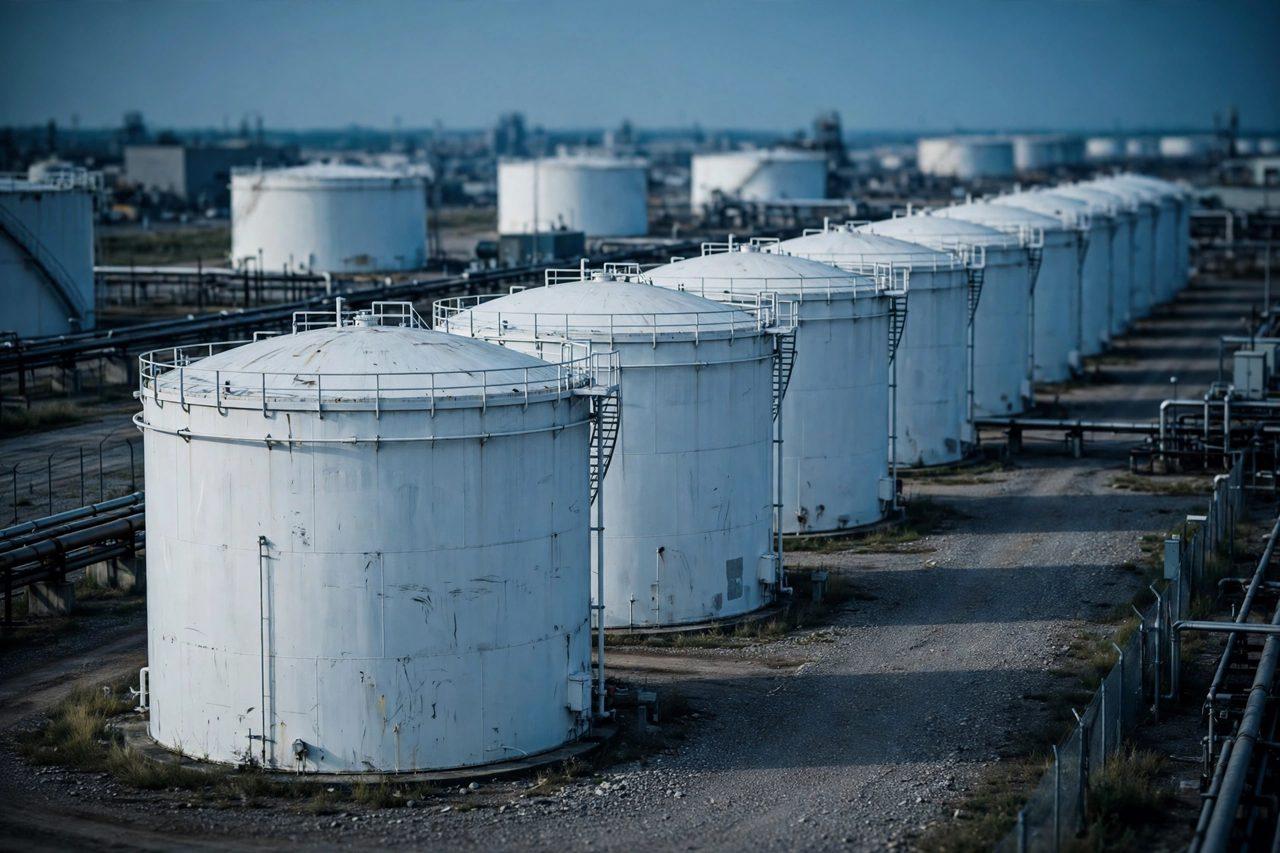
Between production and consumption sits storage. When supply exceeds demand, the extra oil goes into tanks and inventories build; when demand exceeds supply, tanks drain. Traders watch weekly US inventory reports closely because the US publishes the timeliest data: a surprise build usually pressures prices down, while a surprise draw lifts them. Inventories are the market's shock absorber — high stocks cushion a supply outage, low stocks amplify one.
Brent vs WTI: two prices for the same barrel
Beginners are often confused that oil has two headline prices. Brent is the benchmark for oil priced on water — most of the world's seaborne crude — while WTI (West Texas Intermediate) is the US benchmark, priced at Cushing, Oklahoma. The two usually move together, with a spread between them that reflects transport costs and regional gluts or shortages. When you read 'oil rose 2%', it almost always means one of these two benchmarks.

The other drivers: dollar, positioning and headlines
- The US dollar: oil is priced in dollars, so a stronger dollar makes oil more expensive in other currencies and can soften demand and prices.
- Financial positioning: futures traders can push prices beyond what physical supply and demand justify in the short run, and crowded positions unwind fast.
- Geopolitics: wars, sanctions and shipping attacks add a 'risk premium' that can vanish as quickly as it appeared.
- Refining: crude is useless until refined, so refinery outages can lift fuel prices even when crude itself is flat.
A simple way to read an oil move
When oil jumps, ask four questions in order. Did supply actually fall, or is it fear of a fall? Did demand news change? What did inventories do this week? And is the move bigger than the physical news — a sign positioning is doing the driving? That checklist, used consistently, explains most headlines. Practise it with other commodity watchers on the Zimbuck News page and in the Zimbuck Market News group. For a related read, see our silver trading explainer.
FAQ
Why does oil move so much on OPEC headlines? Because OPEC+ controls a large share of spare capacity, so its decisions change expected supply more than any other single factor.
What is spare capacity? Production that can be brought online within about a month and sustained. Low spare capacity means little cushion against outages, so prices react harder to bad news.
Do high inventories always mean lower prices? They lean that way, but prices are set by expectations.
Is Brent or WTI more important? Globally Brent prices more of the world's oil; WTI matters most for the US market.
This guide is general information only, not financial advice. Join the conversation at https://zimbuck.com and share what you watch first when oil moves.