How to Check Memecoin Holder Distribution: Top-10 Wallets, Creator Share and Clusters, Explained

A memecoin's price chart can look perfect right up to the moment it collapses. The warning signs were usually visible earlier — not on the chart, but in the holder list.
Holder distribution shows how a token's supply is spread across wallets. This guide explains the four numbers that matter most, the thresholds experienced traders watch, and how clustered wallets hide concentration that a simple top-10 list can miss. For the daily memecoin and market conversation, join the Zimbuck Market News group.
Why distribution matters more than hype
Memecoins have no earnings, no product revenue and usually no utility to fall back on. What they have is a crowd. If that crowd is real — thousands of independent wallets each holding a modest share — no small group can crash the price on its own. If the crowd is an illusion — a few dozen linked wallets holding most of the supply — the exit can happen in one block.
The base rates explain the caution. A large on-chain study of 18.67 million tokens launched on one major launchpad between January 2024 and June 2026 found that only 4.55% were still actively traded after 90 days, and 68.67% recorded their last trade on the same day they launched. Structure does not guarantee survival, but weak structure predicts failure remarkably well.
Number 1: the top-10 share
Open the token's holder page on a block explorer and add up the ten largest wallets, excluding the liquidity pool and any burn address. As a working framework:
- Below roughly 25% in the top 10: a reasonably spread crowd.
- Between 25% and 40%: context matters — a one-hour-old token naturally starts concentrated.
- Above 50%: ten wallets effectively decide the price.
A widely used red line is a top-5 share above roughly 20% or a top-10 share above roughly 30% — beyond that, one coordinated sell-off can collapse the token. Healthy, established memecoins typically settle into a top-10 range nearer 15–25% once the pool and burns are excluded.
Number 2: the creator's share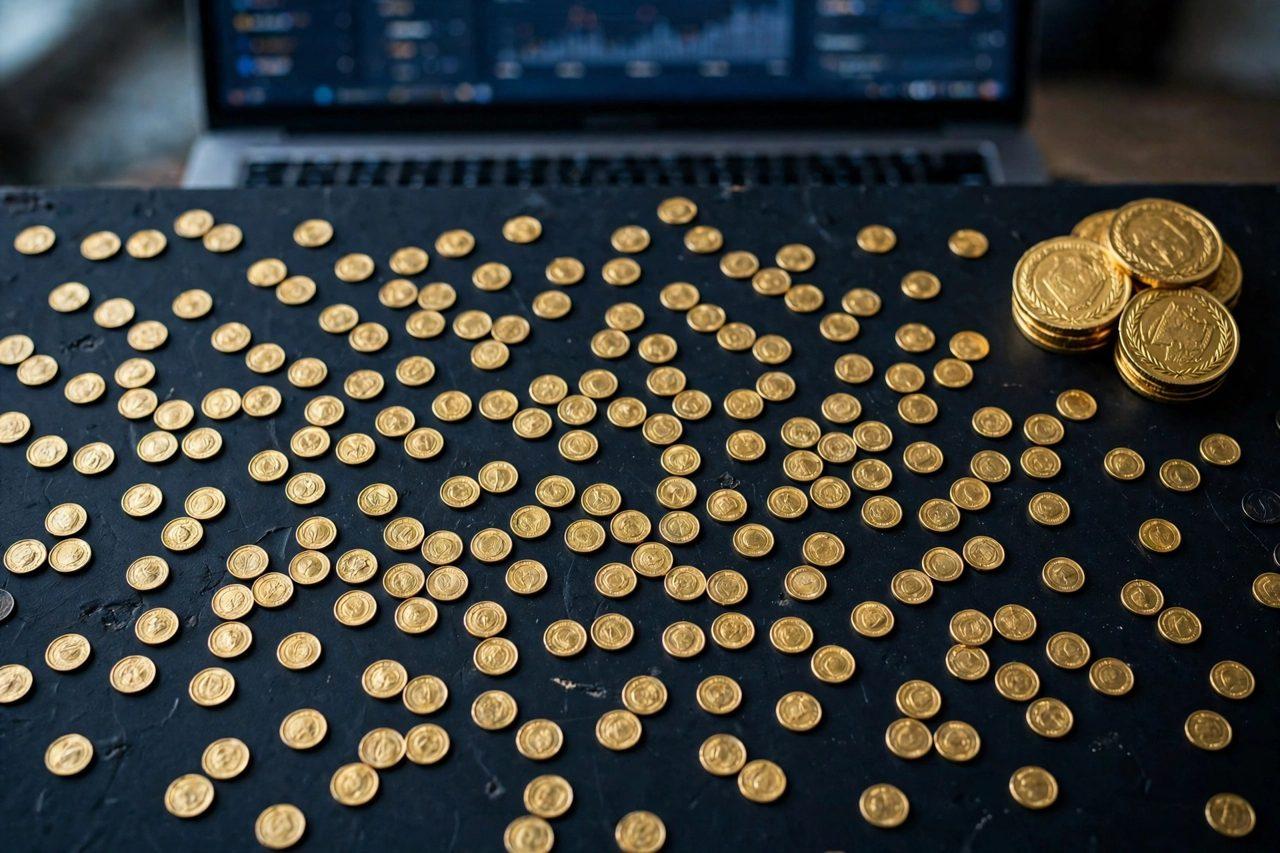
Find the wallet that deployed the token. A creator holding around 2–5% has a reason to keep building and a limited ability to wreck the market. A creator still holding 20% or more has both the means and, once the first rally arrives, the temptation to sell into it. Also check whether the creator has been quietly moving tokens to fresh wallets — that transfer pattern often appears just before distribution to the public begins.
Number 3: the linked, or clustered, share
This is the number that catches what the top-10 list hides. Twenty wallets holding 1.2% each look harmless one by one. If all twenty were funded from the same source wallet in the same hour, together they are a 24% cluster — a single actor wearing twenty masks. Holder-map tools draw lines between connected wallets for exactly this reason. Identical-sized bubbles funded at identical times are one of the most reliable early rug signals there is.
Number 4: the pool's share
Early in a token's life, the liquidity pool should be the largest holder. If one private wallet is bigger than the pool, that wallet is the market: the pool cannot absorb it selling. A practical companion check is liquidity depth — a pool worth less than roughly 8–10% of the token's fully diluted value leaves almost no room for ordinary holders to exit once selling starts.
A five-minute distribution check
- Exclude the pool and burn addresses before judging any percentage.
- Note the top-10 share and whether it is rising or falling over days, not minutes.
- Identify the creator wallet and track whether its balance is shrinking into strength.
- Look for clusters: same funding source, same creation time, same trade sizes.
- Re-check after the first big candle — distribution into a rally is the classic exit pattern.
Our earlier memecoin safety guides on Zimbuck cover the companion checks — contract permissions, locked liquidity and honeypot tests — and are worth reading alongside this one before you size any position. Daily coverage continues on the Zimbuck News page.
Frequently asked questions
What top-10 percentage is dangerous for a memecoin? Above roughly 30% deserves caution and above 50% means a handful of wallets control the price, once the pool and burns are excluded.
Why exclude the liquidity pool from holder checks? Pool tokens are locked in the trading pair, not held by a person who can dump them in one decision. Including the pool makes concentration look worse than it is.
Can a token look distributed but still be controlled? Yes — through clustered wallets funded from one source. That is why the linked share matters as much as the headline top-10 figure.
Does good distribution make a memecoin safe? No. It removes one failure mode. Most new memecoins still go to zero; distribution checks help you avoid the ones engineered to.
How often should I re-check distribution? At launch, after the first major rally, and whenever a large new wallet appears in the top holders.
Distribution will not tell you which memecoin runs next. It will tell you which ones are built to collapse — and that is the check that saves accounts. Follow the conversation at Zimbuck.
This article is market news and general information only, not financial advice.