What Is Contango in Commodities? How Futures Curves Affect Oil and Gold Prices Explained

Every oil and gold price you see quoted for "next month" is not the same as the price today — and the gap between them has a name. When futures prices sit above the spot price, the market is in contango, and that shape quietly decides what traders, funds and even petrol stations end up paying.
Understanding contango takes about five minutes, and it explains a surprising amount of commodity news — from why oil funds can lose money in a flat market to why storage tanks suddenly become valuable.
Spot price, futures price, and the curve
The spot price is what a commodity costs for immediate delivery. A futures contract is a price agreed today for delivery in a specific future month. Line up the futures prices for the next several months in order and you get the futures curve.
- Contango: later months cost MORE than earlier months — the curve slopes upward
- Backwardation: later months cost LESS than earlier months — the curve slopes downward
- Flat curve: delivery month hardly matters, because prices barely change across months
Neither shape is "good" or "bad" on its own. Each one is the market pricing the cost — or the urgency — of having the commodity later ins tead of now.
Why contango happens: the cost of carry
Holding a physical commodity is not free. Someone has to pay for:
- Storage — tanks for oil, vaults for gold, silos for grain
- Insurance — protection against damage, theft or spoilage
- Financing — the interest cost of the money tied up in the stored commodity
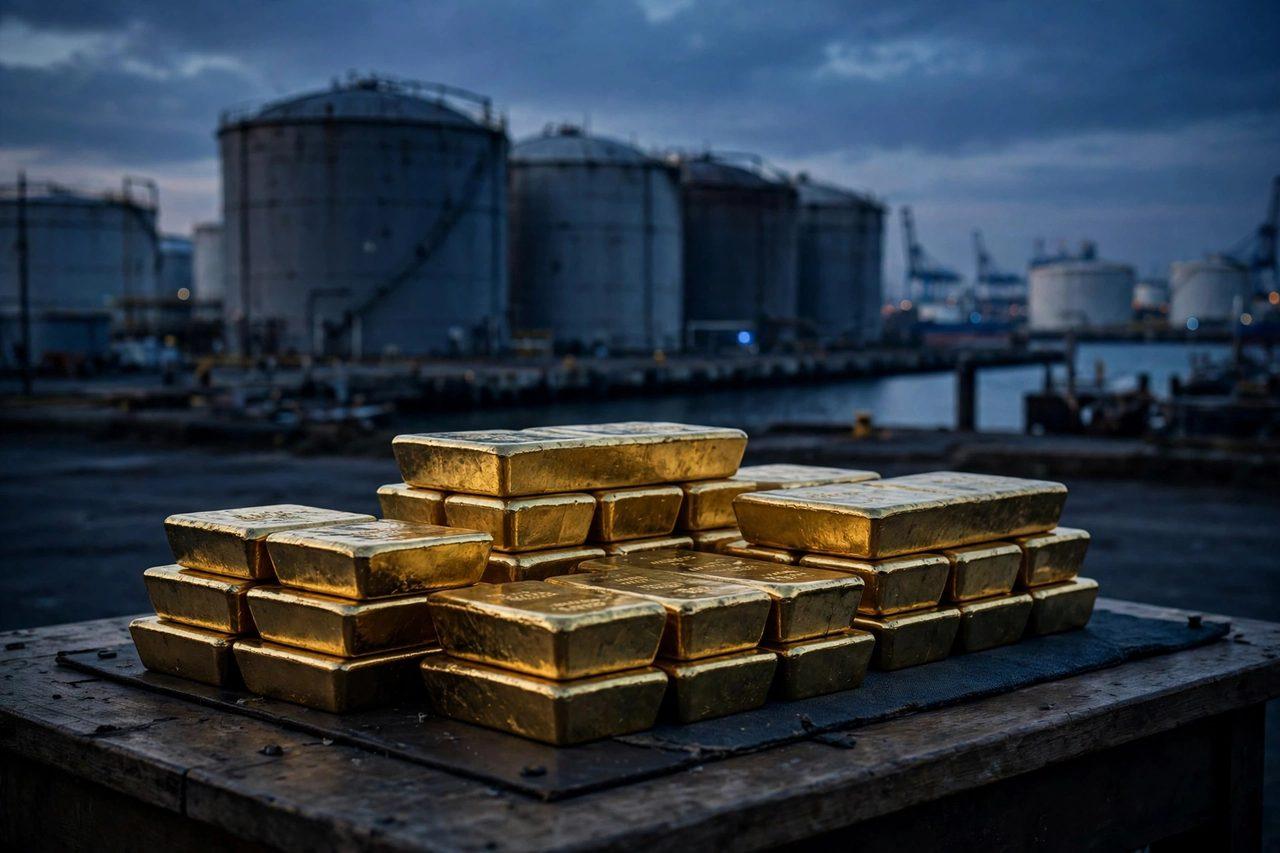
Together these are called the cost of carry. In a calm, well-supplied market, a futures price is roughly the spot price plus the cost of carry until delivery. That is why contango is the normal state for gold: vault space and insurance are cheap relative to gold's value, supply is never urgently short, and so later delivery almost always costs a little more than immediate delivery.
Oil flips between the two shapes far more often. When tanks are full and demand is soft, contango deepens — at extreme moments the front-month price has even collapsed far below later months because nobody had anywhere left to put the oil. When supply is tight and buyers need barrels now, the curve flips into backwardation and immediate delivery commands a premium.
Why contango matters if you never trade futures
Most beginners meet contango through funds. Many commodity funds do not hold physical oil or metal; they hold futures, and when a contract nears expiry they must "roll" it — sell the expiring contract and buy the next month.
In contango, that roll has a cost: the fund sells the cheaper near contract and buys the more expensive later one, every single month. If spot prices stay perfectly flat for a year, a fund rolling through a steep contango curve can still lose money month after month. This slow bleed is often called roll cost, and it is the main reason long-term commodity fund charts can disappoint people who only watched the headline commodity price.
The same logic runs in reverse in backwardation, where rolling can add a small tailwind instead of a cost.
For background on how quickly commodity sentiment can flip, see our report on gold heading for its worst week since March at https://zimbuck.com/blogs/5692/Gold-Heads-for-Its-Worst-Wee k-Since-March-as-Fed .
How to read the curve like a trader
A few practical habits separate a headline reader from a curve reader:
- Check the shape, not just the price. A rising oil price with a curve flipping into backwardation tells a very different story — genuine immediate tightness — from a rising price in deep contango, which can simply reflect storage economics.
- Watch the front spread. The gap between the first and second contract months is the market's fastest-moving tightness signal.
- Remember seasonality. Natural gas and agricultural curves carry seasonal patterns baked in; a winter premium is normal, not a forecast.
- Match the product to the curve. If you hold a futures-based fund for months, the curve shape may matter more to your result than small spot moves.
Commodity watchers trade these ideas daily in the Zimbuck Market News group at https://zimbuck.com/groups/zimbuckmarketnews , and the Zimbuck News page at https://zimbuck.com/pages/zimbucknews follows the biggest moves across energy and metals.
FAQ
What is contango in simple words?
Contango means futures prices for later delivery are higher than the price for immediate delivery. It usually reflects the cost of storing, insuring and financing the commodity until that later date.
Is contango bullish or bearish?
Neither, by itself. Mild contango is normal for many commodities, especially gold. Very steep contango in oil often signals oversupply and full storage, while a flip into backwardation usually signals tight immediate supply.
Why do commodity funds lose money in contango?
Because they must repeatedly sell cheaper expiring contracts and buy more expensive later ones. That roll cost accumulates even when the spot price does not move.
Does gold stay in contango forever?
Gold is in contango most of the time because storage is cheap relative to its value and above-ground supply is large. Brief flips can happen during acute physical tightness, but they are the exception.
Once you start looking at the curve instead of a single price, commodity headlines make far more sense — a "record price" and a "collapsing price" can both be true at different points on the same curve. Join the conversation on Zimbuck at https://zimbuck.com and tell us which commodity curve you are watching this month.
This article is market news and general information only, not financial advice.