


UK Economy Grows for Fifth Month as November PMI Hits 52.3, Factories Lead

Britain's private sector kept growing in November, just at a slower pace. The flash composite PMI eased to 52.3 from October's eight-month high of 52.9, a two-month low that still marks a fifth consecutive month of expansion and points to roughly 0.6% GDP growth in the fourth quarter.
The November readings at a glance:
- Composite PMI: 52.3 (October: 52.9)
- Services PMI: 52.0 (October: 52.8) — a five-month low
- Manufacturing PMI: 52.7 (October: 52.8)
- Manufacturing output: 54.2 — the strongest since August 2024 (October: 53.6)
Factories are carrying the economy right now
The split inside the survey is the real story. Services, the largest part of the UK economy, cooled to their weakest reading in five months, with firms pointing to cost-of-living pressure on households, soft demand for property-related work and general uncertainty in the background.
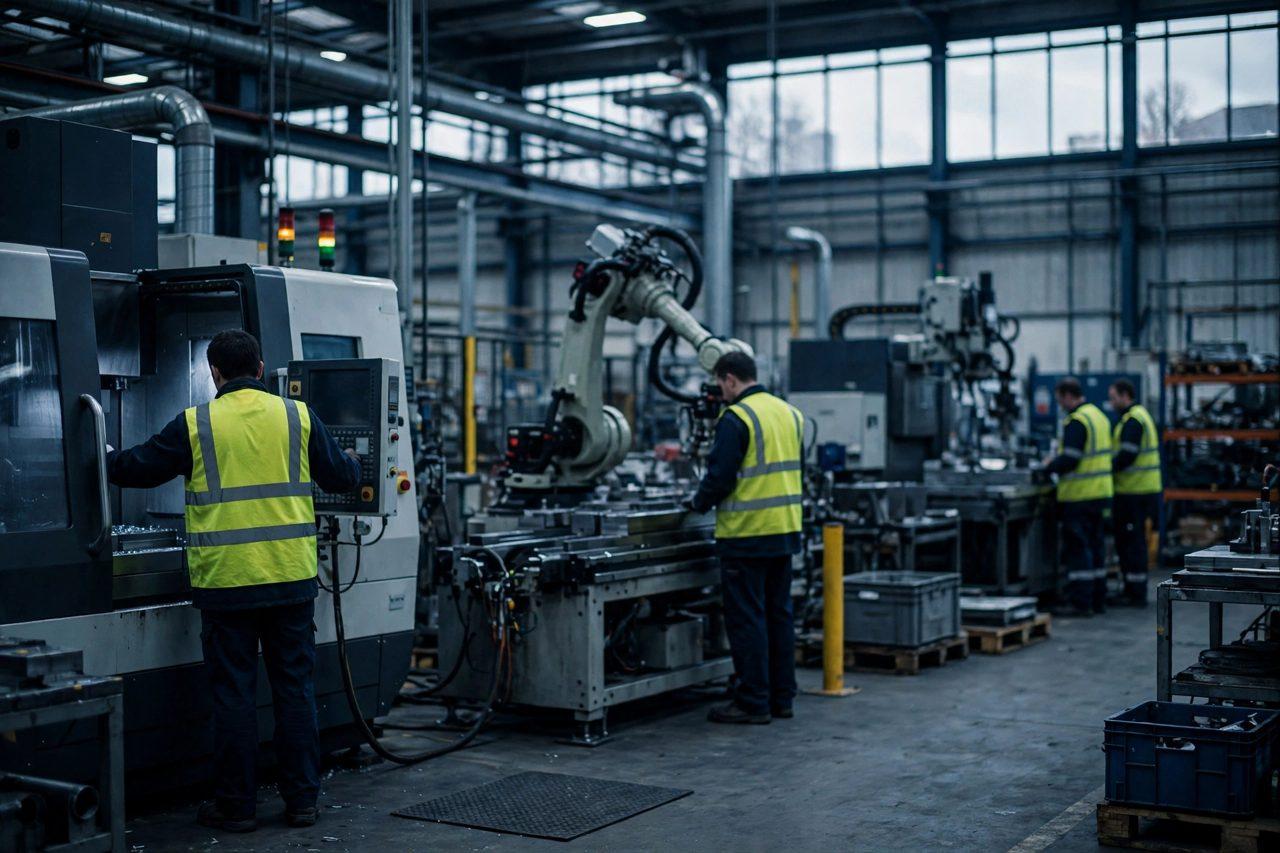
Manufacturing went the other way. While the headline factory index dipped slightly to 52.7, the output measure, often the better guide to the underlying trend, jumped to 54.2, its highest since August 2024. Survey responses linked the strength to investment tied to AI data centres and to higher defence spending, two demand streams that do not depend much on the mood of the British consumer.
What this means for rates and the pound
A composite reading of 52.3 is not the profile of an economy asking for emergency help, but it is not overheating either. Growth holding in the low-52s keeps the picture of a slow, uneven expansion: industry benefiting from global investment themes, household-facing services feeling the squeeze of earlier rate rises and living costs.
For sterling watchers, the takeaway is balance. The economy avoided the slowdown some had feared after October's strong print, yet the services softness gives policymakers room to stay patient. The full breakdown of orders, hiring and prices inside the survey will decide whether November reads as a pause or the start of a cooler winter.

Macro releases like this one, and what they mean for currencies, are followed daily on the Zimbuck News page and debated in the Zimbuck Market News group. For a company-level contrast from the same week, see our Ross Stores Q3 earnings coverage.
FAQ
What was the UK composite PMI in November? 52.3, down from 52.9 in October. Readings above 50 signal expansion, so November was a fifth straight month of growth, at a slower pace.
Which sector performed best? Manufacturing output rose to 54.2, its highest since August 2024, helped by AI data-centre investment and defence demand. Services slowed to 52.0, a five-month low.
What does the survey imply for UK GDP? The November readings are consistent with GDP growing by about 0.6% in the fourth quarter.
Were these figures forecasts? No. These are the published flash actuals for November, compared with October's final readings.
This article is market news and general information only, not financial advice. Join the discussion on Zimbuck.




