

CoreWeave's $4.5 Billion GPU Loan Shows How Expensive the AI Build-Out Has Become

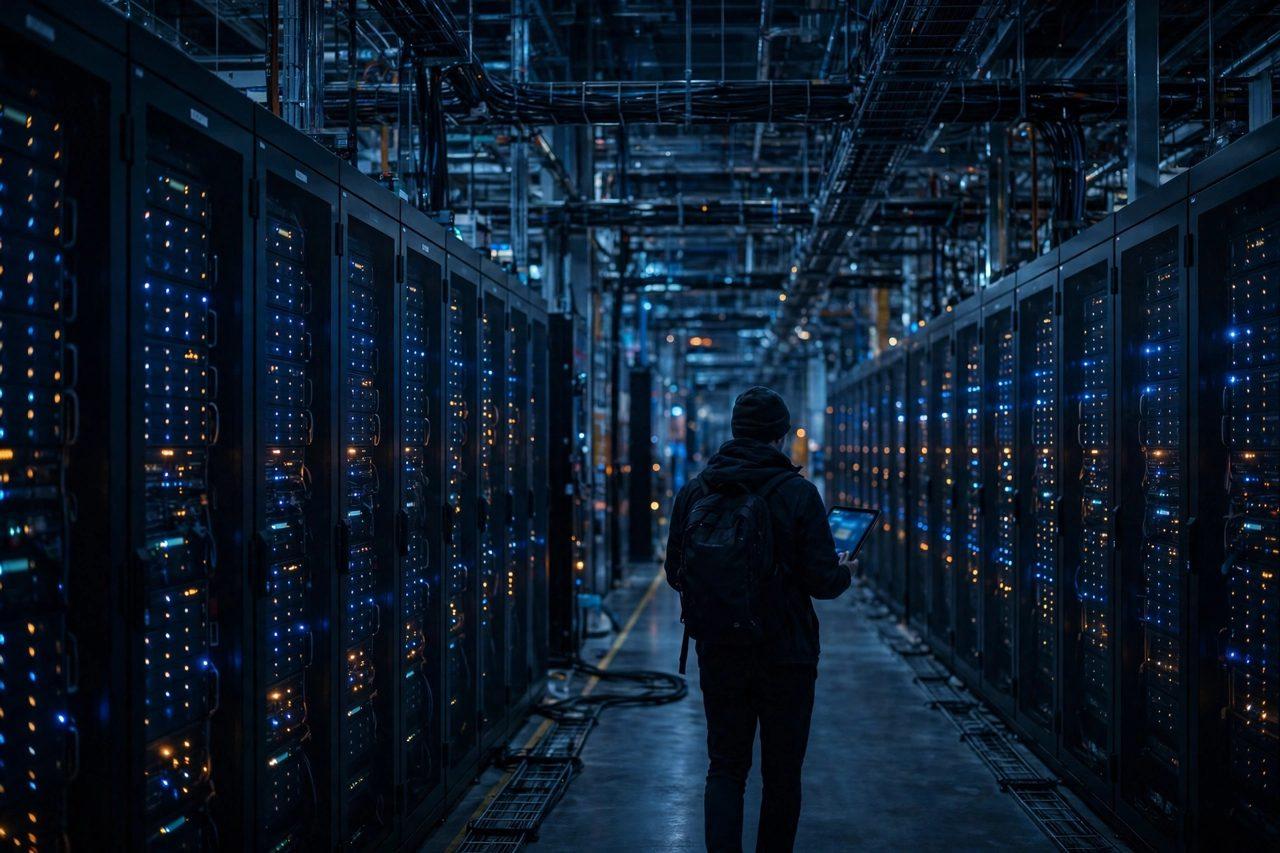
CoreWeave is lining up a $4.5 billion loan secured by graphics processors — while its own bonds trade at yields near 18%. That gap, between what lenders will charge for debt backed by GPUs and what bondholders demand from the company itself, tells the story of the AI build-out in a single number: the infrastructure is valuable, the balance sheet carrying it is stretched, and the difference between the two is now the trade.
What the deal is
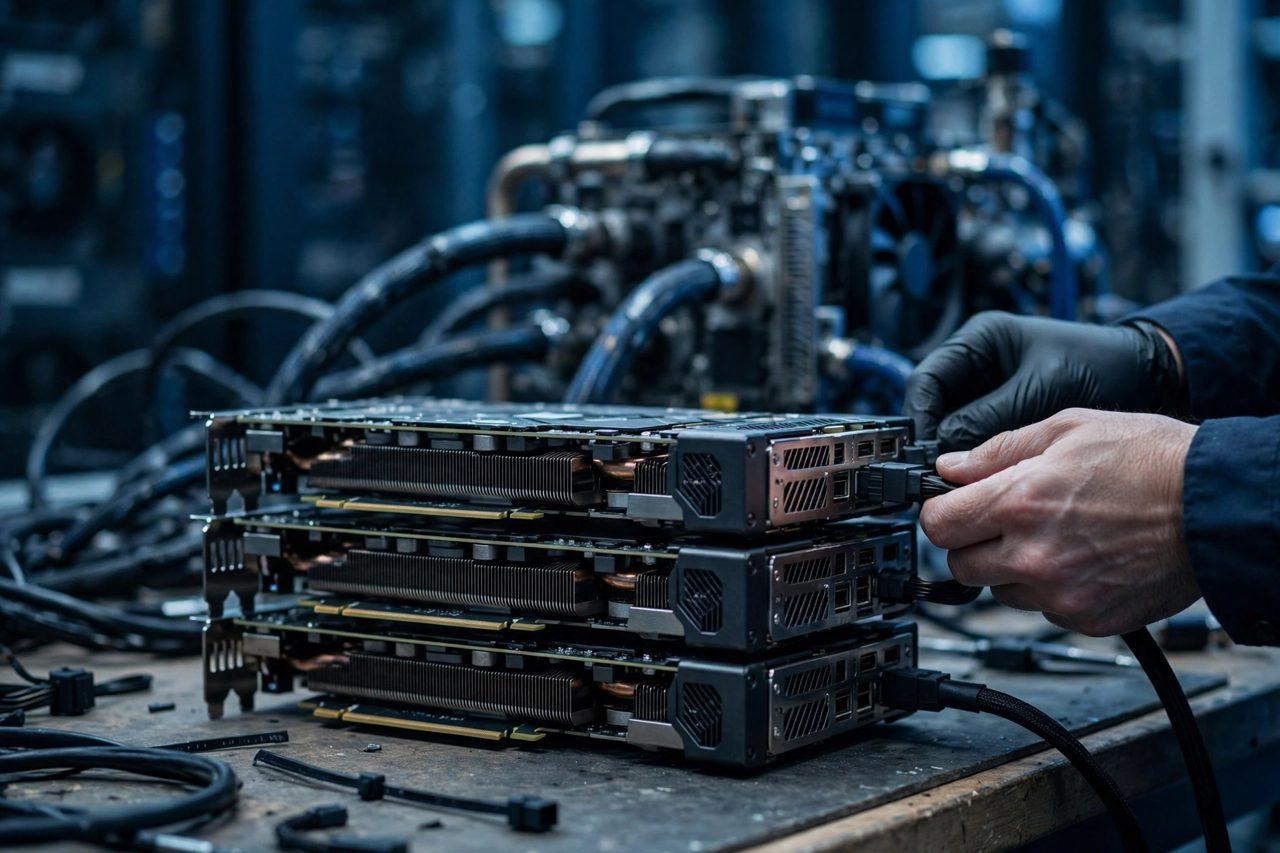
Morgan Stanley and Mitsubishi UFJ Financial Group (MUFG) are preparing a $4.5 billion loan sale for AI infrastructure provider CoreWeave, possibly coming to market as early as next week. The loan is secured by GPUs destined for a Meta Platforms data center in Dalton, Georgia. Early pricing talk puts the yield between 7% and 7.5%, with investor interest already roughly equal to the proposed size. Funds would be drawn through an escrow arrangement to buy equipment, and principal would be repaid gradually.
For context on how quickly this corner of the market moves, the Zimbuck News page tracks the AI infrastructure names readers ask about most.
Why the 7–7.5% versus 18% gap matters
CoreWeave's 9% bonds maturing in 2031 recently traded at yields near 18%. Credit default swaps implied a default probability above 70% over five years. Yet the new facility is expected to get investment-grade ratings, despite CoreWeave's below-investment-grade corporate rating. The reason is what stands behind the loan: the GPUs themselves, and the Meta contracts they will serve. Lenders to the facility are underwriting hardware and a customer; buyers of the bonds are underwriting the whole company. That is the difference between 7.5% and 18% — collateral and a customer on one side, a corporate balance sheet on the other.
The cost of the build-out
The latest quarter shows why CoreWeave needs the money — and why lenders are careful about how it is structured:
- Net interest expense of $846 million, up from $310 million a year earlier.
- Revenue of $3.66 billion, up from $1.37 billion.
- Net loss of $709 million.
- Interest expense is expected to run above $1 billion in the fourth quarter.
- Full-year capital expenditure is projected at $37–39 billion, with about $9 billion of customer advances and deposits expected over the following three months.
Revenue is growing fast, but the cost of carrying the build-out is growing faster. That is the tension running through the whole AI infrastructure trade: demand is real, and so is the bill.
The Meta anchor
Meta is the anchor tenant behind the Dalton GPUs. Meta agreements with CoreWeave include an expanded deal worth about $21 billion on top of a separate $14.2 billion arrangement, with computing access through December 2032. It is the scale of that commitment that lets a loan secured by chips aim for an investment-grade rating while the borrower's own bonds trade like distressed debt.
CoreWeave's Dalton infrastructure runs with Core Scientific — about 590 megawatts contracted, with up to $10.2 billion in potential contract revenue. CoreWeave was roughly 84% of Core Scientific's revenue in the first nine months of 2026. Core Scientific sold 3,374 Bitcoin for $286.8 million to fund capital expenditure and ended September holding just 32 BTC. Traders discuss these names daily in the Zimbuck Market News group.
What it means for stock investors
For stock investors, the loan is both reassuring and a warning. Reassuring, because lenders are willing to fund the build-out at 7–7.5% when the collateral is GPUs and the customer is Meta. A warning, because the same company's unsecured bonds yield near 18% and its interest bill is heading above $1 billion a quarter. The miner-turned-AI-infrastructure pipeline is now a pattern rather than a one-off: Bitcoin miner IREN closed a $3.65 billion equipment facility in June, and Core Scientific has effectively rebuilt itself around CoreWeave demand.
The questions that matter from here are simple to state and hard to answer: can contracted revenue cover an interest bill of this size, how much of the growth is funded by customers paying in advance rather than by new debt, and what happens to the value of GPU collateral if demand for AI computing cools? The loan's pricing says lenders are comfortable with the hardware and the Meta contract. The bond market says the company-level risk is still severe. Both can be right at the same time — and the spread between them is where the investment case will be won or lost. For a contrast in how the market treats earnings it trusts, see CNH Industrial's 11% jump after its Q3 earnings beat.
FAQ
Why would the same company borrow at 7.5% and 18%? Because the two debts are not the same risk. The loan is secured by GPUs and backed by Meta contracts, so it is expected to carry an investment-grade rating. The bonds are unsecured claims on the whole company, which carries a below-investment-grade rating.
What exactly secures the new loan? Graphics processors destined for a Meta Platforms data center in Dalton, Georgia, bought with funds drawn through an escrow arrangement.
How big is the Meta relationship? An expanded deal worth about $21 billion sits on top of a separate $14.2 billion arrangement, with computing access through December 2032.
Are other Bitcoin miners doing the same thing? Yes. IREN closed a $3.65 billion equipment facility in June, and Core Scientific now earns most of its revenue from CoreWeave-related infrastructure work.
Follow daily market coverage on Zimbuck and bring your questions to the community.
This article is market news and general information only, not financial advice.




